

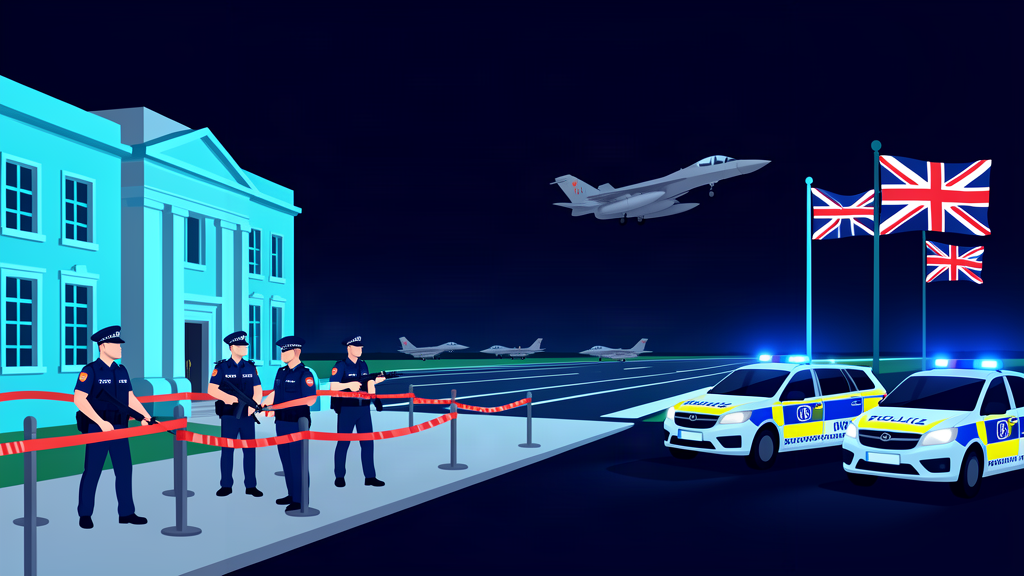
British counterterrorism police have re-arrested two men on suspicion of assisting Iran’s intelligence services, the New York Times reports, in connection with a threat against an RAF air base used by U.S. bomber operations. The arrests underline the continuing challenge of detecting and disrupting Iranian intelligence activity on British soil, as Prime Minister Andy Burnham faces questions about the UK’s exposure to foreign interference.
The RAF Fairford investigation
RAF Fairford in Gloucestershire regularly hosts U.S. Air Force B-52 and B-2 strategic bombers on missions across the Middle East, making it a high-value target for adversaries seeking to gather intelligence or disrupt operations. Counter-terrorism sources say the fresh arrests are linked to an ongoing probe that began earlier this year, suggesting Iranian operatives may have been mapping security procedures or attempting to establish surveillance networks around the base. The two suspects, whose names have not been released, were first detained in September and rearrested after additional evidence emerged during the investigation.
Diplomatic implications
The case arrives as the UK and Iran navigate one of their most strained periods in decades. Prime Minister Burnham’s government has repeatedly condemned Tehran’s support for proxy groups across the Middle East and its nuclear programme expansion. Downing Street has not commented on the specific arrests, but diplomatic sources indicate that national security officials have briefed Washington on the investigation. The Foreign, Commonwealth & Development Office is expected to raise further concerns with Iranian officials through diplomatic channels in the coming days.
Why it matters
For British citizens, the re-arrests bring home a persistent reality: the UK remains a target for state-sponsored espionage and disruption campaigns. The focus on an RAF base that supports U.S. military operations also raises questions about the risks of being drawn into broader conflicts involving Iran. Every major deployment of British military assets abroad creates new vulnerabilities for adversaries to exploit, and the alleged Iranian plotting adds pressure on security services who must balance detection work with protecting sensitive operational details from leaks.
What happens next
The suspects will remain in custody while prosecutors decide on formal charges under the Terrorism Act. Investigators expect to pursue additional leads, including potential co-conspirators who may still be at large. With Defence Secretary Rachel Reeves due to appear before the Defence Select Committee this week, the government may face parliamentary questions about security at RAF bases and the broader threat landscape. The case also coincides with Prime Minister Burnham’s planned trip to Washington next month for talks with U.S. officials on Middle East strategy.
Pattern of Iranian activity
Britain has previously disrupted several alleged Iranian-planned attacks, including the 2017 Westminster incident and plots targeting transport hubs and energy infrastructure. Security sources note a pattern of using dual nationals and apparent lone actors, a tactic that complicates detection and prosecution. MI5’s director general recently warned Parliament that Iran’s Integrated Foreign Policy doctrine treats the UK as a priority target, using cyber operations, disinformation and human assets to advance what it describes as Tehran’s strategic interests against Western democracies.

















We do not allow links of any sort in comments. No SPAM whatsoever. On topic comments only.