

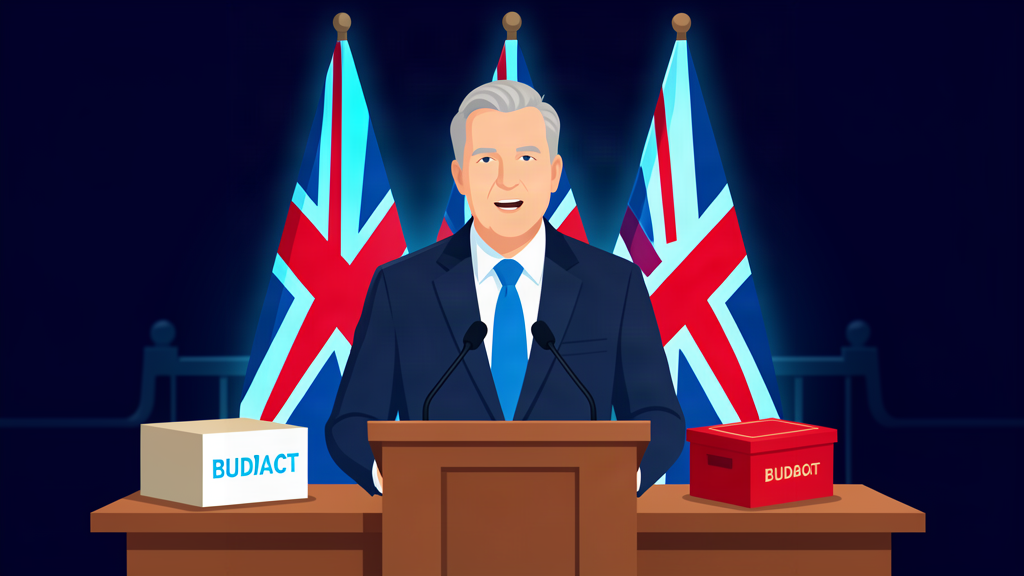
Prime Minister Andy Burnham has rebuffed claims that he is a “tax and spend socialist”, insisting he is prepared to make difficult decisions in next month’s Budget as he seeks to balance the country’s finances.
The challenge from the right
The Prime Minister’s remarks come after critics within the Conservative Party and parts of the business community argued that his approach amounts to a return to old-style Labour tax-and-spend economics. Burnham rejected the characterisation outright, framing his position as one of pragmatic economic management rather than ideological borrowing.
According to the BBC, Burnham said he is prepared to take “difficult decisions” at next month’s Budget. That language signals a government that recognises the scale of the fiscal challenge it faces — one in which rising costs, public service pressures, and the need to keep markets confident all pull in different directions.
The debate over tax and spend is not new in British politics, but it has acquired fresh urgency. The government is operating under tighter constraints than many of its supporters would like, with inflation still a live concern and public services under strain. Every spending pledge now has to be weighed against the risk of unsettling the economic picture.
What the government says it is doing
Burnham’s message is that difficult decisions will be made, not avoided. That represents a shift from the kind of politics that promises upfront spending funded by borrowing — a stance that markets and the Office for Budget Responsibility are likely to scrutinise closely. The Prime Minister’s insistence on readiness to take hard choices is aimed at projecting responsibility ahead of the Budget, when the detail of tax and spending plans will finally become clear.
The “tax and spend socialist” label is the kind of attack that opposition politicians reach for when they want to portray a Labour government as reverting to a caricature of its past. Whether it lands depends on what the Budget actually contains. If personal taxes rise or if spending growth is constrained, the charge may gain traction; if the package is measured and targeted, the government may be able to present it as pragmatic rather than profligate.

ADVERTISEMENT
For a Prime Minister navigating a hung parliament and a diverse party with competing demands, the rhetorical task is delicate. He has to hold together those who want more spending and those who want fiscal discipline, while also answering to the public who are themselves feeling the squeeze on household budgets.
Why it matters
Words before a Budget matter. They shape market expectations, business planning, and public confidence. If the Prime Minister is seen as unprepared to make hard calls, the reaction can be swift — in gilt markets, in business investment decisions, and in the political debate. Conversely, a credible signal of discipline can buy room for the government to make the case for the spending it does prioritise.
The accusation of “tax and spend socialism” also functions as a framing device in the broader ideological battle over the British economy. It goes to the heart of what kind of state the country wants — one that taxes and spends more actively, or one that leaves more room for the private sector. That debate is not settled, and the Budget will be an important data point in it.
Burnham’s defiance of the label is also a message to his own party. It tells the left wing that he will not simply spend his way out of trouble, and it tells the right that he will not abandon public services. Walking that line is the daily reality of governing in difficult times.
What happens next
The Budget is next month. Between now and then, the government will finalise its numbers, negotiate internally, and make sure any announcements are properly prepared. The Chancellor will set out the package, and it will be assessed against the test Burnham has laid down — whether it shows difficult decisions were made, or whether it opens him to the charge his critics are already levelling.
The immediate focus will be on what the OBR says about the fiscal outlook, how borrowing is projected to evolve, and which taxes or spending areas move. Those numbers will determine whether Burnham’s defence holds up, or whether the “tax and spend” attack finds fresh ammunition.


















We do not allow links of any sort in comments. No SPAM whatsoever. On topic comments only.