

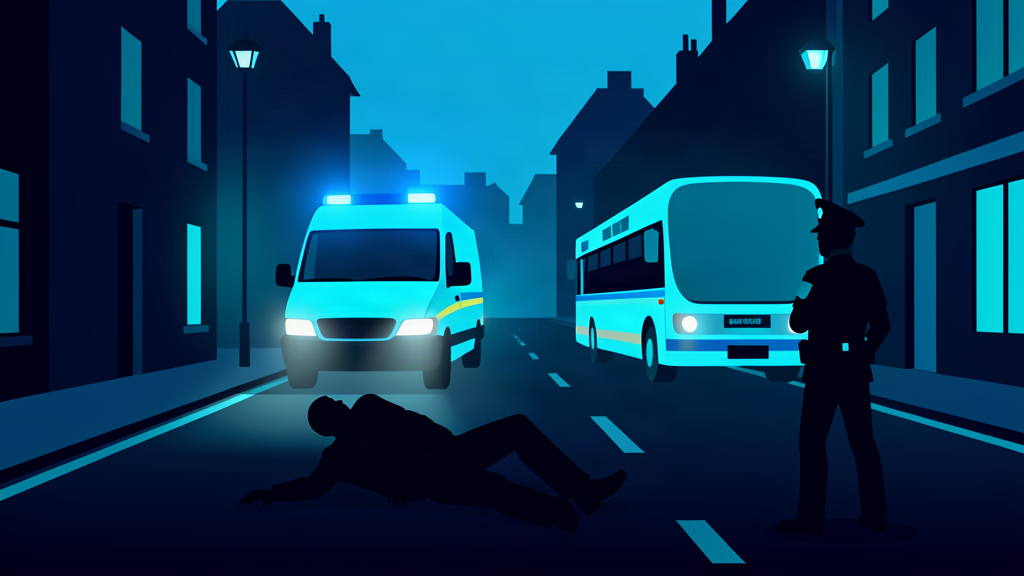
A senior city banker suspected of pushing a woman into the path of a moving bus in the so-called Putney pusher case has been found dead at his home in west London. The discovery has sent shockwaves through the capital and raised questions about the progress of a high-profile investigation that had been dominating headlines.
The Suspect Found Dead
Nicholas Brandram, 44, an HSBC director, was discovered unresponsive by emergency services at his home in Chiswick, west London, on a Tuesday evening. The circumstances of his death have not been publicly detailed in full, but the timing — coming as the investigation into the Putney pusher incident was intensifying — has only added to the sense of unease surrounding the case.
The Putney pusher case had already become one of the most closely watched criminal investigations in London. The initial incident, in which a woman was pushed into the path of a bus, had provoked widespread public shock and a major police hunt for the suspect. That the primary suspect was now dead, found at his own home rather than in custody, has introduced a new and unsettling twist.
A High-Profile Investigation
The case had drawn significant public attention not only because of the nature of the alleged offence but because of what it represented: a seemingly random, violent attack on a member of the public in broad daylight. Such incidents strike at a fundamental sense of safety in everyday life, and when a suspect is identified and then found dead before facing trial, the public is left with questions that a courtroom verdict would normally answer.
The Wider Context
London has seen a series of high-profile violent incidents in recent years that have tested public confidence and police resources. Each one carries its own specific circumstances, but together they contribute to a broader sense that the city’s streets can feel unpredictable. The Putney case had already fed into that conversation, and the death of the prime suspect will not calm it.
When a suspect dies before a case reaches trial, the justice process is abruptly truncated. Victims and their families are denied the finality of a public verdict, and the public is denied the explanatory function that a trial can serve in laying out what happened and why. That unresolved quality often lingers longer than the immediate shock of the death itself.

ADVERTISEMENT
Why It Matters
This story matters because it sits at the intersection of a violent street crime and the sudden, unexpected death of its main suspect. It raises questions that go beyond the specifics of one case: how investigations are handled when a suspect dies, what the implications are for any co-conspirators or wider context, and how the public processes an event that was already shocking and then became more so.
The involvement of a senior banker from one of the UK’s largest financial institutions also adds a social dimension that tends to attract attention beyond the immediate locality. When people in positions of privilege and security are implicated in violent street crime, it unsettles assumptions about who commits such acts and where the risk lies.
What Happens Next
The coroner will need to establish the cause of Brandram’s death, and the police investigation into the Putney incident will have to be reviewed in light of his death. Depending on what the coroner and the police find, there may be further questions about whether anyone else was involved or whether the case had wider implications that remain unresolved.
For the public, the next phase will be one of waiting for official confirmation of what happened — both to Brandram and to the original victim. Until then, the case will retain its unresolved, unsettled character, and that is likely to keep it in the public eye.
Source: The Guardian.
















We do not allow links of any sort in comments. No SPAM whatsoever. On topic comments only.