

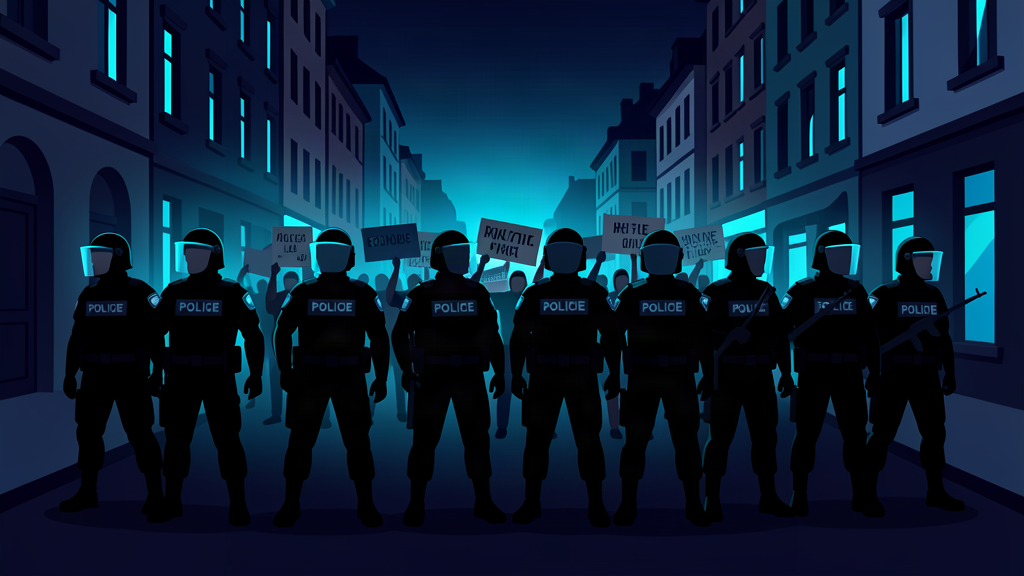
Dutch riot police have broken up a violent far-right protest in The Hague in which demonstrators reportedly made Hitler salutes, chanted antisemitic slogans, and clashed with police. The Netherlands’ justice minister has condemned the rally, describing it as an affront to democratic values and a threat to public safety.
The Protest
The rally took place in The Hague, the Dutch seat of government, where a far-right anti-immigration group had gathered to demonstrate. According to reports, the event quickly turned confrontational, with participants engaging in behaviour that the justice minister characterised as hate speech and incitement. Police moved in to disperse the crowd after warnings went unheeded, resulting in a chaotic scene as rioting officers pushed back against the demonstrators.
Video footage from the scene showed police in riot gear advancing through the square, with some protesters throwing objects and attempting to push through police lines. Several arrests were made, though the full number has not been disclosed. The incident has prompted an internal review of how the event was authorised and managed.
Government Response
The Dutch justice minister issued a sharp condemnation, singling out the Hitler salutes and antisemitic chanting as particularly egregious. In the Netherlands, displaying Nazi symbols and inciting hatred on the basis of religion or ethnicity are criminal offences, and prosecutors are expected to examine whether any of those involved crossed the threshold into criminal conduct.
The government’s response reflects broader concerns in the Netherlands and across Europe about the emboldening of far-right groups and the strain on police resources when confronting large, hostile gatherings. The event has reignited debate about the limits of free speech and assembly when demonstrations veer into hate speech and violence.
European Context
The Hague incident is the latest in a series of confrontations across Europe involving far-right and anti-immigration protesters. Similar rallies have been held in several European capitals over the past year, often drawing counter-demonstrators and requiring heavy police presence. Governments across the continent have been grappling with how to balance the right to protest with the need to prevent hate speech and violence.

ADVERTISEMENT
In the Netherlands, where immigration and integration have been prominent political issues, the incident is likely to fuel ongoing political debate. Far-right parties have made gains in several European elections in recent years, and the visibility of their street presence has become a flashpoint for wider questions about social cohesion.
Why It Matters
The breakdown of order at the The Hague rally raises questions about policing strategy, the thresholds for banning hate speech, and the broader climate of political polarisation in the Netherlands. When protests move from expression of opinion to open hostility towards minority groups, governments face difficult choices about where to draw the line.
The justice minister’s strong wording suggests the Dutch authorities will take a firm line. How that translates into prosecutions and whether the event leads to tighter regulation of far-right demonstrations remains to be seen.
What Happens Next
Police are expected to complete their investigation and pass evidence to prosecutors, who will decide whether to bring charges against those arrested. The government may also review the permit process for demonstrations, particularly where there are intelligence reports of potential hate speech or violence. Political parties across the spectrum are likely to weigh in, with the incident serving as a touchstone for competing views on immigration, free speech, and public order.
Source: Al Jazeera












We do not allow links of any sort in comments. No SPAM whatsoever. On topic comments only.