

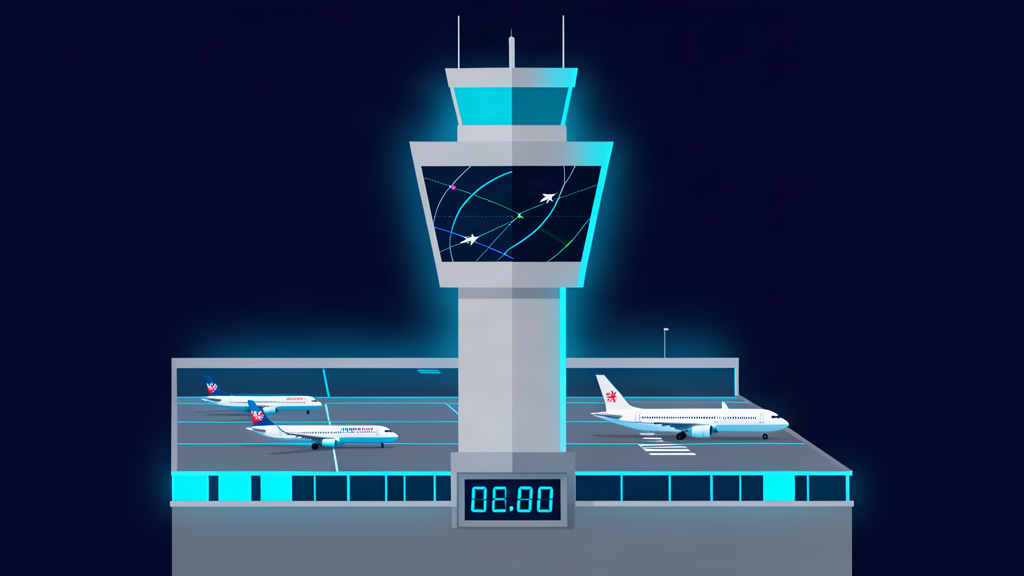
UK airlines have criticised the country’s air traffic control system after a second technical glitch caused further flight disruption, with Prime Minister Andy Burnham saying the latest problems cause even greater concern about the state of the nation’s airspace management. The repeated failures have reignited questions about the reliability of the systems that keep aircraft safely separated and moving through UK skies.
Second glitch in quick succession
The latest disruption follows an earlier fault that had already caused significant problems for airlines and passengers. The fact that a second glitch has now occurred — compounding the impact of the first — has drawn sharp criticism from airline operators, who rely on air traffic control services to move aircraft safely and efficiently through UK airspace.
Airlines have pointed out that repeated technical failures of this kind are not merely an operational inconvenience but a systemic problem that erodes confidence in the infrastructure on which aviation safety depends. For carriers operating busy schedules and managing complex networks of connections, even short-lived disruptions can cascade into delays, cancellations, and knock-on effects across their route maps.
The Prime Minister’s response
Prime Minister Andy Burnham said the further issues experienced on the day cause even greater concern about the UK’s air traffic control system and the organisation that runs it. His remarks reflect the political significance of the problem: air traffic control is a critical piece of national infrastructure, and repeated failures attract the attention of government as well as of the aviation industry.
Burnham’s intervention signals that the government is taking the matter seriously and is likely to be looking for answers about what went wrong, why it happened more than once, and what is being done to prevent a recurrence. The head of the organisation responsible for UK air traffic control is expected to face questioning from politicians and industry representatives in the days ahead.
Why it matters
This matters because air traffic control is the backbone of safe and efficient aviation. When the system falters, the consequences are immediate and visible: grounded flights, stranded passengers, cancelled holidays, missed business meetings, and disrupted supply chains. The UK is one of the world’s busiest aviation markets, and its airspace handles large volumes of international traffic as well as domestic flights.

ADVERTISEMENT
Repeated technical failures also raise broader questions about investment in critical infrastructure, the resilience of ageing systems, and the contingency arrangements in place when primary systems go down. These are not just technical questions — they are questions of public safety, economic performance, and national reputation. The aviation industry operates on thin margins and tight schedules, and it has little tolerance for unreliable infrastructure.
What happens next
In the immediate term, airlines and passengers will be working through the disruption caused by the latest glitch, with the knock-on effects likely to be felt for several days as schedules are restored and backlogged flights are worked through. The air traffic control organisation is expected to provide a technical explanation of what went wrong and what steps are being taken to prevent a repeat.
Politically, there will be pressure on the head of the organisation to account for the failures, and on the government to consider what oversight or intervention may be necessary. Longer term, the episode is likely to reignite debate about the resilience and modernisation of the UK’s air traffic control infrastructure, and about the contingency arrangements that exist when systems fail. Those conversations will continue until confidence in the system is restored.











We do not allow links of any sort in comments. No SPAM whatsoever. On topic comments only.