

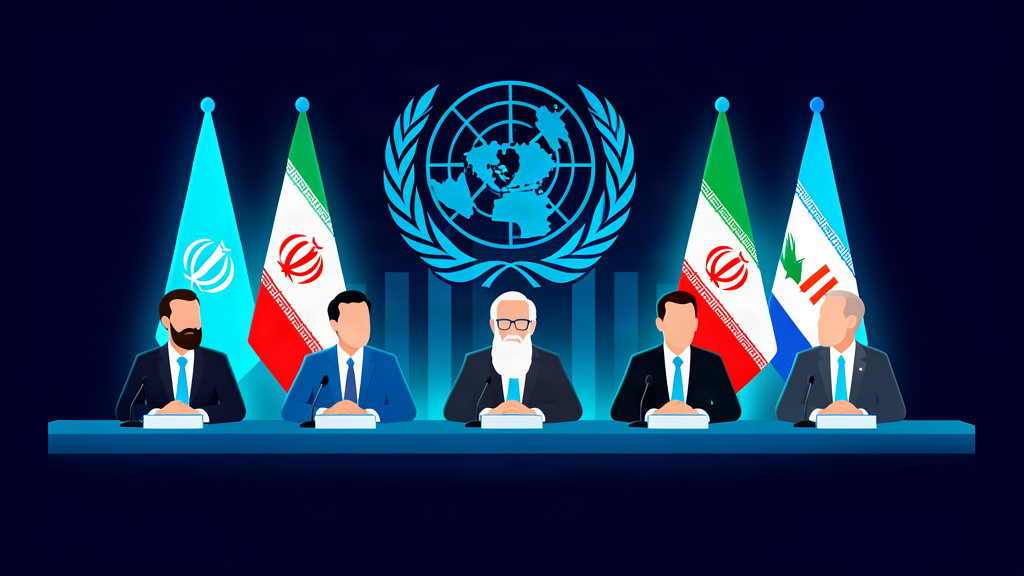
The G7 has called on Iran to end its support for the Houthi rebels in Yemen, issuing the warning ahead of this week’s United Nations General Assembly in New York. The allied group of industrialised nations also condemned the Houthis’ recent attacks on Saudi Arabia, saying the escalation in fighting in Yemen jeopardises global energy security.
A unified front from the G7
The statement brings together the United States, United Kingdom, France, Germany, Italy, Canada and Japan in a rare show of agreement on Yemen, where the Houthis have stepped up attacks on Saudi territory in recent weeks. The group said Iran must stop providing weapons and military support to the rebels, without which the Houthis would struggle to sustain their campaign.
British Prime Minister Andy Burnham has been at the forefront of the diplomatic response, having already agreed to provide what he described as defensive military support to Saudi Arabia, including air-to-air refuelling for Saudi jets. The G7 statement reinforces that position and widens it to include the broader region.
Why the Houthis matter to global energy
Yemen sits on a critical stretch of the Red Sea and the Bab el-Mandeb strait, through which a significant proportion of the world’s seaborne oil and gas passes. When the Houthis attack Saudi infrastructure or threaten shipping lanes, the effect ripples through global energy markets almost immediately. The G7 explicitly linked the recent escalation to risks to global energy security, a concern that carries weight in the UK given the country’s ongoing dependence on imported energy.
The Houthis’ claim of responsibility for the attack on Riyadh airport, which sent thick smoke over the Saudi capital, was one of the triggers for the heightened international response. Saudi Arabia has been leading a coalition campaign against the rebels for years, and the latest flare-up has raised fears of a wider regional conflict.
The UN General Assembly stage
The timing of the G7 intervention is deliberate. The UN General Assembly this week will see world leaders convene in New York, including Burnham and US President Donald Trump. Both men are expected to address the Yemen question in their speeches, and the G7 statement provides a coordinated platform from which to press Iran on its role. Burnham has already said he expects to find common ground with Trump on a range of issues during their first meeting, and Yemen could be one area where their positions align.

ADVERTISEMENT
The UN gathering also offers an opportunity to bring non-G7 nations into the conversation, particularly countries in the region that have a direct stake in the outcome. A broader coalition would increase pressure on Iran and could open the door to a negotiated settlement that has eluded diplomats for years.
Why it matters
For the UK, the Yemen crisis is not just a foreign policy question. The country’s energy bills, its security partnerships in the Middle East and its standing in the G7 all depend on a stable outcome. Burnham’s decision to support Saudi Arabia with refuelling — framed explicitly as defensive — signals that the UK is prepared to take a more active role than it has in recent years, when Yemen often slipped down the agenda.
The G7’s unified statement also matters because it deprives Iran of the ability to play western powers against each other. A fragmented response would give Tehran room to continue arming the Houthis while denying any involvement. A united front closes that door.
What happens next
The immediate next step is the UN General Assembly itself, where Burnham and other leaders will have the chance to press their case directly. The UK government will also be watching for any further Houthi attacks on Saudi territory, which could trigger a more forceful response.
Beyond this week, diplomats will be looking for signs that Iran is willing to rein in the Houthis or face additional sanctions. The G7 has not announced new sanctions in this statement, but the warning is clear: continued support for the rebels will have consequences. Whether Tehran chooses to de-escalate or double down will shape the trajectory of the conflict in the months ahead.
Source: BBC News











We do not allow links of any sort in comments. No SPAM whatsoever. On topic comments only.