


Poland has blamed sabotage for a fire that damaged a Starlink satellite ground station, with the government revealing the facility helps provide internet coverage to neighbouring Ukraine. The incident has sharpened concerns across NATO capitals that Russian hybrid warfare is increasingly targeting the infrastructure backbone of European communications and defence logistics.
A station with a wartime role
The Starlink station sits in Poland and is part of a network of ground infrastructure that connects Elon Musk’s satellite internet constellation to the terrestrial internet. According to the Polish government, the site is used in part to beam connectivity across the border into Ukraine, where Starlink has become a critical communications layer for everything from military logistics to civilian emergency services.
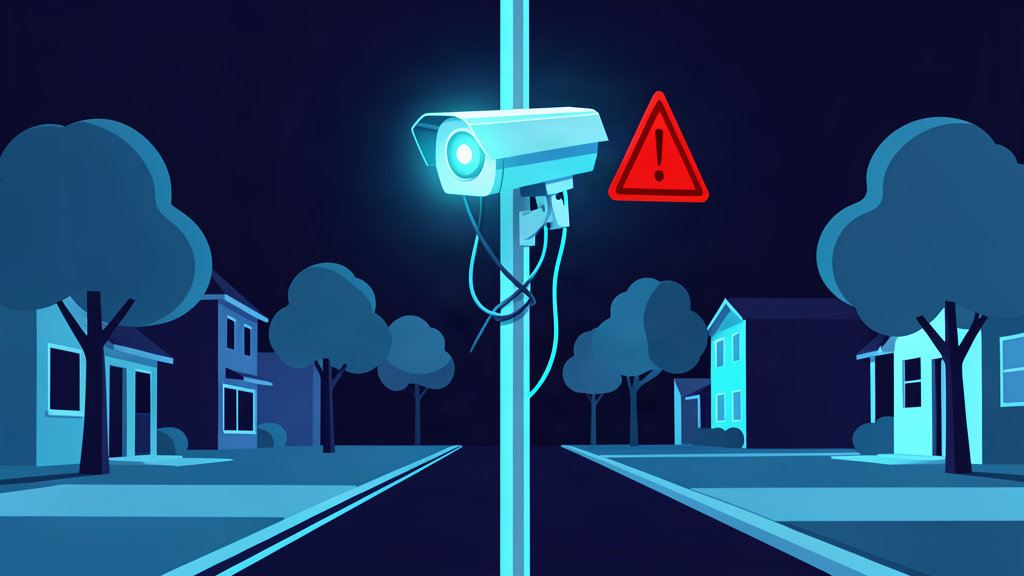
A fire at such a facility is not merely a technical fault. Ground stations are choke points: if one goes dark, the satellites above it cannot route traffic to and from the ground, and service degrades across the coverage area that depends on it. That is why a deliberate attack on this kind of infrastructure carries a different weight from an ordinary industrial accident.
Why Poland called it sabotage
The characterisation matters. Poland’s government did not stop at calling the fire suspicious; it used the word sabotage, a deliberate choice of language that signals a belief the event was intentional rather than accidental. That framing immediately raises the question of who might have an interest in degrading Starlink coverage reaching Ukraine, and in sending a signal that critical infrastructure on NATO’s eastern flank is vulnerable.
Denmark’s simultaneous warning about a rising Russian threat adds context. When a second NATO ally publicly elevates its assessment of Russian activity at roughly the same moment, the picture that emerges is not of an isolated local incident but of a broader pattern that several governments are tracking.
Why it matters
This sits at the intersection of several pressing concerns. Starlink has become woven into the Ukrainian war effort; ground infrastructure that supports it is, by extension, part of the logistical chain sustaining a country under attack. A successful sabotage campaign against such nodes would not require striking satellites in orbit at all — it could degrade service by hitting the terrestrial endpoints that the system depends on.

ADVERTISEMENT
There is also a deterrence message here. Hybrid actions that fall below the threshold of a direct military strike — arson, sabotage, cyber intrusion — are difficult to attribute definitively and difficult to answer with conventional force. That ambiguity is often the point. If the assumption is that a fire can be plausibly dismissed as an accident, the attacker gains a measure of cover. Poland’s public use of the sabotage label is, in part, an effort to close that ambiguity off.
For the UK and other European governments, the episode is a reminder that the war in Ukraine has an infrastructure dimension well beyond the front line. Communications, energy, transport, and now satellite ground stations are all potential targets, and the countries hosting that infrastructure are themselves in the frame.
What happens next
Investigations into the cause of the fire will now run in parallel: a domestic criminal or security inquiry inside Poland, and a wider NATO-level look at whether the incident fits a pattern of coordinated hybrid activity. If sabotage is confirmed rather than merely alleged, the question of response — diplomatic, sanctions-based, or otherwise — will follow.
Starlink and the operators of the ground station will also face questions about physical security at their sites. Ground stations are, by their nature, fixed and geographically known. If they are to remain part of critical communications infrastructure in a contested environment, their protection may need to rise to a level closer to that of other sensitive sites.
For Ukraine, the immediate concern will be whether the damage to the station causes any sustained loss of coverage, and whether alternative ground paths can absorb the traffic. The longer-term concern, shared across the alliance, is whether this was a one-off or a foretaste of more systematic targeting.



















We do not allow links of any sort in comments. No SPAM whatsoever. On topic comments only.