

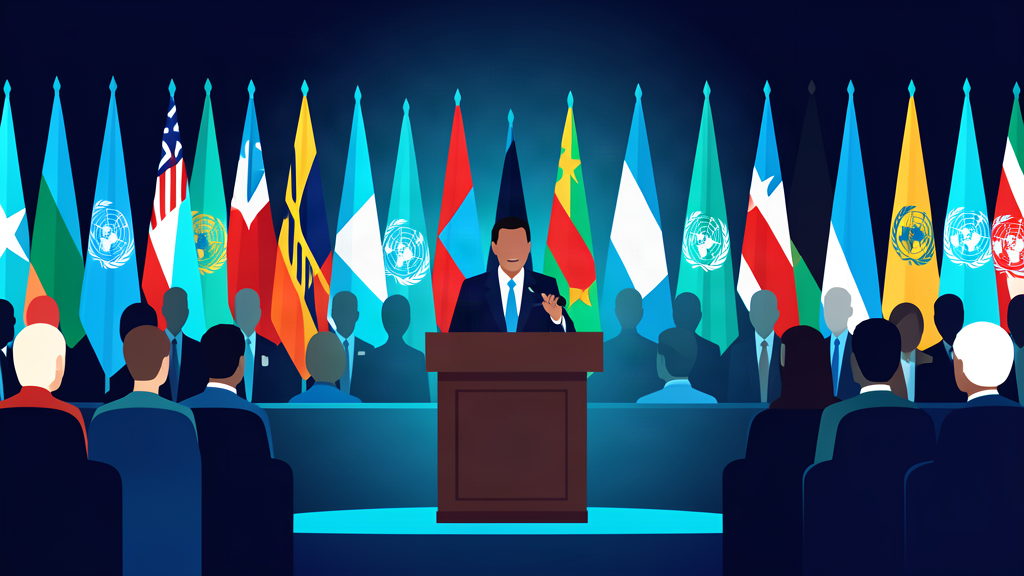
Nepal’s Prime Minister Balendra Shah has told the United Nations General Assembly that the global order is broken when it comes to tackling the climate crisis, delivering a speech that drew applause from the assembly. His remarks place Nepal among the developing world voices insisting that the international response to climate change has failed to match the scale of the threat.
A stark message from Kathmandu
Speaking at the UN podium, Shah argued that the structures governing international climate action are not working as they should. His assertion that the global order is broken reflects a frustration shared by many smaller and climate-vulnerable nations, which have repeatedly called for richer countries to provide more funding, cut emissions faster, and support adaptation in places most exposed to extreme weather, flooding, and rising temperatures.
Nepal is particularly exposed to climate impacts. The country’s Himalayan glaciers are retreating, affecting water supplies for millions downstream, and the steep terrain makes it vulnerable to landslides and flooding. For a country of Nepal’s size and resources, the climate crisis is not a distant or abstract issue but a present and growing threat to lives, infrastructure, and the economy.
The wider climate debate
The speech fits into a long-running debate about climate justice — the idea that those who have contributed least to greenhouse gas emissions often bear the heaviest consequences. Developing country leaders have argued for years that wealthier nations, which built their economies on fossil fuels, should shoulder a greater share of the costs of cutting emissions and helping poorer countries adapt. That argument has shaped negotiations at successive UN climate conferences, with mixed results.
The current global framework for climate action rests on nationally determined contributions — each country’s own pledge to reduce emissions — alongside promises of financial support from richer states. Progress toward those promises has been uneven, and the gap between what scientists say is needed and what governments have pledged remains significant.
Why it matters
Shah’s intervention at the UN is a reminder that the climate crisis is not only a technical or environmental question but a political one, shaped by inequality, history, and competing national interests. For countries like Nepal, the credibility of the international response depends on whether promises are kept and whether the most vulnerable are genuinely supported. For the wider global community, the speech underscores the urgency of finding a more effective and fairer approach to a problem that does not respect borders.

ADVERTISEMENT
What happens next
The next milestones in the international climate process will come at forthcoming UN climate conferences, where countries are expected to update their targets and where funding questions will again be on the table. Whether Shah’s diagnosis of a broken global order prompts renewed pressure for reform will depend on the political momentum building around the issue — and on whether the governments with the most resources are prepared to respond.

















We do not allow links of any sort in comments. No SPAM whatsoever. On topic comments only.