

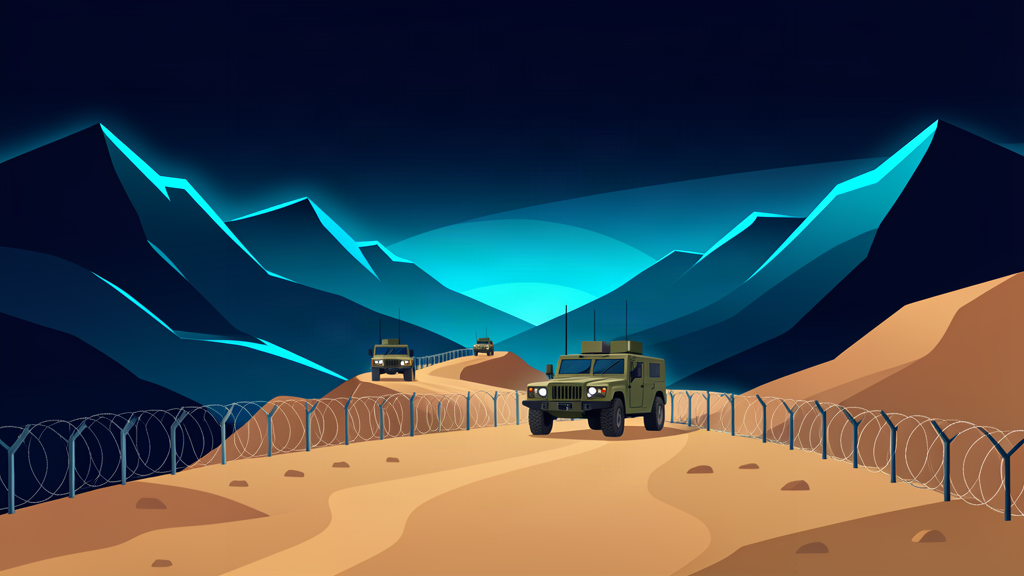
Pakistani security forces have reported ongoing cross-border fire with fighters from the Afghan Taliban, in the latest escalation along the volatile frontier between the two countries. The exchanges of fire come after a period of mounting tension between Islamabad and Kabul, with Pakistan accusing Afghan militants of operating from within Afghan territory and launching attacks into Pakistan’s northwestern provinces.
The Pakistani military said its forces engaged Taliban fighters who had crossed the border, resulting in casualties on the Afghan side. The claim could not be independently verified, and the Afghan Taliban have not publicly commented on the specific incident. Border regions between Pakistan and Afghanistan have long been flashpoints for violence, with porous boundaries allowing militant groups to move between the two countries and complicating efforts to secure either side of the line.
The conflict between Pakistan and the Afghan Taliban has deep roots. Pakistan’s military has repeatedly stated that it faces threats from groups based in Afghanistan, and has carried out operations along the border in response. The Taliban, who returned to power in Afghanistan in 2021, have denied facilitating attacks into Pakistan, though they have been accused by Pakistani officials of providing support to the Pakistani Taliban, a separate militant group that operates against the Pakistani state. The result is a border that is both a physical and a political fault line.
Why it matters
The border between Pakistan and Afghanistan is one of the most dangerous and unstable frontiers in the region. Escalation here has implications not just for the two countries but for the broader security environment in South and Central Asia. For the UK, which retains security and development interests in both countries, instability on the border raises concerns about refugee flows, regional terrorism, and the safety of British personnel and interests in the area. The incident also underscores the fragility of the Taliban’s control in Afghanistan, where internal and external conflicts continue to challenge the regime almost five years after its return to power.
What happens next
Border commanders on both sides are likely to remain on high alert, with the risk of further exchanges. Diplomatic channels between Islamabad and Kabul may be tested as both sides seek to manage the escalation and avoid a wider clash. The international community, including UN agencies, may urge restraint and call for dialogue to prevent the situation from spiralling. Pakistan’s military is expected to maintain its posture along the frontier, and the Afghan authorities will face pressure to rein in the groups they are accused of hosting.
Source: Al Jazeera.



















We do not allow links of any sort in comments. No SPAM whatsoever. On topic comments only.