

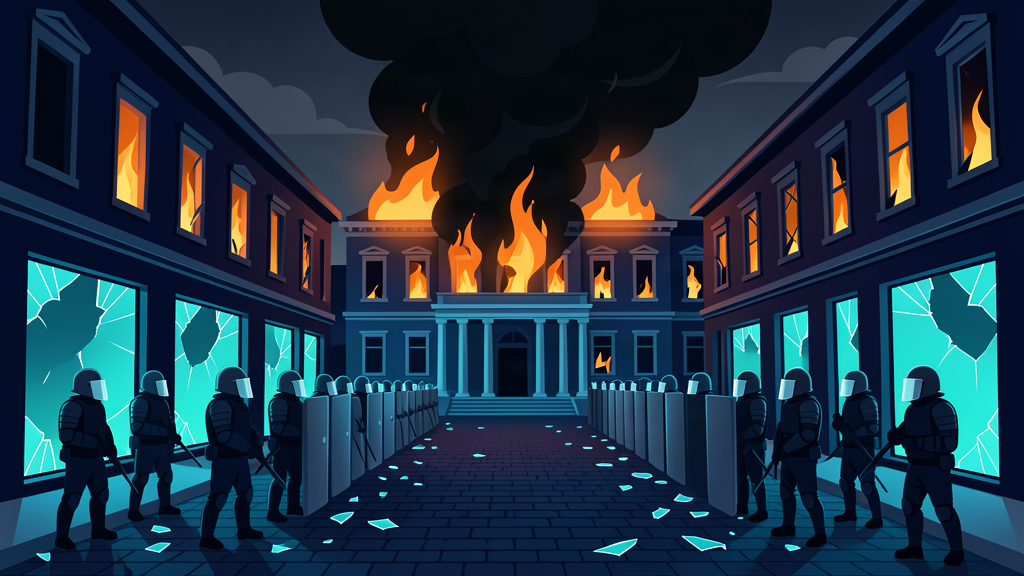
Protests in Albania have spiralled into violence, with government buildings set ablaze and clashes between demonstrators and riot police, as opposition groups demand Prime Minister Edi Rama’s resignation in what analysts describe as the worst unrest in the country since the 1990s.
Clashes in Tirana
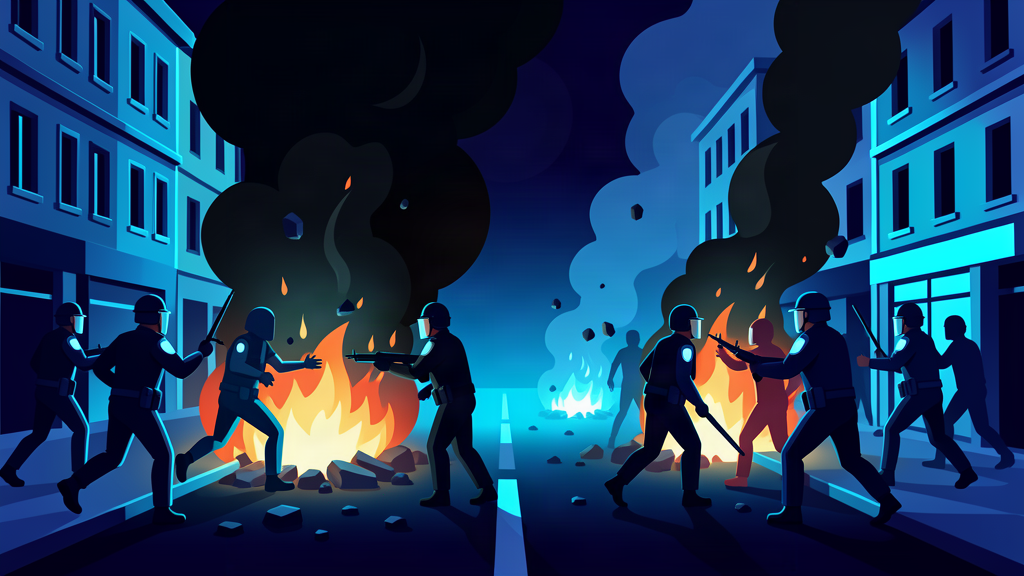
Demonstrators in central Tirana set fire to the headquarters of the governing Socialist Party and several bank branches, smashing shop windows and hurling stones at police lines. Riot police responded with water cannon and tear gas, and at least 30 officers and dozens of protesters were treated for injuries.
The unrest, now in its third day, follows the arrest of a prominent opposition MP on corruption charges last week. Opposition leaders say the charges are politically motivated and have called for fresh elections, while the government maintains that the rule of law is being upheld.
International reaction
European Union foreign policy chief Josep Borrell called for calm and dialogue, urging all parties to de-escalate. Prime Minister Andy Burnham’s office said the UK was monitoring the situation closely, noting Britain’s long-standing relationship with Albania through NATO and the Western Balkans partnership.
Downing Street confirmed that Mr Burnham had spoken with his Albanian counterpart by telephone, reaffirming the UK’s commitment to stability in the region. The Foreign Office issued an updated travel advisory for Tirana, though commercial flights continue to operate.
Root causes
The protests reflect a combination of economic frustration, political polarisation, and concerns over corruption that have simmered in Albania for years. Youth unemployment stands at over 30%, and several EU-funded infrastructure projects have stalled, fuelling public anger.

ADVERTISEMENT
For the UK, the crisis in Albania — a NATO ally and candidate for EU membership — carries strategic weight. The country serves as a transit point for migration routes into Europe, and political instability there can ripple across the Western Balkans.
Why it matters
If the unrest continues unchecked, it risks undermining Albania’s path towards EU accession and destabilising a region that the UK has worked to keep firmly anchored in the Western alliance system. The fires in Tirana’s streets are a reminder that democratic institutions, once taken for granted, remain fragile in several Balkan states. For British policymakers, the crisis presents a test of diplomatic engagement without military involvement.
What happens next
Opposition leaders have announced plans for a fourth day of demonstrations tomorrow, while the government has pledged to hold an emergency cabinet meeting. The Albanian parliament is expected to convene a special session by the end of the week. International mediators from the EU and the US are understood to be preparing a joint statement calling for an immediate return to dialogue. Prime Minister Burnham’s team has said further UK statements may follow if the situation deteriorates.











We do not allow links of any sort in comments. No SPAM whatsoever. On topic comments only.