


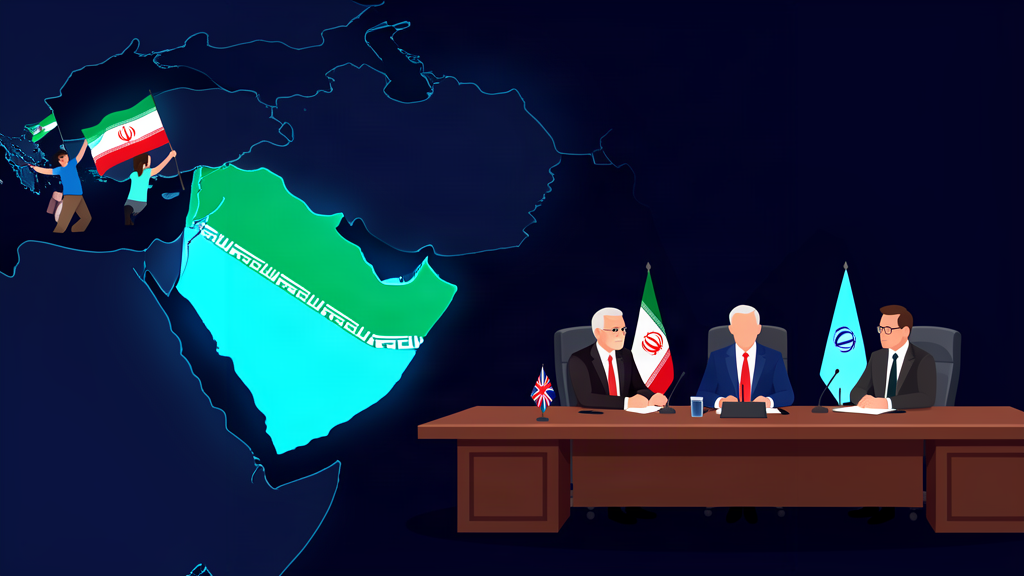
Israeli Prime Minister Benjamin Netanyahu claims he and U.S. President Donald Trump discussed removing Iran’s regime as essential to preventing Tehran from rebuilding its nuclear programme, Al Jazeera reports. This assertion, made during a media interview, adds to mounting pressure on London to clarify Britain’s own position in an escalating confrontation with Iran. UK Prime Minister Andy Burnham has not directly responded to the specific claim, but Downing Street reiterated the UK’s commitment to the diplomatic track on Iran’s nuclear programme.
The claim
“I told President Trump that if we want to prevent Iran from reconstituting its nuclear weapons programme, we must consider eliminating the regime in Tehran,” Netanyahu was reported as saying. Al Jazeera noted that the comments came amid heightened rhetoric following the UN General Assembly session, where both leaders signalled a hardline stance toward Iran’s regional activities. The Israeli leader has repeatedly framed Iran as an existential threat, citing its support for proxy groups across the Middle East. British officials have watched these statements with concern, as any shift toward military action would require rapid coordination with Washington given the special relationship between the two nations.
UK diplomatic challenge
Prime Minister Burnham finds himself navigating between Israel’s stated security concerns and the UK’s own strategic calculations. While London maintains a close defence partnership with Israel, British officials have repeatedly emphasised that military action should remain a last resort. The Foreign Office is monitoring the situation closely as diplomatic channels assess whether Netanyahu’s comments signal an imminent shift in U.S. policy. The Cabinet Office’s latest intelligence update warns that escalation risks could disrupt commercial shipping through the Persian Gulf, a route that carries a portion of the UK’s energy imports.
Why it matters
British households should understand that the UK’s stance on Iran directly affects national security priorities at home. Iranian cyber operations targeting critical infrastructure have increased in frequency, and the government has warned energy companies to raise their defences against potential reprisals. Any escalation in the region also threatens commercial shipping through the Persian Gulf, which carries a portion of the UK’s oil imports. Defence planners are reviewing response capabilities as diplomatic channels remain under strain.
What happens next
In coming weeks, European allies are expected to coordinate a unified response to Iran’s nuclear programme at a series of diplomatic meetings. The UN Security Council will review the latest IAEA report on Iran’s compliance, while British ministers face questions in Parliament about the UK’s preparedness for potential escalation. Prime Minister Burnham is scheduled to host a quarterly National Security Council meeting where Iran’s regional ambitions and the threat of military action will be assessed. For now, the UK’s strategy remains anchored in diplomacy, even as the rhetoric from Tel Aviv and Washington grows more pointed.

















We do not allow links of any sort in comments. No SPAM whatsoever. On topic comments only.