

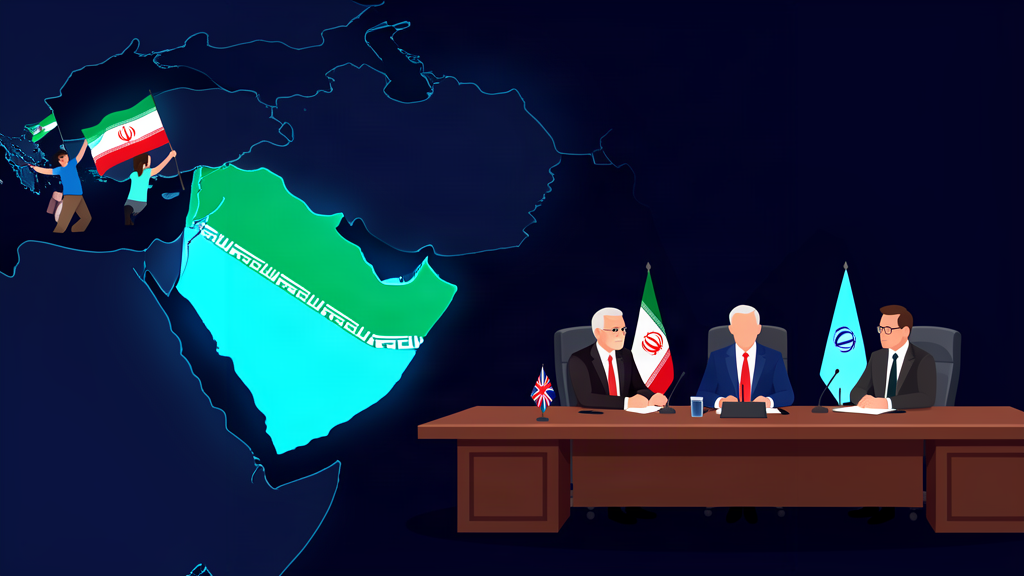
A foreign policy analyst has warned that a potential war on Iran could strengthen the very regime that Western governments seek to remove, as external attacks historically unite Iranians around their government despite deep domestic grievances. The warning comes as global tensions simmer over Tehran’s nuclear programme, with UK Prime Minister Andy Burnham’s government weighing its position in an escalating confrontation.
The nationalism argument
“The war on Iran could strengthen Iranian nationalism rather than trigger regime change,” Negar Mortazavi told Al Jazeera at the Global Security Forum. “External military pressure tends to rally domestic support behind the current leadership, as Iranians close ranks against a perceived foreign threat.” This dynamic has played out repeatedly across the region — from the 2006 Lebanon conflict to the 2019 Gulf tensions — where attempted regime change through military means produced the opposite of its intended effect. Iranian officials have long framed Western intervention as evidence of hostility toward the Islamic Republic, a narrative that resonates with nationalist sentiment across the political spectrum.
UK strategic calculations
Prime Minister Burnham has so far stopped short of endorsing military action, instead supporting diplomatic pressure through the P5+1 framework and targeted sanctions. His government’s approach reflects concern not only about Iranian behaviour but also about the broader regional fallout from any escalation. British security services monitor Iranian cyber operations and proxy networks that operate across the Middle East, including through allied Shia militias in Iraq and Hezbollah in Lebanon. The Cabinet Office’s latest intelligence assessment notes that military action risks uniting Iranian factions that are otherwise divided over economic policy and social reforms.
Why it matters
British households and businesses face direct consequences if tensions with Iran escalate into conflict. Energy markets have already shown volatility during previous confrontations, and any disruption to shipping routes through the Strait of Hormuz could push up fuel and food prices. The UK’s Iranian diaspora community worries about family members trapped in the country, while defence contractors see stock prices fluctuate with each new development. Perhaps more fundamentally, the debate reveals a split within British foreign policy circles about whether pressure strengthens or weakens authoritarian regimes — a question that has shaped UK policy since the 2015 nuclear deal negotiations.
What happens next
Iran is expected to respond to new European sanctions with reciprocal measures within days, potentially targeting British financial institutions or energy sector interests. The UN Security Council meets next week to review the latest IAEA report on Iran’s nuclear programme, where the UK will seek to coordinate a unified Western response. Domestically, Prime Minister Burnham faces pressure from both those advocating regime change and those urging renewed diplomacy. The coming fortnight will be critical in determining whether the confrontation leads to negotiations or military action.













We do not allow links of any sort in comments. No SPAM whatsoever. On topic comments only.