

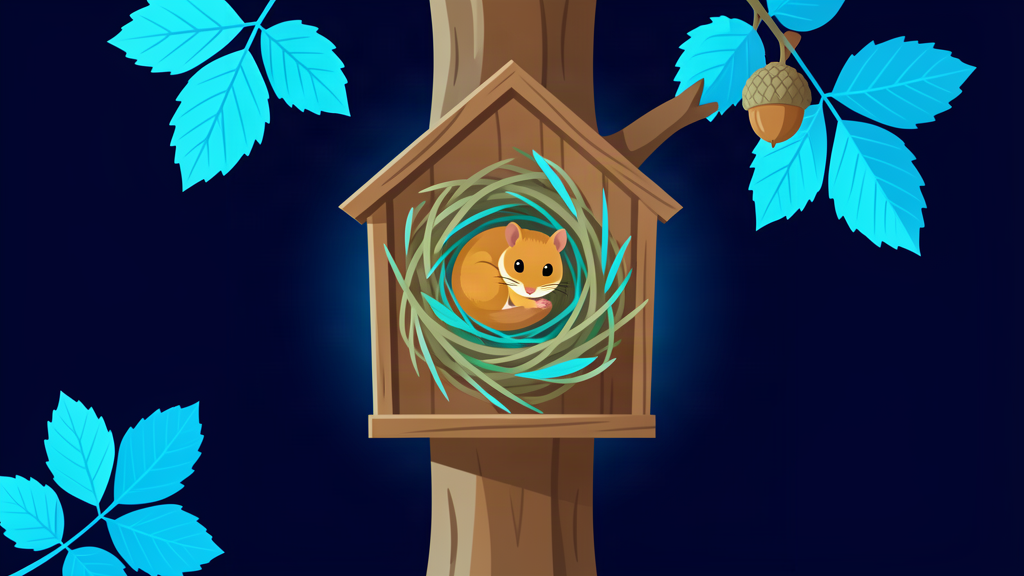
Britain’s hazel dormouse, one of the country’s smallest and most elusive mammals, may be showing signs of a recovery after decades of decline, according to new figures reported by the BBC. The data suggest that warmer summers in recent years could be helping the species to survive and breed more successfully, offering a rare piece of good news for a mammal that has long been regarded as under pressure in the British countryside.
The hazel dormouse is best known for its golden-brown fur, large dark eyes and habit of curling up in a ball to sleep for long periods. It spends much of the year building intricate woven nests from grasses, honeysuckle bark and leaves, often high in hedgerows, woodland edges and scrub. Because it is largely nocturnal and spends the winter in hibernation, it is rarely seen and easy to overlook, even in areas where it survives.
Signs of a revival after long decline
For many years, the dormouse was treated as a species in deep trouble. Habitat loss, changes to woodland management, and the fragmentation of hedgerows and coppiced woods have all been widely linked to its decline. A mammal that depends on connected corridors of shrubs and trees, and on a varied seasonal food supply including hazelnuts, berries, flowers and insects, is particularly vulnerable when those connections are broken.
The new figures, as reported by the BBC, point in a more encouraging direction. Warmer summers appear to be boosting survival, with better conditions for breeding and for finding food during the critical months when young are being raised. For a species that must gain enough weight to get through a long winter hibernation, a productive summer can make the difference between a population holding on and one continuing to fall.
Conservationists will be keen to see whether the improvement is sustained and how widespread it is. A short-term lift in one area does not, on its own, amount to a national recovery, and the dormouse remains far from secure. But if warmer conditions are genuinely helping across multiple sites, the findings would suggest that the species can respond quickly when the pressures on it ease.
Why habitat still matters
Climate alone does not explain the dormouse’s fortunes. The quality and connection of habitat remain central to its future. Hazel dormice need more than isolated patches of woodland; they need networks of hedgerows, scrub and woodland edge linking one feeding and nesting area to another. Without those links, even a favourable summer cannot rescue a population cut off from mates, food sources or shelter.

ADVERTISEMENT
That is why practical work on the ground continues to matter so much. Maintaining and planting hedgerows, managing coppice and scrub in rotation, and providing nest boxes in suitable sites are all measures that can help dormice, as well as many other woodland and farmland species. The recovery in the figures should be read as a reason for continued effort rather than a signal to relax it.
Why it matters
The dormouse is a useful barometer of the health of Britain’s hedgerows and woodlands. It is sensitive to the structure of the landscape, the timing of food supplies and the availability of safe places to nest and hibernate. If it is recovering, that may indicate that wider habitat work is starting to pay off, and that conditions in parts of the countryside are moving in the right direction. The story also matters beyond one species: hedgerows support birds, insects, fungi and plants in large numbers, and a mammal that depends on them so completely is a potent symbol of what those habitats can still sustain.
What happens next
The next stage will be to see whether further monitoring confirms the trend and shows whether it is being replicated across the dormouse’s remaining range. Conservation groups will be watching survival and breeding figures over coming seasons, and will be looking in particular for evidence that warmer summers are combining with good habitat management rather than masking its absence. For now, the figures reported by the BBC offer a welcome reason for cautious optimism about one of Britain’s most charming and least visible mammals.





















We do not allow links of any sort in comments. No SPAM whatsoever. On topic comments only.