

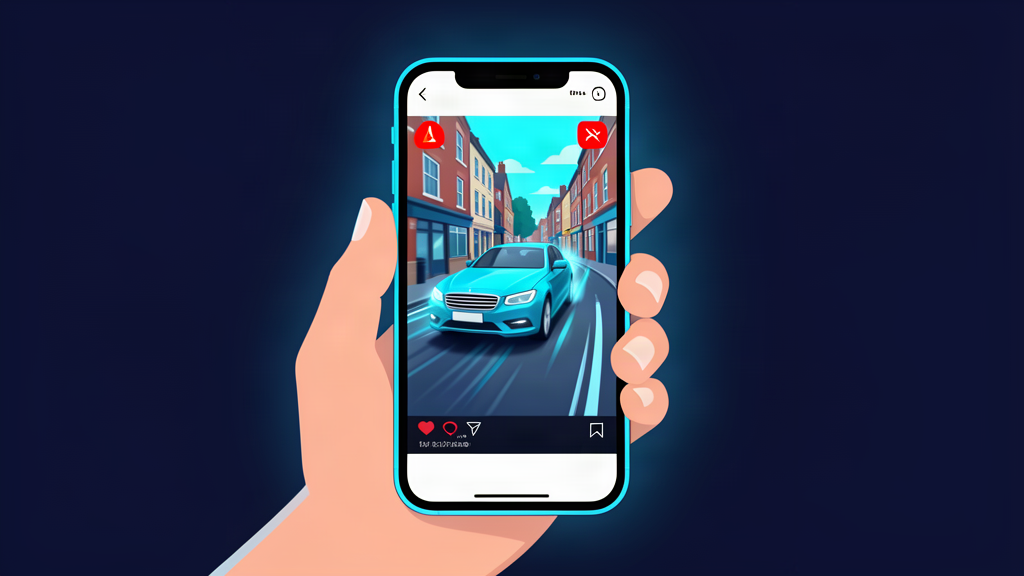
The UK government has written to TikTok, Instagram and other major social media platforms demanding the swift removal of videos that glorify dangerous driving, after a series of deaths linked to online “car culture” content prompted ministers to intervene. The move, first reported by the Associated Press, marks one of the most direct attempts yet by Britain to pressure tech firms over clips that officials argue normalise reckless behaviour on public roads.
What the government is asking for
In letters to the platforms, ministers have asked for clips that celebrate speeding, street racing and anti-social driving to be taken down quickly, and for stronger recommendation systems to stop such material being pushed to young users. The government is understood to believe that short-video apps have become a shop window for dangerous stunts, with footage of modified cars and convoys gathering in retail parks and industrial estates attracting millions of views. Officials want the companies to treat the glorification of illegal driving as a clear breach of their own community guidelines, rather than harmless entertainment, and to act before content goes viral rather than after the fact.
The backdrop to the demand
Britain already has some of the toughest road-safety laws in Europe, but enforcement has struggled to keep pace with footage that is filmed, edited and shared within hours. Investigators and bereaved families have repeatedly pointed to the role of social media in encouraging risky driving, and campaigners have long argued that the platforms profit from engagement with clips they know are dangerous. By appealing directly to the companies rather than waiting for individual prosecutions, ministers are signalling that they regard the apps themselves as part of the problem, not merely a bystander to it.
Why it matters
For parents and road-safety campaigners, the step is a long-overdue acknowledgement that the phone in a teenager’s pocket can shape what happens at 70mph on a bypass. Road deaths remain a live political issue in the UK, and any measure that appears to put public safety ahead of platform profits tends to draw cross-party support. The intervention also tests the limits of Britain’s online-safety framework: whether existing duties on firms to protect users from harm can be stretched to cover content that glorifies illegal acts behind the wheel, rather than only the most extreme material.
What happens next
The platforms are expected to respond to the government in the coming weeks, and further meetings between ministers and the companies are likely. If voluntary action is judged insufficient, the government could bring the issue more firmly under the existing online-safety regime, which already places legal duties on firms to protect users from harmful material. Campaigners will be watching whether removal is swift and consistent, or whether clips simply resurface under new accounts. Either way, the letter sets a clear expectation that Britain will hold the platforms accountable when their content is linked to deaths on the road.
Source: Original report. Rewrite for Your News Website.
















Such sad news. My thoughts are with her family and loved ones.