

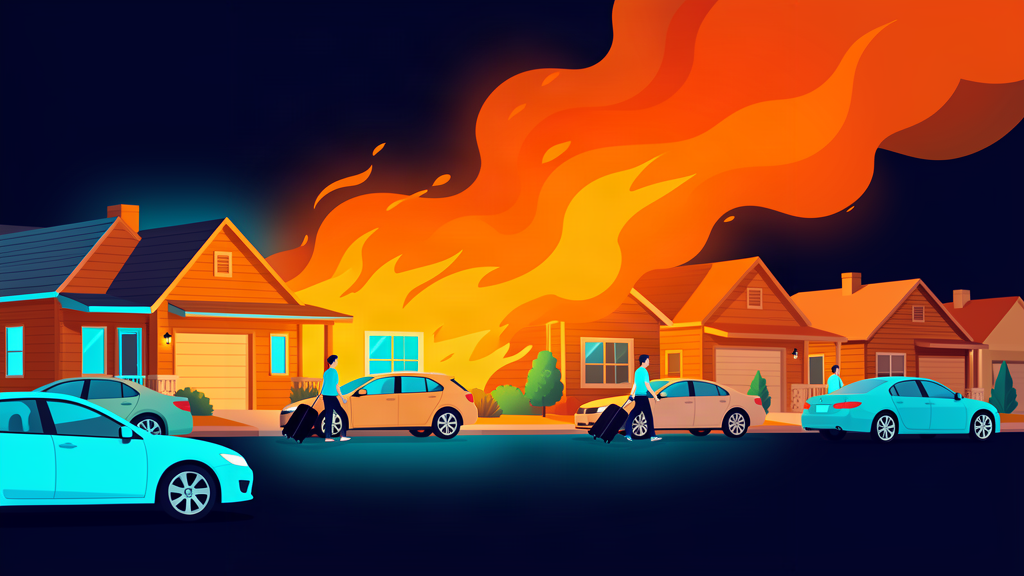
Families flee as flames advance
Thousands of residents are evacuating their homes in Nevada as a fast-moving wildfire spreads through communities, with one local describing the experience as being “scared to death”. The BBC reports that the blaze has forced families from their properties and placed emergency crews on high alert across the affected area. Thick smoke and shifting winds have made the path of the fire difficult to predict, complicating the work of those tasked with protecting homes.
A growing emergency
Fire crews are battling the outbreak on multiple fronts, with aircraft and ground teams deployed to slow its advance. Evacuation orders have pushed residents into temporary shelters, and authorities are urging people in nearby zones to prepare to leave at short notice. The exact size of the burned area and the number of structures threatened have not been fully confirmed, but the scale of the displacement is already significant. Dry conditions and high temperatures have fuelled the spread, hallmarks of the fire seasons that have grown more severe across the American west.
The climate backdrop
Wildfires of this kind are becoming a familiar feature of summer in the United States, and scientists have long warned that hotter, drier conditions lengthen the window in which such fires can take hold. For British readers, the scenes echo the growing frequency of extreme weather at home, from record heat to flash flooding, and the same underlying trend of a warming climate. The UK government’s own advisers have repeatedly stressed that adapting to wildfire and flood risk is no longer a theoretical exercise.
Why it matters
Beyond the immediate human cost, the Nevada fire illustrates how extreme wildfire is reshaping where and how people can live, and the strain it places on emergency services. It is a vivid example of the kind of disaster that crosses borders in its causes and consequences, feeding into global insurance costs, air quality and migration patterns. For the UK, it is a prompt to consider domestic preparedness as warmer summers make grassland and moorland fires more likely.
What happens next
Firefighters are expected to remain engaged for days as they seek to establish containment lines, and further evacuations are possible if winds shift. Officials will turn to assessing damage and supporting displaced residents once the immediate threat eases. In the longer term, the episode will add to the debate in the United States over land management, building codes and the resources devoted to firefighting in an era of intensifying fire seasons.
Source: Original report. Rewrite for Your News Website.




















Such sad news. My thoughts are with her family and loved ones.