

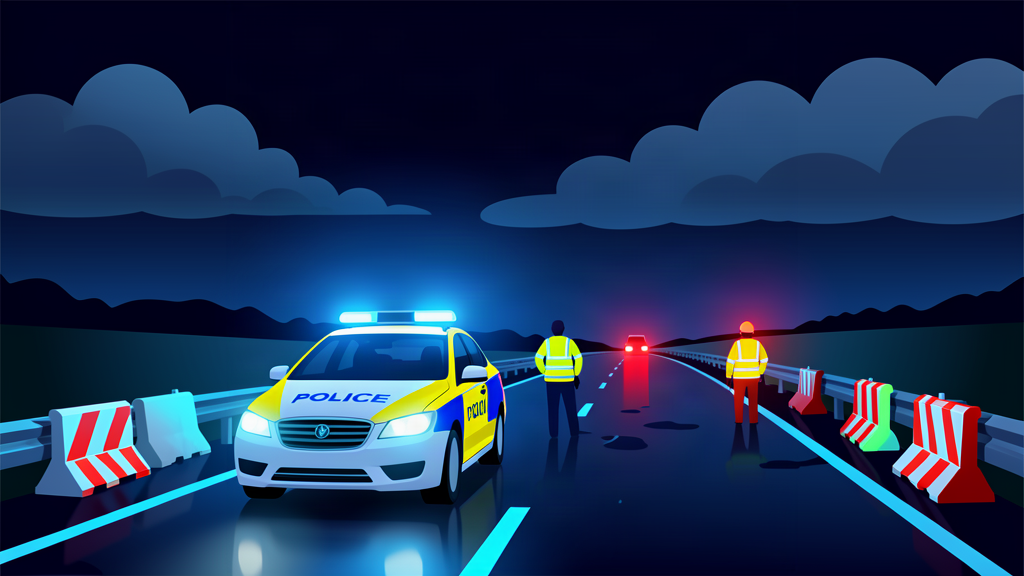
The BBC has visited Grangetown, a residential area in Middlesbrough that has become the focal point of the police investigation into the fatal crash on the A66. The broadcaster’s Ed Thomas reported from the neighbourhood where the aftermath of the incident continues to be felt by residents, as officers work to piece together the sequence of events that led to the deaths of seven people, including two serving police officers.
A community reeling from the investigation
Grangetown is a tightly knit area on the outskirts of Middlesbrough in North Yorkshire. In the days since the crash, the neighbourhood has found itself at the centre of a major police inquiry. The BBC’s presence in the area reflects the interest the investigation has generated, not only because of the scale of the loss of life but because of the unusual circumstances surrounding the pursuit that preceded it.
Eyewitnesses in the area have described a sense of shock and unease. The crash occurred on a stretch of the A66 that runs through the Teesside region, a key route for both local traffic and long-distance hauliers. Residents said the sound of the impact travelled far across the flat landscape, and that emergency vehicles converged on the scene over a prolonged period.
Cleveland Police have indicated that the investigation is complex and involves multiple strands. The deceased include two officers who were part of the pursuit at the time of the crash. Their families have been notified, and a significant deployment of specialist officers has been assigned to support them and to manage the ongoing enquiry.
The broader police funding picture
In a separate but connected development, the chief constable of Cleveland Police has spoken publicly about the challenges facing her force. Victoria Fuller told the BBC that while her officers take pride in their work, they are being let down by the level of funding available to them. She argued that the force needs to become part of a larger, more strategically resourced organisation if it is to meet the demands placed upon it.
The comments come at a sensitive moment for the force. The fatal crash has already drawn intense scrutiny, and any suggestion that resourcing played a role is likely to fuel debate in Westminster and in the relevant local authorities. Police funding in England and Wales has been a long-running political issue, with different forces experiencing very different pressures depending on their geography, demographics, and crime profiles.

ADVERTISEMENT
Cleveland Police covers a large area that includes Middlesbrough, Stockton-on-Tees, and Redcar and Cleveland. The force has, like many in the north of England, had to contend with significant demands on its resources while operating with a budget that its leadership has repeatedly described as insufficient.
Why it matters
The A66 crash is one of the most serious road incidents involving police officers in recent UK history. Seven deaths, including two serving members of the police, place it in a category that inevitably attracts national attention and political interest. The decision by the BBC to visit Grangetown signals that the story is far from concluded, and that the investigation may yet reveal details that have wider implications for how police pursuits are conducted and regulated.
At the same time, the chief constable’s remarks about funding highlight a structural question that predates this particular incident. If the force’s leadership believes it has been underfunded to the point where it cannot properly fulfil its responsibilities, that is an issue that goes beyond the immediate circumstances of the crash and touches on the broader adequacy of policing in the region.
What happens next
The investigation into the crash is expected to continue for some time. Specialist collision investigators will be examining the vehicles, the road, and the sequence of the pursuit in detail. It is likely to be months before a full account of what happened is established, and any report into the conduct of the officers involved will take longer still.
In the meantime, the pressure on Cleveland Police is unlikely to ease. The force will have to manage the investigative demands of the crash while also maintaining normal policing operations in a region that has already seen a significant number of high-profile incidents this year. The chief constable’s call for greater resources is likely to be echoed by other force leaders and by policing campaigners, adding to the pressure on the government ahead of the next spending round.













We do not allow links of any sort in comments. No SPAM whatsoever. On topic comments only.