

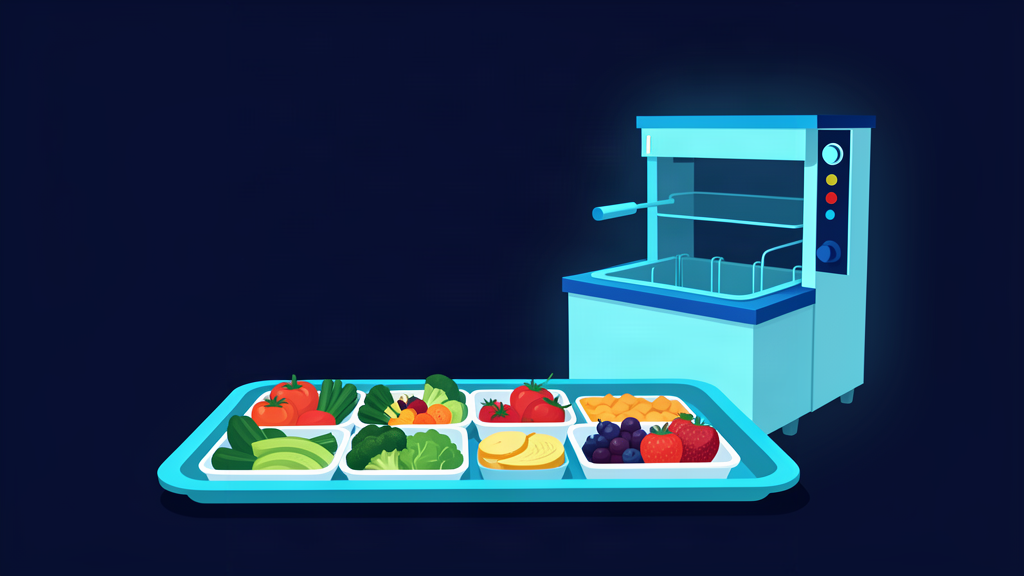
New rules for school dinners in England will ban deep-fried food from canteens, as the government rolls out what it describes as once-in-a-generation changes to children’s meals. The standards are intended to tighten the nutritional content of food served in schools, with a particular focus on cutting down on fried items, sugary drinks and heavily processed snacks that have become familiar features of some lunch menus.
What the rules change
Under the new standards, schools will be expected to limit or remove foods that are deep-fried, batter-coated or served from fryers. The shift is designed to move the typical school lunch away from chips, fried snacks and similar items and towards meals that rely more on oven cooking, grilling and fresh ingredients. The government has framed the changes as a major step in improving the diet of school-age children, who spend a large share of their week in the classroom and often rely on school meals as a staple of their daily intake.
The BBC reported that the government is describing the reforms as once-in-a-generation changes, a phrasing that signals how far the new rules are intended to move the goalposts for school caterers. The standards will affect what can be offered on the menu, how often certain items can appear, and the overall balance of nutrients in the food that pupils are served.
The wider school food debate
School food has long been a politically sensitive subject in England. Campaigners have argued for years that the quality of meals served in schools has a direct effect on children’s health, concentration and long-term eating habits. At the same time, school kitchens and catering companies have had to work within tight budgets, and any shift in standards has to be matched by the money available to implement it.
The new rules arrive in a context where many families are still feeling the pressure of higher food prices. For some pupils, particularly in poorer areas, a school meal may be one of the most reliable sources of a hot, structured meal in the day. That makes the nutritional content of what is served not just a matter of policy but of day-to-day welfare. The government’s push to control fried food and improve the balance of meals reflects a longer-running concern about childhood diet and the role that schools play in shaping it.
Why it matters
The ban on deep-fried food matters because it changes what children encounter every lunchtime in hundreds of schools. It is a visible, practical change rather than an abstract ambition, and it will affect caterers, suppliers and families as menus are adjusted. It also matters because school food standards are one of the clearest places where the government can act on public health without waiting for individuals to make choices in a crowded and often expensive retail environment.

ADVERTISEMENT
There is, however, a question about whether the ambition matches the resources. Improvements to menus cost money, whether in ingredients, training or kitchen equipment, and schools are already juggling many competing demands. If the standards are to stick, the funding and support behind them will matter just as much as the rules themselves.
What happens next
The next step will be for schools and catering providers to work through how the standards are applied in practice, including where there is flexibility and where the rules are firm. Expect menus to change over the coming months as kitchens adapt. The government is likely to point to the new standards as evidence of action on child health, while campaigners will watch to see whether the changes translate into consistently better meals on the plate rather than a set of rules that prove difficult to enforce across the country.
























We do not allow links of any sort in comments. No SPAM whatsoever. On topic comments only.