

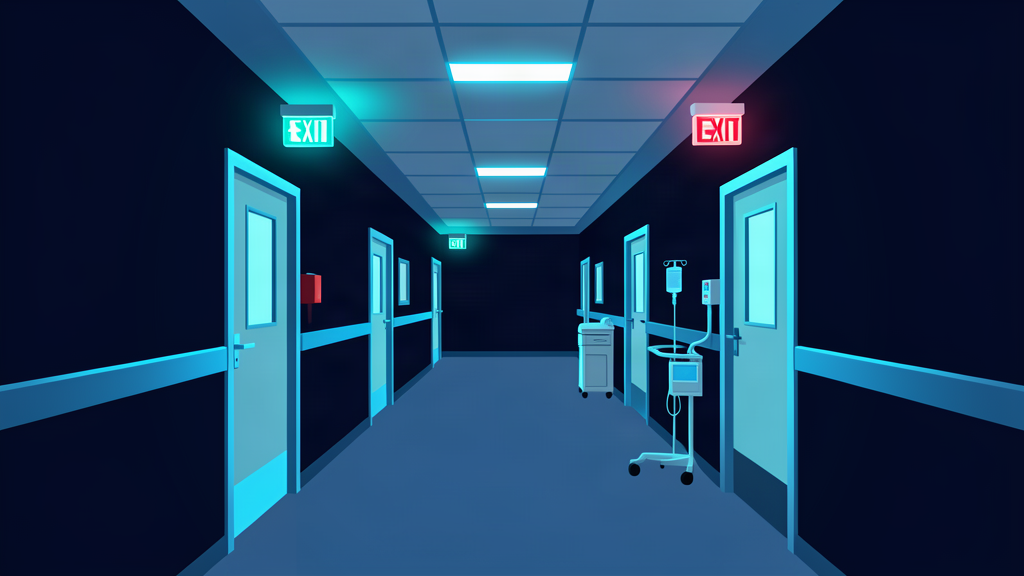
Rescuers battling through a neonatal unit in Pakistan found many of the unit’s doors locked, blocking their route to the babies inside as a fire tore through the ward, a firefighter has told the BBC. The blaze at the hospital in Islamabad killed 14 newborns and exposed deep failings in fire safety at the facility, according to a new report into the disaster.
A ward without defences
The report found that the neonatal unit — one of the most vulnerable hospital environments anywhere, filled with premature babies in incubators dependent on continuous power and oxygen — had no fire alarms and no sprinkler system. For parents and staff, the absence of the most basic fire safety infrastructure turned a contained incident into a catastrophe.
Firefighters who arrived at the scene described a desperate scramble through corridors where locked doors impeded their progress. In a unit where every second counts for a fragile newborn, those delays were fatal. The BBC’s reporting has highlighted that rescuers had explicitly warned that many doors near the unit were locked, obstructing their route to the babies.
The fire has prompted an immediate inquiry ordered by Pakistani officials, who have promised a thorough investigation into how a hospital caring for the most delicate patients in the country could operate without fundamental fire protections.
Why neonatal units are uniquely at risk
Neonatal intensive care units present unusual fire safety challenges. The patients cannot be moved quickly — many are too small or too unwell to be relocated without significant medical risk. Incubators, ventilators, and monitors are all power-dependent, meaning any fire that disrupts electricity can become life-threatening within minutes. Sprinkler systems and early fire detection are therefore not merely regulatory niceties; in these wards they are often the only line of defence.
Fire safety experts have long warned that hospitals in many countries, particularly in lower-resourced settings, struggle to maintain standards when infrastructure budgets are stretched. Alarms that are never tested, sprinklers that are never activated, and locked doors meant for infection control but never reversed in an emergency are recurring themes in hospital fire inquiries worldwide.

ADVERTISEMENT
The human toll
The loss of 14 newborns in a single incident is a profound tragedy. For the families involved, the shock is compounded by the knowledge — still emerging through the BBC’s reporting — that the unit may have lacked the basic safeguards that could have prevented the deaths. The emotional impact on hospital staff, who were confronting the fire while knowing that the youngest patients in their care were trapped behind locked doors, is incalculable.
The firefighter’s account of locked doors blocking rescuers has become a central and troubling detail of the emerging narrative. It raises immediate questions about emergency procedures, staff training, and whether the unit’s physical configuration was ever assessed for fire evacuation.
Why it matters
This is not simply a story about one hospital fire. It is a story about what happens when institutions charged with protecting the most vulnerable fail at the most fundamental level. Neonatal units exist to give premature and critically ill babies a chance they would not otherwise have. When a unit burns and the alarms do not sound, the betrayal of that purpose is absolute.
For UK readers, the story resonates on several levels: the NHS faces its own ongoing scrutiny over fire safety in hospitals, and the image of locked doors impeding rescuers inside a medical ward will strike a chord with anyone who has followed fire safety inquiries in British healthcare facilities. The distance between Islamabad and London does nothing to diminish the shared lesson — that basic fire safety in places of care is not optional.
What happens next
Pakistani officials have ordered an immediate inquiry, and the BBC’s reporting suggests that the investigation will examine the locked doors, the missing alarms, and the absence of sprinklers as central lines of inquiry. The hospital will face intense scrutiny from regulators, families, and the public.
Beyond the specific findings, the disaster is likely to reignite broader debate about fire safety standards in hospitals across the region and the enforcement of existing regulations. For now, the focus remains on the 14 families who lost children and on the urgent question of how a unit dedicated to keeping newborns alive could be so poorly protected against fire.
Source: BBC News.




















We do not allow links of any sort in comments. No SPAM whatsoever. On topic comments only.