

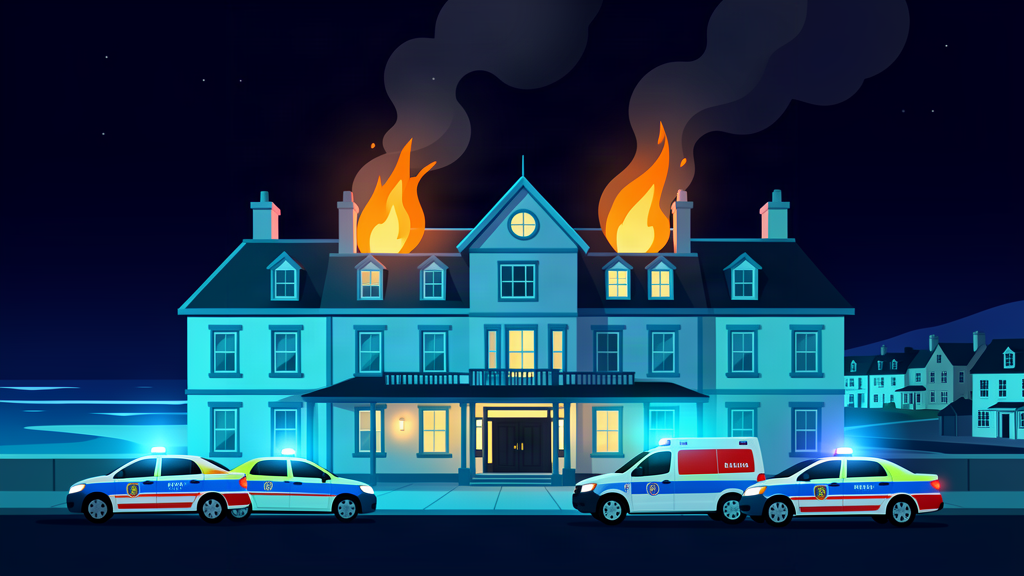
Around 280 people were evacuated in the night after a fire broke out at a major seaside hotel, with Kent Police treating the incident as suspicious, the BBC reports. The Grand Burstin Hotel in Folkestone was occupied at the time, and guests were forced from their rooms as the alarm spread through the building.
The evacuation
The scale of the evacuation is significant. Roughly 280 people were moved out of the hotel, which means a large number of people were abruptly woken and displaced in the middle of the night. For a seaside hotel on the Kent coast, that figure suggests the building was fairly full, with guests who were likely there for a stay rather than an overnight stop on a long journey. Being forced out in those circumstances affects people differently — some may have had nowhere else to go, others may have been in the middle of a visit to the area.
An evacuation of that size also places strain on the emergency services and on local resources. People displaced in the night need somewhere to go, and the hotel itself faces an uncertain period ahead while the building is assessed. The BBC’s reporting makes clear that the incident was substantial enough to prompt a major response.
Treated as suspicious
Kent Police’s decision to treat the fire as suspicious is the detail that gives the story its serious edge. A fire that is treated as suspicious is one where investigators do not yet have a clear accidental cause and are keeping open the possibility that it was deliberate. That does not mean a conclusion has been reached; it means the investigation is active and the question of how the fire started has not been settled.
For guests and staff, that introduces an unsettling element. A fire in a hotel is frightening enough on its own. Learning that police are treating it as suspicious adds a layer of concern that will take time to resolve. Until investigators establish what happened, the circumstances of the fire will remain unclear.
A familiar setting under strain
The Grand Burstin Hotel is a well-known property on the Folkestone coast. Hotels of that kind are part of the fabric of seaside towns — places where people come to stay for weekends, holidays, and short breaks, and where the local economy benefits from the visitors they attract. A serious fire at a prominent hotel therefore has implications beyond the people directly affected: it affects the town’s profile and the confidence of people considering a visit.

ADVERTISEMENT
The fact that the incident happened at night, with guests asleep inside, also sharpens the event. Night-time fires are harder to spot early, and people waking to an evacuation are at greater risk of confusion and injury. That the evacuation proceeded without reports of major injuries is something, but it does not diminish the seriousness of the event itself.
Why it matters
A suspicious fire at a major hotel raises questions that go beyond the immediate emergency. Was the building’s fire safety equipment adequate? Were guests able to get out quickly and safely? What caused the fire, and could it have been prevented? Those are the kinds of questions that follow any serious hotel fire, but the “suspicious” element focuses attention on whether there is a public safety concern that needs addressing more broadly.
For Folkestone, the incident is a blow at a time when the town has been working to develop its profile as a destination on the Kent coast. A major hotel fire, especially one under police investigation, is the kind of event that shapes perception.
What happens next
The immediate priority is the investigation. Kent Police and fire investigators will want to establish how the fire started before any firm conclusions can be drawn. The BBC’s reporting indicates the incident is being treated as suspicious, which suggests the investigation is active and ongoing. Until it is complete, the cause remains unconfirmed.
The hotel’s future in the short term is also uncertain. A building that has suffered a serious fire needs assessment before it can reopen, and guests who were evacuated will need to make alternative arrangements. The longer-term outcome will depend on what investigators find and on the condition of the property once the immediate emergency has passed.














We do not allow links of any sort in comments. No SPAM whatsoever. On topic comments only.