

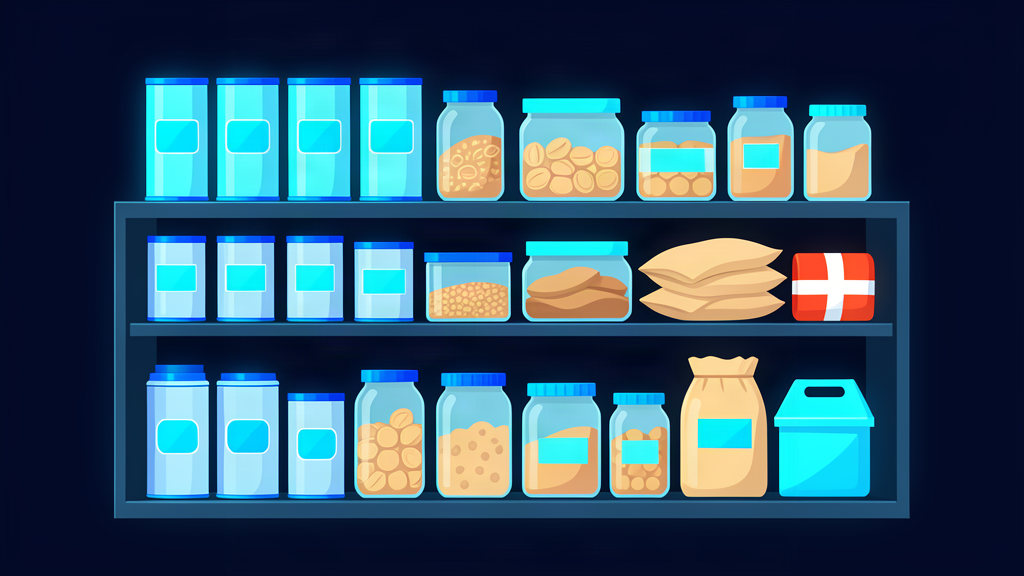
The UK government is urging households to think carefully about what they keep in their cupboards, as extreme weather events and supply-chain disruptions make emergency preparedness a more mainstream concern than it has been in living memory.
Why the advice has changed
The guidance, reported by the BBC, reflects a shift in how public authorities are thinking about resilience at household level. In the past, stockpiling was often treated as something for survivalists or for people living in remote areas with unreliable access to shops. Today, the reasoning is broader: severe storms, flooding, heatwaves and transport disruptions can all briefly cut off access to food, water and power in parts of the country, and official advice has started to catch up with that reality.
The government’s particular focus, according to the BBC report, is on canned goods — items that can be stored for extended periods without refrigeration and that require little or no preparation if energy supplies are interrupted. That points to a practical, low-cost form of preparedness rather than a call for panic buying or bulk hoarding.
What the guidance tends to cover
Although the details of any official list vary, the general principles are consistent across similar advice issued in the UK and elsewhere. Water is usually the first priority: households are encouraged to keep a supply that can see them through a short interruption in mains water or a period when power cuts prevent boiling or filtering. Canned or dried staples — beans, pulses, tinned fruit and vegetables, cereals, pasta and rice — form the backbone of most recommendations because they store well and cover basic nutritional needs.
Medical supplies, prescription medicines where appropriate, a basic first-aid kit, torches, batteries and a battery-powered or hand-crank radio are also commonly cited. The recurring theme is not to build a fortress but to be able to manage a few days of disruption without relying entirely on immediate restocking from shops or emergency services.
Why it matters
The advice matters because it sits at the intersection of individual responsibility and public resilience. Local authorities and emergency services are stretched more easily when large numbers of people are simultaneously affected by an incident and when those people have not made even basic preparations. A household that has water, a charged phone, a torch and a few days’ worth of food is less likely to need immediate assistance, and the people who do need help can then receive it more quickly.

ADVERTISEMENT
It also matters because the pattern of risk is changing. The UK has experienced a run of high-profile weather events in recent years, from named storms and flooding to periods of extreme heat. Each time, the immediate aftermath tends to concentrate demand in shops, distribution hubs and emergency restocking routes. Encouraging people to hold a small buffer smooths those spikes.
What happens next
The most likely next step is that the guidance becomes more visible rather than more stringent. Public information campaigns, local authority updates and advice from resilience organisations are expected to continue nudging households towards a modest baseline of preparedness without demanding dramatic lifestyle changes.
For now, the practical takeaway from the government’s message is straightforward: a realistic stock of canned and dried goods, enough water for a short interruption, and a basic emergency kit are becoming part of sensible household planning in the UK, rather than an exceptional measure for rare worst-case scenarios.













We do not allow links of any sort in comments. No SPAM whatsoever. On topic comments only.