

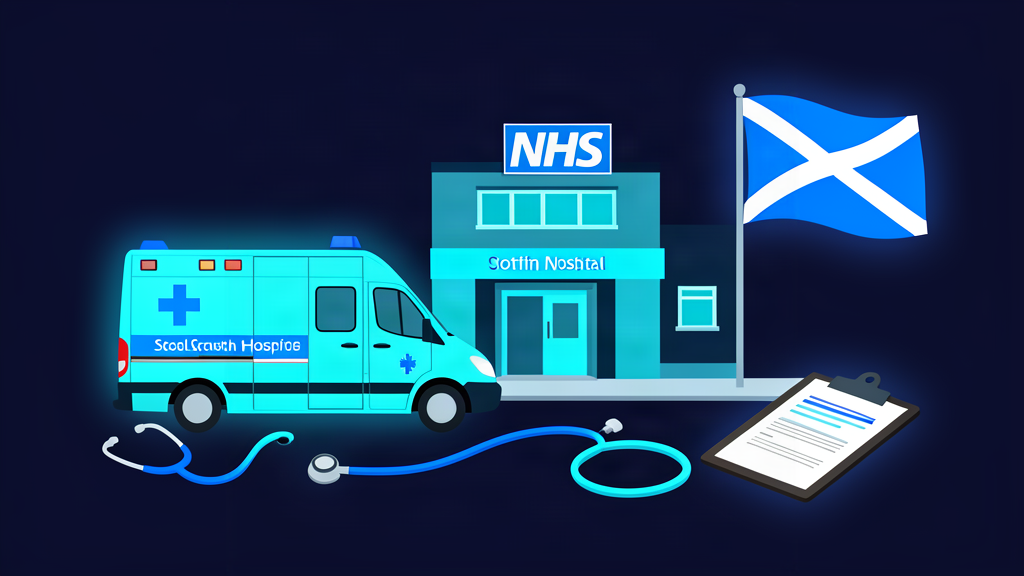
Trust in the NHS is emerging as the most serious political test of John Swinney’s time in office, with the Scottish government under pressure to show it can get to grips with problems at NHS Grampian. The BBC’s analysis, published on 25 November, argues that the health board has become a flashpoint — and that the first minister’s response will be judged as much on credibility as on policy.
A board under the spotlight
NHS Grampian has become the focus of a wider argument about the state of Scotland’s health service. According to the BBC, the Scottish government must now convince both the public and political opponents that it has a firm handle on what is going wrong. That is a higher bar than simply announcing a review or restating a commitment to the NHS: it requires ministers to demonstrate that they understand the scale of the problem and have a plan that can be measured.
The difficulty for ministers is that health is an area where perceptions move quickly. A single high-profile case can come to stand for a whole system in the public mind, and once that happens, reassurance from the top can sound like dismissal. The BBC’s framing — that this could be Swinney’s “most dangerous political moment” — reflects how quickly a service issue can turn into a test of a government’s overall competence.
It is also worth separating what ministers can fix quickly from what will take years. Leadership changes, clearer public reporting and a published turnaround plan are decisions a government can take in weeks. The underlying pressures on the health service — demand, staffing and capacity — are not. The BBC’s analysis suggests the political danger lies in the gap between the two: voters want to see movement now, while the structural problems will not resolve on a ministerial timetable. That gap is where trust is most likely to be won or lost.
Why it matters
Health is consistently one of the issues voters say matters most, and the NHS is the institution they trust most. When confidence in a health board wobbles, it is not just a local story: it feeds into a national argument about whether the devolved government is delivering. For Swinney, the risk is that NHS Grampian becomes the example opponents reach for whenever they want to question the government’s grip. Restoring trust therefore has a political dimension as well as a clinical one.
The devolved government has spent years arguing that decisions about the NHS are best taken in Scotland. That argument carries more weight when the service is visibly working; it is tested when a board becomes a byword for problems. How Swinney handles NHS Grampian will therefore feed into a much larger constitutional conversation, whatever the immediate clinical outcome.

ADVERTISEMENT
What happens next
The Scottish government’s next steps will be scrutinised for specifics. The BBC report points to the need to convince political rivals as well as the public, which suggests ministers will have to answer detailed questions in parliament and set out what “a grip on the problems” actually looks like in practice. Watch for concrete measures — clear leadership at the board, published targets and a timetable — rather than general statements of support. If those are slow to arrive, the sense of a government on the back foot is likely to grow.


















We do not allow links of any sort in comments. No SPAM whatsoever. On topic comments only.