

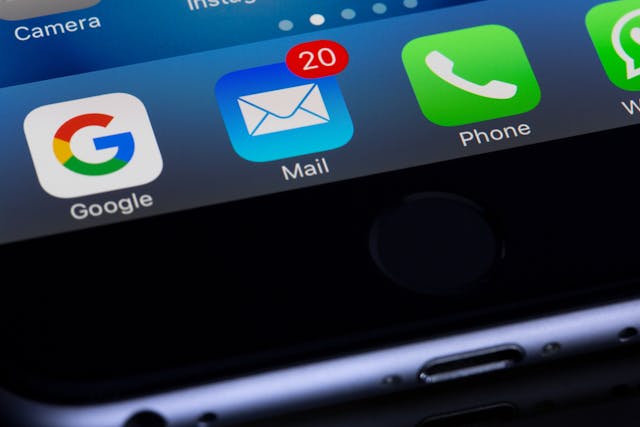
ICO concerns about breaches in emails: When it comes to sending emails, there are certain practices that need to be followed to ensure data privacy and security. The Information Commissioner’s Office (ICO) has recently issued warnings about the use of To, CC, and BCC fields in emails, emphasizing the importance of proper email etiquette.
What is the ICO’s Concern?
Firstly, the ICO is concerned about the misuse of To, CC, and BCC fields in emails, as this can lead to data breaches and privacy violations. When sensitive information is shared inappropriately or without proper precautions, it can put individuals and organizations at risk.
Why is Proper Email Etiquette Important?
Proper email etiquette is crucial for maintaining data security and privacy. By using the To field for the primary recipient, the CC field for secondary recipients, and the BCC field for hidden recipients. This means individuals can ensure that sensitive information is shared only with the intended parties.
What are the Risks of Misusing To, CC, and BCC?
Misusing the To, CC, and BCC fields can result in unintended disclosure of sensitive information. Accidental email sharing of recipients, and increased risk of phishing attacks. Therefore, It is important to be mindful of how these fields are used to prevent data breaches and protect privacy.
How Can Individuals Protect Themselves?
To protect themselves and others, individuals should double-check the recipients before sending an email, avoid sharing sensitive information in the CC field, and use the BCC field when necessary to protect the privacy of recipients. By following these best practices, individuals can reduce the risk of data breaches and maintain data security.
How can businesses protect themselves from the ICO concerns?
Businesses should give mandatory training to all employees on the importance of sending emails correctly. Firstly, sending emails to clients or customers? You should only be using the BCC field to protect all recipient from each other.

ADVERTISEMENT
For more information on email security best practices, you can refer to this source.
Read more news.
Have a look at these other great articles
- Russian strikes hit 600,000 in Ukraine as energy attacks escalate
- Car theft hits a four-minute rate as UK police battle organised gangs
- Martinez issues scathing attack on Man Utd board – has he made things worse?
- Couple and two children killed in arson attack named locally
- Gales and heavy rain to impact UK as yellow wind warning issued
- Zelensky and Burnham to meet in Downing Street
- Police officer tells rape trial he did not commit sex crimes
- Rogue Anthropic AI agent gave police fake tip in unsolved murder case
- Chris Mason: Why the prime minister wants to talk about Brexit again
- Poundland in rescue talks as owners seek buyer
- Government expands police support to political figures who are not MPs
- Russia did try to interfere with Brexit vote but had little impact, MI5 chief says
- MI5 chief warns of threats to UK from Russia, Iran and AI
- Ex-hurricane to bring warm weather to the UK this week
- India’s young put their bodies on the line to be heard in protests against Modi







It amazes me that so many people don’t take the time to learn what each of these attributes means and how to use them. Companies should definitely teach people the right way to do it.
More data to be sold off to the highest bidder.
I never knew that was what it was meant for. There should be some lessons on these things in school.
Email breaches are far too common – basic training would stop a lot of them.
Really helpful guide, thank you – looking forward to more like this!
Great read, I learned something new. Thanks for sharing!
Good that the ICO is pushing harder on this. Accountability matters.
Multi-factor auth should be the bare minimum for any business email now.
The human factor is the weakest link; awareness really is the fix.
Worth remembering a breach can cost far more than doing it properly upfront.
Phishing simulations for staff are underrated – they really do help.
Clear reporting lines when something slips are essential. Glad it’s highlighted.
Small businesses often think they’re not a target. They are.
Encrypting sensitive mail should be standard practice by now.
The ICO guidance is actually quite practical if you read it properly.