

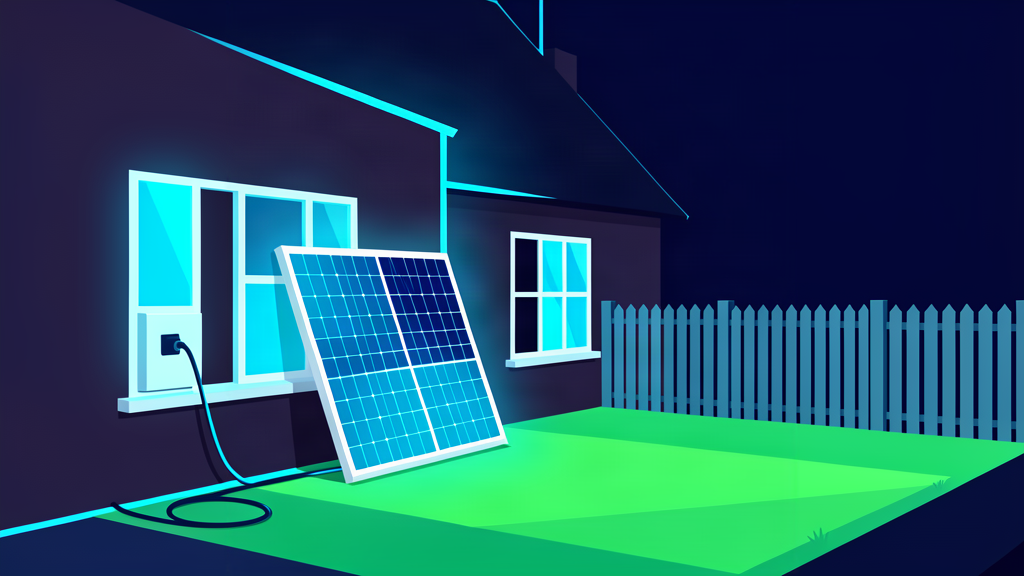
Plug-in solar panels are preparing to appear on British shop shelves, with the UK government suggesting the devices could help households significantly cut their energy bills without the upheaval of a full rooftop installation. Often called balcony or plug-in systems, the panels connect to a standard socket and feed electricity directly into a home, and their arrival in UK retail marks a notable shift in how small-scale renewable generation is being pitched to ordinary consumers.
What are plug-in solar panels?
Unlike a conventional array bolted to the roof and wired into the consumer unit by a certified electrician, a plug-in kit typically consists of one or two panels that rest on a balcony, a garden wall or a flat surface, linked by a cable to a plug. The idea is simplicity: no scaffolding, no building warranty complications, and a price point low enough to appeal to renters and flat-dwellers who have historically been shut out of solar. The format has already taken off in parts of Europe, where millions of such units have been registered.
The government’s pitch
According to the BBC, the UK government claims the panels could help homes “significantly cut” energy bills. The attraction for ministers is clear — a cheap, visible way to put generation in the hands of consumers at a moment when household energy costs remain a political flashpoint. Whether the savings live up to the headline will depend on orientation, weather and how much electricity a household uses during daylight hours, but even modest offsets ease pressure on the grid at peak times.
Why it matters
For a country still wrestling with energy security and the cost of living, plug-in solar lowers the barrier to generation from “major home improvement” to “weekend purchase.” That democratisation matters: it extends the benefits of clean power beyond homeowners with south-facing roofs and the means for a professional install. If the devices sell in volume, they also chip away at peak demand, reducing the case for new gas-fired backup generation. The flip side is regulation — safety standards, export limits and grid connection rules will need to keep pace with a product anyone can plug in.
What happens next
The immediate step is availability: the panels moving from specialist importers to mainstream UK retailers is the change consumers will notice first. Expect clearer guidance from regulators on safe installation and on how the systems interact with home circuits, alongside a wider conversation about whether the planning and electrical rules that govern them need updating. For now, the government’s message is straightforward — a small panel on the wall could be one of the cheapest ways to shave pounds off the next electricity bill.
Source: Original report. Rewrite for Your News Website.




















Really helpful article, thank you – looking forward to more like this!