

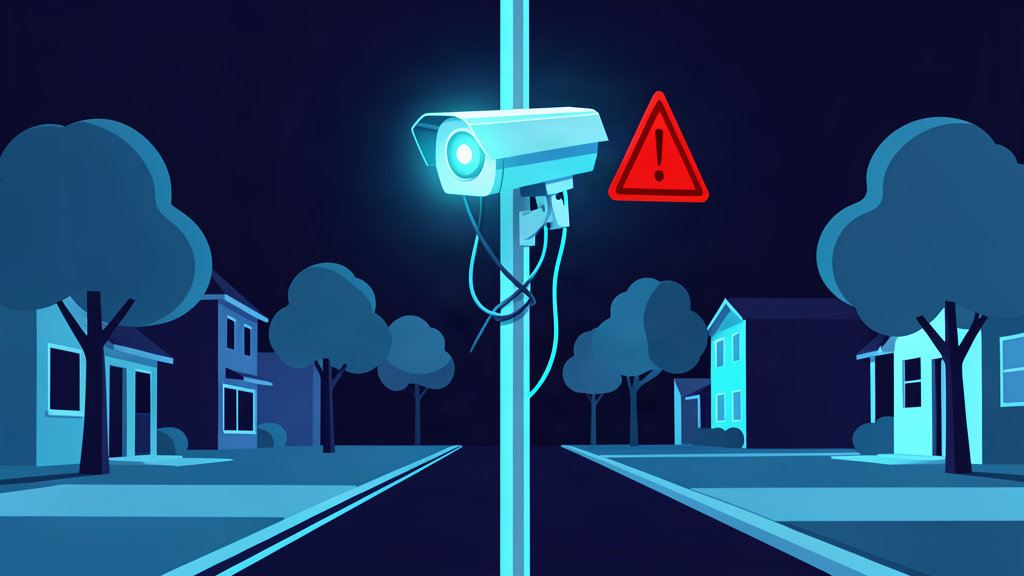
AI-powered surveillance cameras that automatically photograph every car passing by are being vandalised across the United States, as communities push back against the rapid expansion of a surveillance network that critics say treats ordinary citizens like suspects. The clashes over companies such as Flock Safety are shaping up to be a major issue in the run-up to the US midterm elections, with lawmakers on both sides of the political divide calling for guardrails on the technology.
A network that keeps growing
Flock Safety, founded in 2017, has become one of the largest makers of automatic licence plate readers in the United States. The company says it works with more than 7,000 communities nationwide and estimates that roughly 100,000 of its cameras are deployed across the country. The distinctive black oval devices, mounted on poles and powered by solar panels, are designed to capture a photograph of the rear of every vehicle that drives past, retaining the footage for a period set by the local authority.
What distinguishes Flock from earlier generations of licence plate readers is the network effect. Individual police departments do not just access their own cameras; they log into a shared database that can include thousands of devices from around the country. In Houston, for example, the Metro Transit Authority owns just 35 cameras of its own, but documents obtained by the BBC show that the agency has access to roughly 20,000 devices in the Flock network, including some as far away as Albany County, New York.
The scope of those searches has expanded rapidly. In the Cypress-Fairbanks independent school district near Houston, a typical licence plate lookup in April 2024 searched around 270 camera networks. By April 2025, the typical search had almost doubled to around 500 networks. By April 2026, one in five searches was conducted across more than 6,000 networks.
Sabotage and resistance
The growth of the network has not gone unnoticed by residents. In late July, four Flock cameras in Houston’s affluent Old Braeswood neighbourhood were attacked in the middle of the night. The metal poles were severed, leaving the cameras and their solar panels lying on the ground. Some of the devices had red signs attached reading: “Notice. 24/7 video recording.” Similar incidents of vandalism have been reported in Minnesota, California, and Georgia.
The sabotage is a visible signal of a broader unease. Critics argue that the cameras are overly broad investigative tools that cast a wide net over everyday life. Christopher Rivera, of the Texas Civil Rights Project, told the BBC that authorities could use the databases to search people’s everyday routines, which ultimately scrapes out their routes to work, where their children go to school, and where they worship, and that that is very problematic.

ADVERTISEMENT
Abuse and oversight
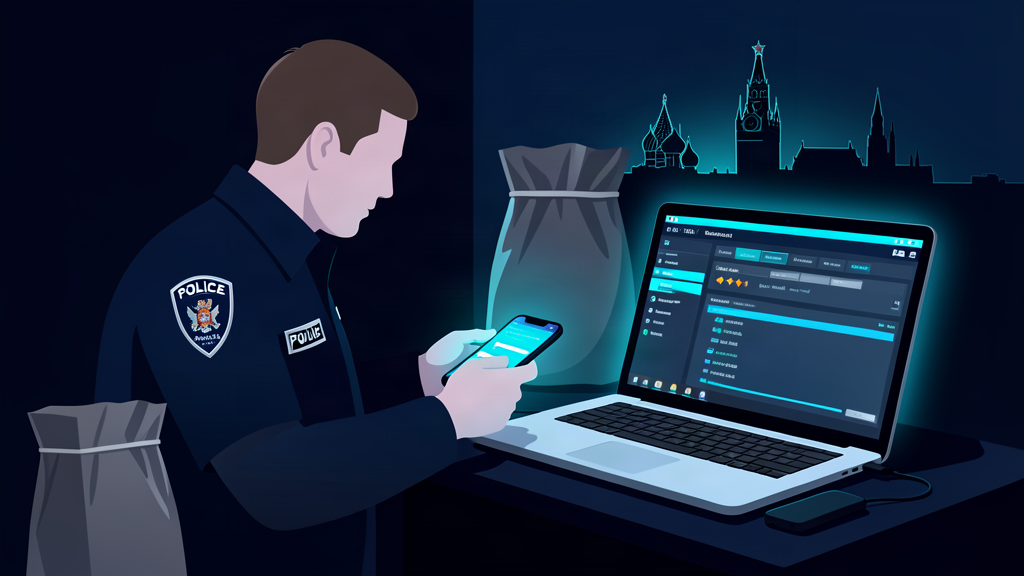
Recent incidents have sharpened concerns about how the system can be misused. Last week, a police officer in Kentucky was charged after using the Flock system to track his ex-girlfriend, who had filed a protection order against him, more than 2,000 times. He was caught by Flock’s newly mandatory, AI-powered audit tool, which flags suspicious usage patterns.
In 2025, a detective in Johnson County, Texas, searched over 80,000 images in an effort to locate a woman suspected of having had an abortion. He did not have a warrant. The case has fuelled arguments from civil liberties groups that police can use licence plate readers to sidestep the warrant requirements that would normally apply to searching a person’s property or tapping their phone.
Flock says it does not use facial recognition technology itself. However, the BBC has obtained documents showing that the Harris County Sheriff’s Office, which covers Houston, uses a separate facial recognition product called Clearview AI. The tool includes a database of more than 70 billion images, many of which were scraped from public internet sources including social media. The county’s Clearview AI contract runs through March 2027. Several European countries have issued data protection fines against Clearview AI, including a £7.5 million penalty from the UK’s Information Commissioner’s Office.
Why it matters
The debate over Flock cameras sits at the intersection of public safety, privacy, and trust in institutions. Police departments that use the technology point to dramatic results. Chief Ray Schultz of the Memorial Villages Police Department, a small jurisdiction within Houston, said his department recovered an average of three stolen cars a year before purchasing Flock cameras. Now, he says, that figure is 45. He has also used the system to locate an elderly woman with dementia who had driven 60 miles from Galveston and become lost, reuniting her with her family.
But for residents who feel the cameras are being deployed without their consent or meaningful oversight, the benefits are less compelling. One immigrant from Central America, who asked the BBC not to use her real name for fear it could affect a pending green card case, said the camera outside her house made her feel as if she were being stalked. She has changed her commute to work, taking different routes every day so there is no pattern.
The political dimension is also growing. More than 200 communities have cancelled or chosen not to renew their contracts with Flock since 2021, including 90 in August alone, according to the advocacy group Secure Justice. Large metropolitan areas such as Los Angeles, Seattle, and Austin are among those that have moved away from the company. Republican Congressman Keith Self has proposed federal legislation that would require government agencies to obtain warrants before accessing Flock data.
What happens next
Flock has made some policy changes in response to the scrutiny, including making audits mandatory and reducing the default period that data stays on a server from 30 days to seven, unless it is flagged as part of an investigation. Individual agencies can still choose to retain data for much longer. The company’s founder and CEO, Garrett Langley, told the BBC that it should be up to individual cities to decide how long to store data and what information to share. He disputed the characterisation of his company as a surveillance business, though three patents filed between 2020 and 2025 include the word surveillance in their titles.
With the midterm elections approaching, the issue is likely to feature more prominently in campaigns across the country. For now, the vandalism continues, the contracts are being cancelled, and the debate over whether the cameras make communities safer or simply make everyone feel watched is becoming harder to ignore.












We do not allow links of any sort in comments. No SPAM whatsoever. On topic comments only.