

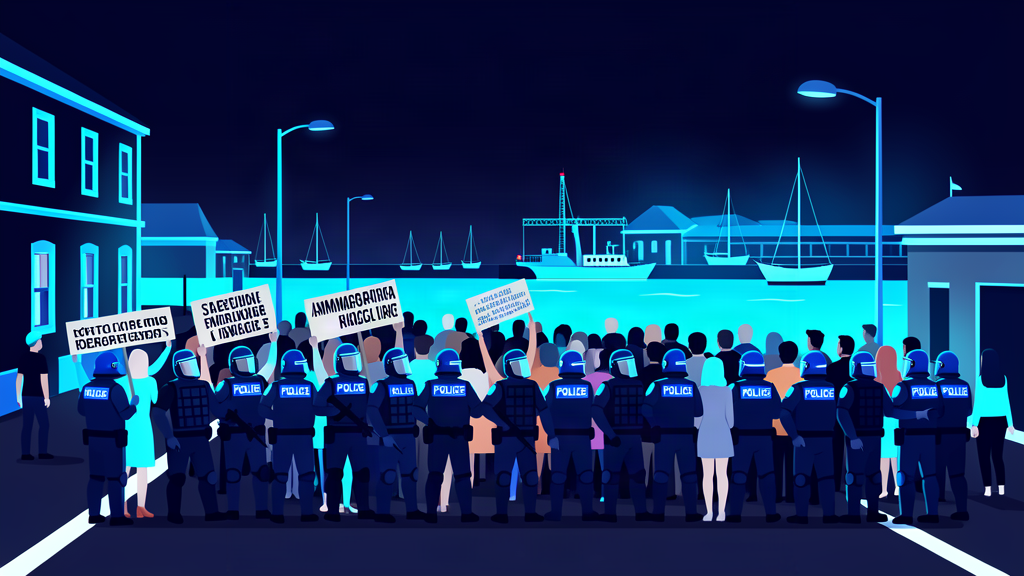
Anti-immigration protesters have clashed with police in Portsmouth following the arrival of around 140 people aboard a small boat on the UK coast. The confrontation highlights the ongoing tension around small boat crossings and the challenges faced by communities and authorities in ports where arrivals occur.
The incident took place in a city that has become a familiar setting for such scenes. Portsmouth, a key maritime city on England’s south coast, has seen repeated episodes of both migrant arrivals and the public reactions they provoke. When a large group arrives in a single vessel, it often draws a rapid response from both emergency services and, at times, members of the public who have gathered to express their opposition to small boat crossings.
The dynamics of a clash
Clashes between protesters and police in this context typically unfold in a familiar pattern. Protesters gather near the area where arrivals are being processed, and the situation can escalate when tensions run high. Police are tasked with maintaining order, protecting those who have arrived, and ensuring that any necessary procedures can take place without disruption. When protesters and officers come into conflict — whether through verbal confrontation, the pushing of barriers, or more serious physical confrontation — the police response is guided by their duty to keep the peace while allowing lawful protest.
The presence of around 140 people on a single small boat is a significant arrival in operational terms. It means a large group needs to be processed, assessed, and accommodated or transferred, all of which places demands on the Border Force, local authorities, and support organisations. The arrival of such a group in one go also tends to attract media attention and public interest, which can compound the pressure on all involved.
Portsmouth’s position as a port city means it has the infrastructure and experience to handle maritime arrivals. But that does not make the scenes any less charged. For residents, the visible presence of protesters and police can be unsettling, and the political temperature around small boat crossings remains high across the country.
Why it matters
This clash is a reminder that the small boat issue is not only a matter of border policy and statistics — it plays out in real communities, on real streets, with real consequences for public order and community relations. Each arrival has the potential to spark confrontation, and each confrontation risks deepening divisions.

ADVERTISEMENT
The police are caught in the middle. They must protect the right to protest while preventing disorder, and they must do so in a way that does not appear to favour one side or the other. When clashes occur, it raises questions about preparation, resource allocation, and whether sufficient measures are in place to de-escalate situations before they turn violent.
For the wider public debate, scenes like this reinforce the polarisation around immigration and border control. Those who oppose small boat crossings see these arrivals as evidence of a system under strain; those who oppose the hostile response see it as evidence of intolerance and disorder. Both sides can point to the same event and draw very different conclusions.
What happens next
In the immediate aftermath, police will continue to manage the scene, ensure that those who arrived are processed safely, and investigate any criminal activity that took place during the clash. Charges may follow if there is evidence of offences such as assault, trespass, or disorder.
Longer term, the event will feed into the ongoing political discussion about how to reduce small boat crossings and how to manage the public response when they occur. The government’s approach to border security, the role of local communities, and the conduct of protesters and police alike will all remain subjects of scrutiny. For now, the focus is on restoring order and ensuring that the aftermath is handled without further escalation.
















We do not allow links of any sort in comments. No SPAM whatsoever. On topic comments only.