

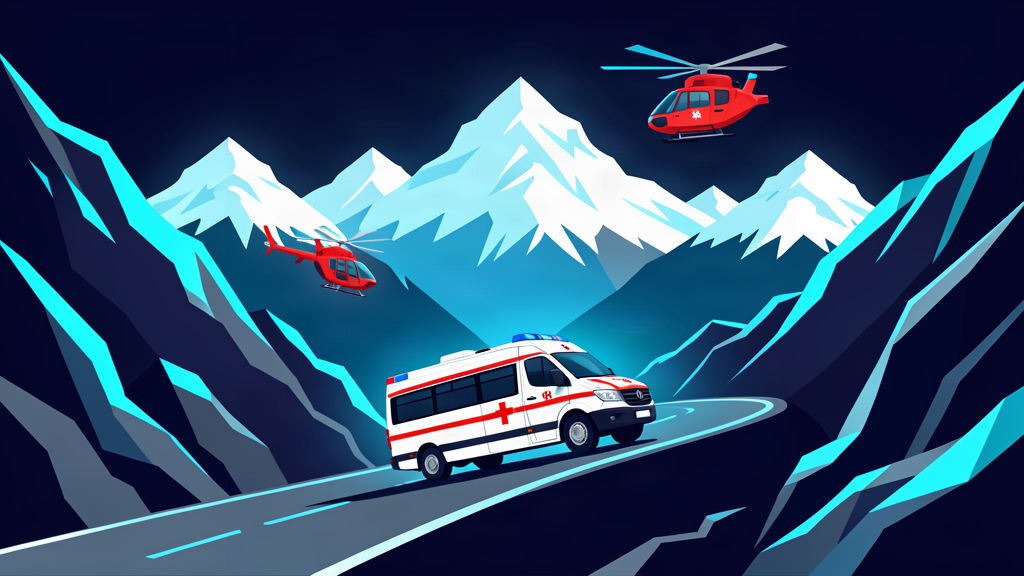
A Dutch tour bus has overturned in the Swiss Alps, leaving five people dead and around forty more injured, with police confirming the scale of the casualties after the crash in eastern Switzerland. The coach, carrying tourists, came off the road in mountainous terrain and ended up in a position that required a substantial emergency response from Swiss services.
A major mountain rescue
The location of the crash complicated the response. Alpine roads can be tight, exposed and difficult to access, and a coach that has overturned in that environment presents real problems for the emergency services. Rescue teams would have had to work carefully to reach passengers who may have been trapped, to stabilise the vehicle and to move the injured to safety without causing further harm. The terrain would have been a factor from the moment the crash was reported.
The deaths of five people on a single coach incident make this one of the more serious road accidents in the region in recent times. Dutch tour groups are a regular feature of Alpine travel in the summer season, and coach crashes in mountainous areas tend to attract attention because of the number of passengers involved and the difficulty of mounting a rapid rescue in remote locations.
What is known about the crash
The reports available so far confirm that the coach overturned and that there are both dead and injured passengers on board. The precise cause of the crash has not been established at this stage. In an alpine environment, possible factors can include road conditions, weather, visibility, the behaviour of the driver and the condition of the vehicle itself. Investigators will look at each of those elements in turn once the scene has been secured and the passengers have been cared for.
Coach operators in Europe are required to meet strict safety standards, and accidents involving tourist coaches usually trigger a detailed inquiry into the operator’s maintenance records, driver hours, route planning and compliance with local regulations. Because the passengers came from the Netherlands, there will also be an element of consular and family liaison work for Dutch authorities in the days ahead.
Why it matters
This is a serious incident with a significant human toll, and it raises questions about road safety on Alpine routes that are used heavily by tourist traffic. Mountain roads are popular with visitors but also carry risks that are less common on flatter, more straightforward routes. A coach crash with multiple casualties is a reminder that road safety in tourism-dependent regions remains an ongoing concern, and that the consequences of a single accident can be severe when a large vehicle is involved in difficult terrain.

ADVERTISEMENT
For the countries involved, the crash will also be a test of coordination between Swiss rescue services, local hospitals and Dutch officials who will be looking after the families of the passengers. In incidents of this kind, the immediate emergency is only the first stage; the aftermath includes identifying the dead, supporting the injured, and establishing, as far as possible, what went wrong.
What happens next
The immediate priorities are the treatment of the injured, including the most seriously hurt passengers, and the recovery and identification of those who died. Swiss police and rescue services will continue their work at the scene, and the inquiry into the cause of the crash will begin in earnest once the site has been cleared and the passengers have been accounted for. Investigators from the relevant transport safety authority will examine the road, the coach, the driver and the conditions at the time of the accident. Dutch authorities are likely to be involved in supporting the families of their nationals and in following the progress of the investigation. Until the findings are available, the exact sequence of events will remain unclear.



















We do not allow links of any sort in comments. No SPAM whatsoever. On topic comments only.