

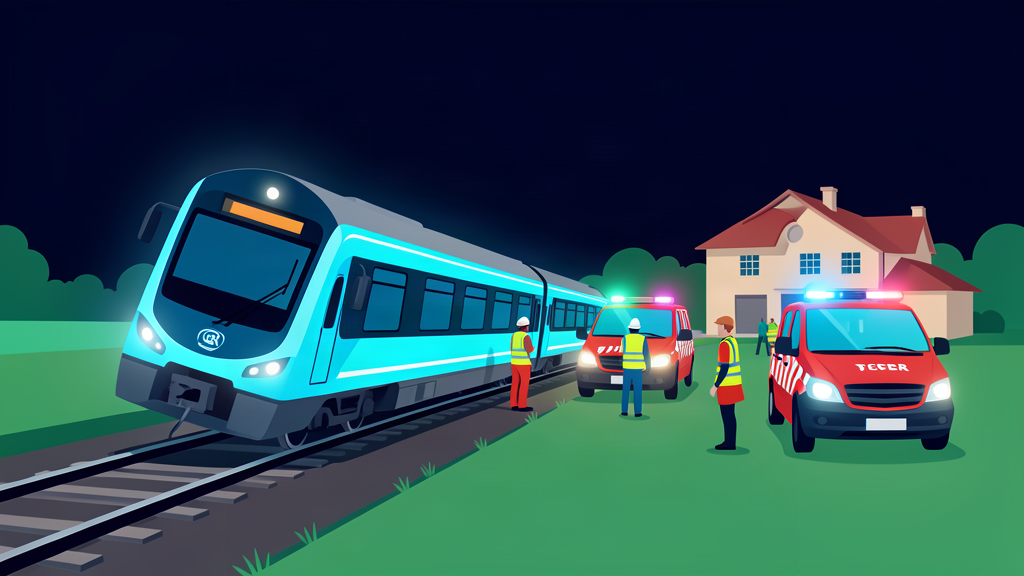
A passenger train has derailed in France, leaving dozens of people injured and prompting a major emergency response across the scene. French authorities have deployed large numbers of firefighters and medical teams to the site, where the force of the crash left the train tilted and damaged along the track. Early reports indicate that 44 people were injured, with one person in a critical condition.
A fast response on the ground
The emergency services moved in quickly after the derailment, with around 130 firefighters and five medical teams dispatched to the area. The scale of the mobilisation suggests that the accident happened in circumstances that required a substantial rescue operation, with crews working to reach passengers trapped in the wreckage and to assess the condition of those who had already been pulled free.
Train derailments in France are investigated by the national railway safety authorities, who examine the track, the rolling stock, the signalling and the actions of the crew. In the immediate aftermath, the priority is to stabilise the injured, secure the site and prevent any further danger to passengers, staff and rescuers. SNCF and the local transport authorities typically suspend services on the affected line while the inspection is carried out.
What is known so far
The reports available at this stage are limited to the initial emergency response and the number of people injured. Information about the type of train involved, the precise location of the derailment and the likely cause has not yet been fully confirmed. The fact that one passenger is described as being in a critical condition indicates that the impact was serious enough to produce life-threatening injuries, and the condition of the most severely affected passengers will be a focus of concern in the hours ahead.
French train travel is heavily used by both commuters and long-distance passengers, and accidents on the network attract close attention because of the central role that rail plays in domestic transport. Even when the cause is unclear, the immediate effect is often disruption to timetables, diversions for connecting services and a temporary shutdown of the line while the site is surveyed.
Why it matters
Railway safety remains a persistent concern for transport authorities across Europe, where rail networks carry large volumes of passengers every day and operate under varied terrain and weather conditions. A derailment with multiple injuries, including at least one critical case, is a reminder that major incidents can still occur despite the safety systems in place. The response will also test the readiness of local services to handle a serious accident involving a large number of casualties in a relatively short period. For the passengers involved, the focus now shifts to the medical treatment they receive and to the investigation that will follow.

ADVERTISEMENT
What happens next
The immediate phase will involve the continued medical care of the injured, including the passenger in critical condition, and the ongoing work of the emergency services at the scene. After that, the railway safety authorities will begin their inquiry into what caused the train to leave the track. That process typically involves examining the condition of the infrastructure, the performance of the train, any signals or warnings that may have been missed, and the sequence of events leading up to the derailment. Until those findings are available, the exact cause will remain unknown, and officials will be careful to avoid drawing firm conclusions too early.




















We do not allow links of any sort in comments. No SPAM whatsoever. On topic comments only.