

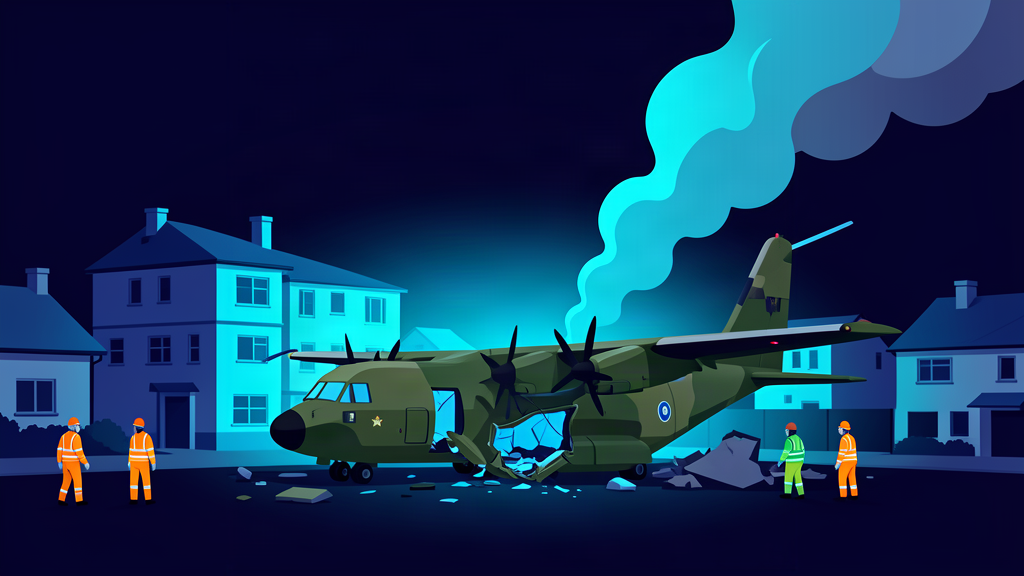
An army plane has crashed into a residential area in the Democratic Republic of the Congo, killing at least 17 people, according to reports from the region. Among the dead are believed to be civilians and two military generals, in what local officials have described as a devastating incident in a country already grappling with long-standing instability.
The aircraft went down in a populated neighbourhood, striking homes and causing extensive damage. Witnesses described a scene of destruction, with smoke rising from the crash site and residents rushing to search for survivors among the wreckage. Emergency personnel and armed forces personnel were deployed to the area, but the scale of the impact made rescue efforts difficult.
Authorities have not released a full casualty count, and the true number of dead and injured may rise as recovery teams continue to comb through the debris. The army plane is understood to have been on a routine operation at the time of the crash, though the precise circumstances — including the cause of the accident — remain unclear.
The government has not yet issued a detailed public statement explaining how the crash occurred. In the DRC, military aircraft are frequently used to move personnel and supplies across a vast country where road infrastructure is often poor and insecurity is widespread. Aviation accidents involving military planes are not uncommon, and each one prompts questions about maintenance, operational standards, and the risks of flying over densely populated areas.
Why the crash matters
The DRC is one of the most challenging environments in the world for both civilian and military aviation. The country’s huge size, limited infrastructure, and persistent conflict mean that aircraft are often essential for transport and logistics, but they are also exposed to a range of hazards, from difficult weather conditions to the effects of wear and tear on ageing fleets.
When a military plane crashes into a residential area, the consequences extend well beyond the immediate loss of life. Entire families can be affected, homes can be destroyed, and communities can be left shaken by an event that may have no warning and little immediate explanation. In a country where many people already live with uncertainty because of conflict and displacement, a crash of this kind can feel like another layer of instability imposed from above.

ADVERTISEMENT
The reported deaths of two generals add a further dimension to the incident. The loss of senior military figures in a single accident is a serious blow, and it will inevitably prompt scrutiny of how military flights are planned, cleared, and monitored. In a country where the armed forces play a central role in both security operations and logistical support, the personnel lost to a crash can have operational as well as human consequences.
What happens next
An investigation into the cause of the crash is expected to follow. In the immediate aftermath, the priority is to account for those who died, treat the injured, and establish what went wrong. That process may take time, particularly where the aircraft is military and the details of its flight path, cargo, and condition are not freely available to the public.
Local residents and victims’ families are likely to want answers about how and why the plane came down where it did. In a residential area, the question of whether the flight path should have taken the aircraft over homes will be one of the most sensitive issues, and any inquiry will need to address it carefully.
The wider context also matters. The DRC continues to face a range of security and humanitarian challenges, and aviation incidents are one more facet of a country under strain. Until there is a clear account of what caused this particular crash, speculation will fill the gap — and for the communities affected, only a thorough and transparent investigation will begin to provide the reassurance that an official explanation can offer.






















We do not allow links of any sort in comments. No SPAM whatsoever. On topic comments only.