

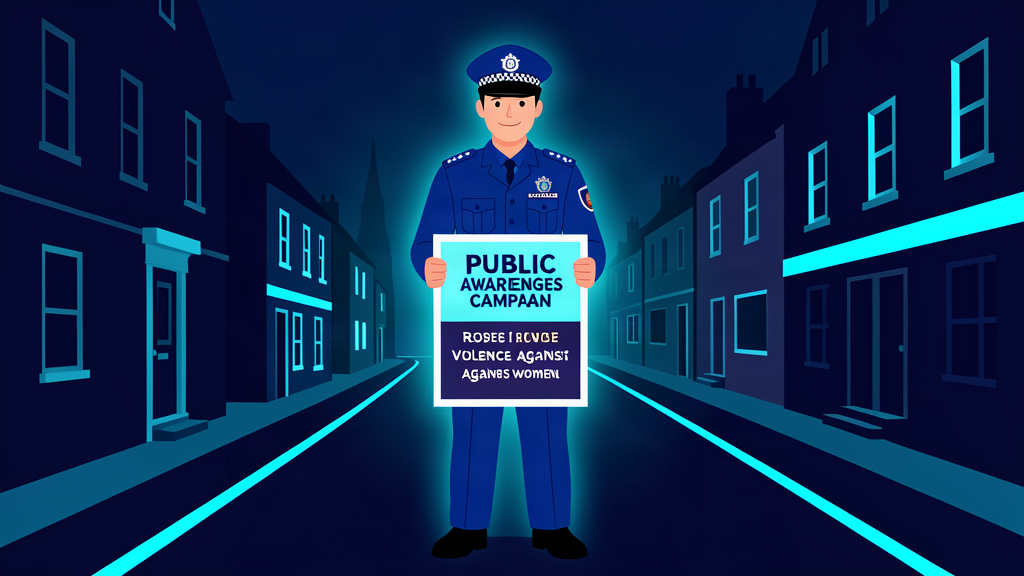
Police Scotland has launched a new public awareness campaign aimed squarely at men, marking the latest escalation in the fight against violence towards women and girls — an issue authorities across the UK are now treating with the urgency of a national emergency.
The campaign
The advert, released by Police Scotland, forms part of a broader push to shift attitudes and behaviours at the root of abuse. Rather than focusing solely on victims or perpetrators after the fact, the campaign targets the cohort most likely to perpetrate: men. It arrives amid a growing consensus among police leaders, policymakers, and campaign groups that violence against women and girls has reached a scale and severity that demands a coordinated national response.
The phrase “national emergency” has been deployed by senior figures in UK policing and government in recent months to convey the sheer volume of incidents — from stalking and harassment to sexual assault and domestic homicide — and to justify an intensified enforcement and prevention strategy. The Scotland campaign is one tangible expression of that stance, translating a policy designation into a public-facing message.
Why it matters
Violence against women and girls remains one of the most pervasive yet under-reported crimes in the UK. National statistics compiled by the Office for National Statistics and devolved equivalents consistently show high prevalence rates for domestic abuse, sexual violence, and stalking, with only a fraction of incidents reaching police or the courts. Declaring the issue a national emergency is intended to unlock resources, focus leadership attention, and signal to victims that the state takes their safety seriously.
Campaigns aimed at men — rather than solely at potential victims — represent a strategic pivot. Prevention experts have long argued that reducing abuse requires changing the social norms, peer dynamics, and individual attitudes that enable it, and that messaging directed at the group most responsible for perpetrating violence can be more effective than awareness-raising aimed elsewhere. Whether a single advert can shift those norms is an open question, but it signals a willingness to experiment with more targeted interventions.
What happens next
Police Scotland will monitor the campaign’s reach and engagement, and its impact will be judged in part against broader metrics: calls to helplines, reports to police, and the number of prosecutions. The wider UK context will also be watched closely. If the “national emergency” framing leads to increased funding for refuge services, specialist police units, and prevention programmes in schools and communities, the designation will have done more than generate headlines. If it remains rhetorical, campaigners will likely press for concrete commitments.

ADVERTISEMENT
For now, the advert adds another layer to a public conversation that has grown louder and more urgent in recent years — and one that shows no sign of fading.




















We do not allow links of any sort in comments. No SPAM whatsoever. On topic comments only.