

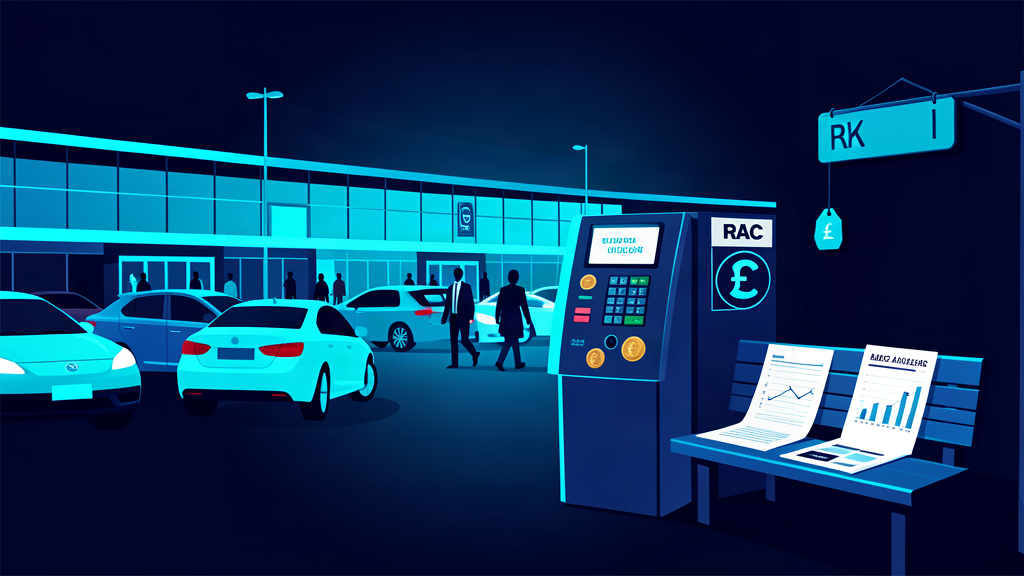
The government has announced a review of soaring airport drop-off fees after analysis revealed the charges have risen by a third since last summer, with some travellers now paying up to £8 simply to be set down at the terminal.
The Department for Transport confirmed the review following a RAC analysis that found prices at the UK’s busiest airports had climbed sharply since summer 2025. Gatwick and Stansted increased fees from £7 to £10, Edinburgh from £6 to £8.50, and Bournemouth from £5 to £8. London City — which only introduced charges last year — commands £8 for five minutes of parking, making it the most expensive per-minute airport in the country at £1.60 per minute. Belfast International raised its fee from £3 to £5 for ten minutes.
Driving public anger
Rod Dennis of the RAC, who compiled the analysis, said four in five drivers surveyed believe the charges are a “rip-off,” with just one in ten understanding why airports impose them at all. London City’s per-minute rate of £1.60 stands out as the most expensive in the country on a time basis, while Belfast International’s £5 for ten minutes represents a steeper proportional increase from last year’s £3. Passenger groups argue the fees hit families hardest, particularly those arriving from overseas who are unfamiliar with the charge structure and discover it only at the barrier.
Airports UK, the industry body representing privately-owned terminals, defended the fees as a necessary component of the commercial model, arguing that UK airports receive no state subsidies unlike their publicly-owned European counterparts. Chief executive Karen Dee stressed that all airports offer free drop-off points elsewhere on site and that the fees help manage congestion and reduce emissions around busy terminals.
Why it matters
For many families, the drop-off charge has become an unwelcome addition to the already high cost of flying. A family of four dropping off luggage and passengers at Gatwick now pays as much as £40 simply for the convenience of a short wait — a sum that disproportionately affects lower-income travellers who cannot rely on public transport to reach regional airports. With inflation squeezing disposable income, these fees — often justified as environmental measures — are increasingly perceived as a tax on air travel rather than a congestion-management tool.
What happens next
The review will examine how other countries manage airport access and whether similar per-minute charging models exist elsewhere in Europe. The Department for Transport has asked airports to exercise “restraint” on future increases while the review is conducted, with findings due in the autumn. In the meantime, the government has confirmed its separate pledge to scrap the doubling of passenger charges for parents sitting with children on flights will be in place for next summer’s peak season. Source: BBC News.












We do not allow links of any sort in comments. No SPAM whatsoever. On topic comments only.