

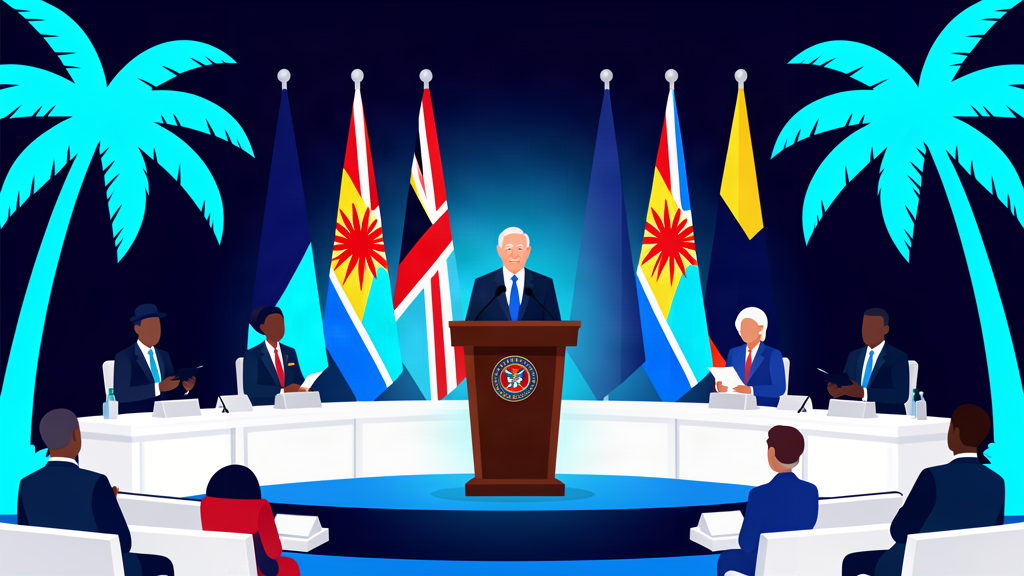
King Charles III has described the transatlantic slave trade as a shameful chapter that fills his heart with horror, in remarks made while formally opening the Commonwealth Heads of Government Meeting in Antigua and Barbuda. The King was addressing leaders from across the Commonwealth, a family of nations that includes the United Kingdom and many Caribbean states whose histories are deeply marked by slavery and its legacies. His words, reported by the BBC, place the question of historical reckoning at the centre of a summit that is also expected to address trade, climate, security and shared democratic values.
The significance of the remarks lies partly in their setting. Antigua and Barbuda, like other Caribbean nations, carries the living memory of enslavement in its institutions, place names, family histories and cultural landscape. For the King to speak in such terms there, rather than in London, signals an awareness that the Commonwealth’s credibility depends on its willingness to confront difficult history honestly. The phrase shameful chapter is notable for its clarity. It does not minimise or euphemise the trade, and it acknowledges the moral weight of an era in which Britain was a central participant. At the same time, a statement of horror, however sincerely expressed, is the beginning of a conversation rather than its conclusion. Commonwealth leaders will expect to move from acknowledgement to discussion of reparative justice, education, cultural restitution and development support, areas where there has long been debate about what is owed and how it should be delivered.
Why it matters
In the UK, the King’s remarks will resonate in a domestic debate that remains contested. Britain’s national story includes both the abolition of slavery, in which British campaigners played a prominent role, and the centuries in which British ships, merchants, planters and investors profited from the trade in enslaved people. How that history is taught in schools, represented in museums and reflected in public institutions is a live question for Prime Minister Andy Burnham’s government. The King’s words may strengthen calls for curriculum reform, for greater support for museums holding collections with colonial provenance, and for a more honest account of Britain’s economic development. They will also be heard by Caribbean Britons, for whom the legacy of slavery is not a distant academic topic but a family history that shapes identity and experience.
Internationally, the remarks affect Britain’s standing within the Commonwealth. The organisation’s strength has traditionally been its diversity and its shared values, but it also contains nations with very different views on reparations and historical justice. If the summit can produce a constructive discussion, it may show the Commonwealth acting as a forum where difficult issues can be addressed without fracturing the partnership. If it cannot, the King’s words may be seen as an opening that is not followed through.
What happens next
The coming days of the summit will be closely watched for any communiqué language on historical injustice, and for side discussions between the King, Caribbean leaders and the UK delegation. Expect questions in Westminster and in the media about whether the government intends to go further, and expect Caribbean leaders to press for practical measures as well as words. The King, as a constitutional monarch, cannot make policy, but his intervention sets a tone that ministers will have to respond to. For Britain, the challenge now is to match acknowledgement with action in the areas where the UK can make a difference, from education and archives to aid and trade. The horror expressed in Antigua and Barbuda will be measured, in the end, not by the sentiment but by what follows.




















We do not allow links of any sort in comments. No SPAM whatsoever. On topic comments only.