

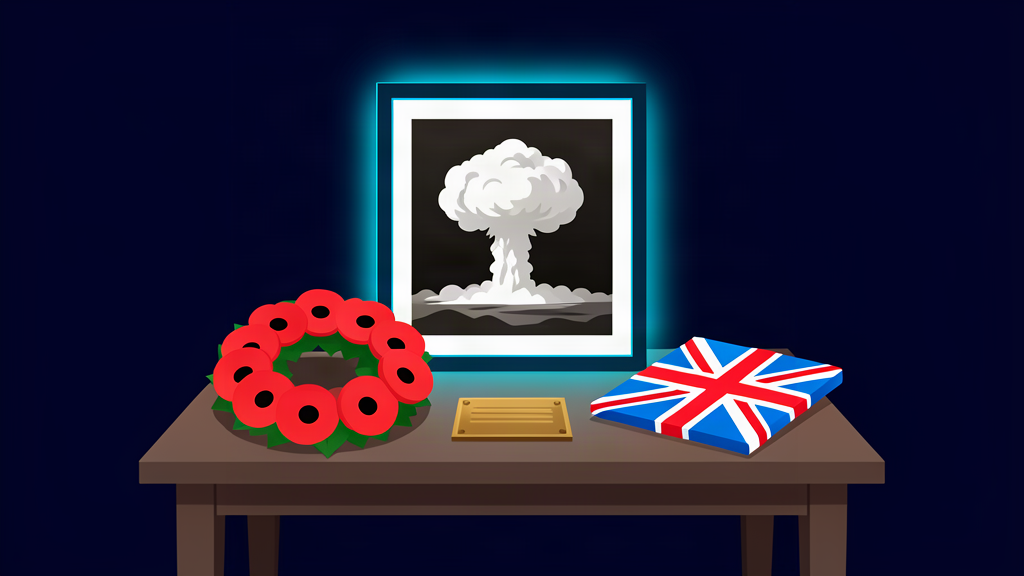
Britain’s nuclear test veterans will be given “the full truth” about the health legacy of the Cold War atomic programme, Prime Minister Andy Burnham has said, as he confirmed an independent panel modelled on the Hillsborough process. The announcement, reported by BBC News, is being presented by ministers as a long-overdue response to campaigning by veterans who say their health was damaged by service during Britain’s atomic tests.
What the panel will look at
The core commitment, according to BBC News, is an independent examination of the health legacy of Britain’s Cold War-era atomic programme. A Hillsborough-style panel carries a particular meaning in British public life: it suggests a process with genuine independence from government, a willingness to hear from those affected, and a remit broad enough to examine what was known and when. The details that matter most — membership, powers to call for documents, timescale and whether findings will be binding — have yet to be set out in full, and those details will determine whether the announcement is remembered as a turning point or a holding statement.
For veterans and their families, the question has always been simpler than the institutional machinery. They want to know whether their illnesses and the health problems seen across subsequent generations can be traced to the conditions in which they served. Successive governments have struggled with that question, in part because the science is difficult and in part because records from the period are incomplete. An independent panel cannot by itself resolve decades of uncertainty, but it can at least make the attempt visible and accountable.
A long campaign for recognition
The campaign by nuclear test veterans is one of the most persistent in British public life. It has been built by people who served at a time when the strategic imperative of the Cold War overshadowed almost every other consideration, and who later found that the consequences of that era did not simply end with the tests. Their argument has consistently been that the burden of uncertainty has fallen on them for far too long, and that a state which asked them to serve owes them a clear account of what happened.
What makes this moment different is the language coming from the top of government. When a prime minister says veterans will get “the full truth”, that is a commitment with weight, but it also raises expectations. Veterans’ organisations will be watching closely for any sign that the panel’s scope has been narrowed, or that its timetable has been set without reference to the people whose lives are at the centre of it.
Why it matters
This is a test of how Britain handles the long tail of its own history. The atomic programme was a defining part of the country’s post-war identity, yet the human cost has never been fully settled in public. A credible inquiry would give veterans recognition and, whatever its conclusions, a measure of closure. A weak one would risk adding another chapter to a story of delay.

ADVERTISEMENT
What happens next
Attention now turns to the panel’s terms of reference: who will sit on it, what evidence it can demand and when it is expected to report. BBC News will follow those announcements as they come. Veterans and their representatives will be looking for independence in practice rather than in name alone. If the process is genuinely open, it could finally answer questions that have been asked for decades; if it is not, the disappointment will be felt most keenly by the people who have waited longest.
Source: BBC News. Read the original report at BBC News →



















We do not allow links of any sort in comments. No SPAM whatsoever. On topic comments only.