

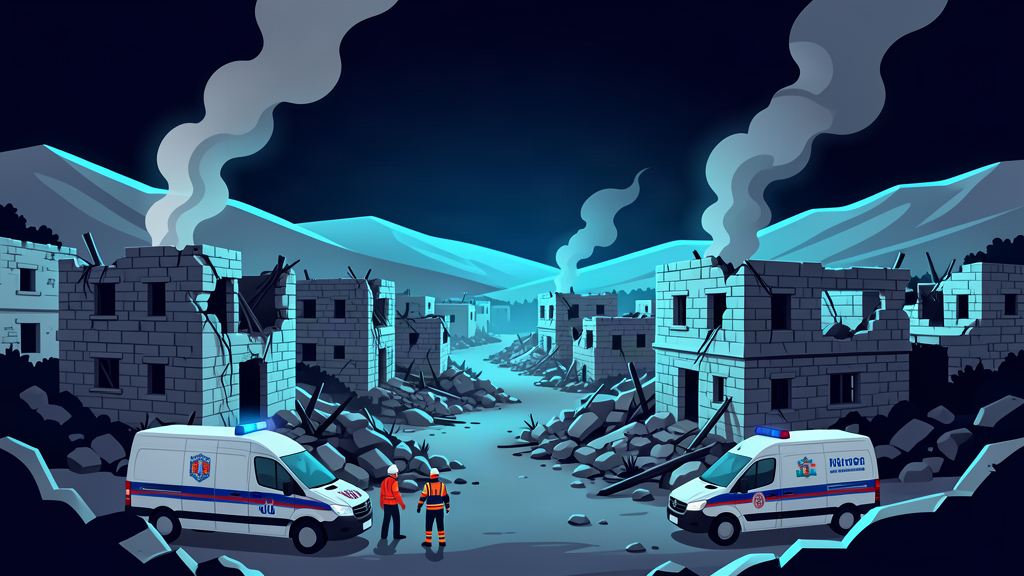
Israeli strikes have hit a southern Lebanese village, killing 11 people according to the country’s state media, in a development that Lebanon warns threatens to unravel a US-brokered ceasefire aimed at ending the longstanding conflict between Israel and Hezbollah.
The latest attacks strike at a delicate moment. The ceasefire, negotiated with American backing, was designed to halt the cycle of violence that has dominated the Lebanon-Israel border for months. Any escalation risks undoing the diplomatic progress that has kept the region relatively quiet since the agreement took effect.
Why the ceasefire is under strain
A US-brokered ceasefire is only as durable as the parties’ willingness to honour it. Both Israel and Hezbollah have faced domestic pressure from factions that view compromise as weakness. When strikes like this one occur, they feed the narrative that the other side cannot be trusted, making it harder for moderates on either side to sustain the agreement.
Lebanon’s state media reports that the village hit is in the south, the area most directly affected by the conflict. Southern Lebanon has been the focal point of cross-border hostilities, with villages and towns caught between Israeli military operations and Hezbollah’s positions. Civilian casualties in this region have been a persistent source of international concern.
The Lebanese government’s response — warning that the attacks jeopardise the ceasefire — signals that Beirut views this as more than an isolated incident. It is a test of whether the diplomatic framework can withstand the kind of flare-up that has historically derailed similar agreements in the region.
What happens next
The immediate question is whether this strike will be followed by further escalation or whether it remains an isolated event. Ceasefire monitoring mechanisms, typically involving international mediators, are likely to be activated to determine what happened and to press both sides to return to compliance.

ADVERTISEMENT
If the attacks continue, the US-brokered framework could begin to unravel. That would reopen the prospect of sustained hostilities along the Lebanon-Israel border, with consequences for regional stability and for the thousands of civilians who have already been displaced by the conflict. For now, the situation remains fluid, and the coming days will be critical in determining whether the ceasefire holds or fractures.






















We do not allow links of any sort in comments. No SPAM whatsoever. On topic comments only.