

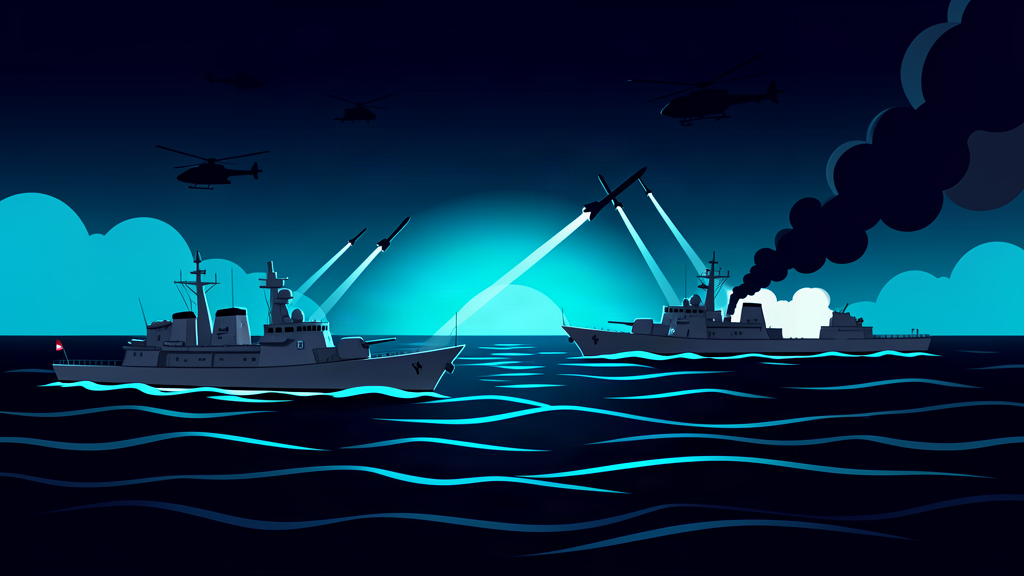
The United States military has carried out a series of strikes against three oil tankers it says are part of an Iranian “shadow network”, in a retaliatory operation that marks the latest escalation in the long-running confrontation between Washington and Tehran.
Retaliatory strikes after missile attack on US warships
The US military said it struck three oil tankers linked to Iran in response to a missile attack on two American warships. The operation, which the Pentagon described as a direct retaliation, targeted vessels that US officials say are part of an Iranian-backed network used to move oil and fund activities in violation of international sanctions.
The strikes came days after the two sides exchanged some of the most intense fire in weeks, according to US military officials. The latest operation is part of a broader pattern of tit-for-tat strikes that have characterised the deteriorating relationship between the United States and Iran in recent months.
US officials stressed that the operation was limited and aimed at disrupting what they described as a shadow network rather than at Iranian territory or government targets directly. The tankers were reportedly struck at sea, though the exact location was not disclosed in the initial report.
The shadow network and the conflict’s trajectory
The term “shadow network” refers to the unofficial, often covert, channels through which Iran has long been accused of moving oil, weapons, and funds to allied groups and activities across the region. The US and its allies have repeatedly targeted such networks, arguing that they allow Iran to evade sanctions and support destabilising activities without directly engaging US forces.
The latest exchange of fire is part of a pattern that has been building for weeks. Earlier in the conflict cycle, Iran launched missiles at two US warships, an attack that prompted the retaliatory strikes on the tankers. The exchange of fire came as tensions between the two sides had been simmering, with both sides conducting operations in the region.

ADVERTISEMENT
US military officials described the tanker strikes as a proportionate response, intended to signal that attacks on American forces would be met with action. The operation appears calibrated to send a message without triggering a broader conflagration — though in a region where miscalculation has repeatedly led to escalation, the line is a narrow one.
Why it matters
The strikes matter because they are the latest chapter in a conflict that has repeatedly threatened to spiral beyond the controlled exchanges both sides have so far maintained. The US-Iran confrontation has been one of the most volatile elements in Middle Eastern geopolitics, and each new exchange of fire raises the question of whether one side or the other will miscalculate and trigger a wider conflict.
For the global oil market, attacks on tankers carry an immediate and practical significance. The Persian Gulf and surrounding waters are among the world’s most important shipping lanes for oil, and any disruption to tanker traffic — even a limited one — can affect prices and supply chains. The market has been watching the situation closely, and each new strike adds to the uncertainty.
The strikes also carry political weight. They demonstrate that the US is prepared to act on what it describes as Iranian aggression, and they signal to both Tehran and Washington’s regional allies that the United States will respond. For Iran, the question is how to respond without triggering an even broader US operation.
What happens next
In the immediate term, the focus will be on whether Iran retaliates directly in response to the tanker strikes. US officials are watching for any Iranian action that could widen the conflict, and there is likely to be heightened alert across US forces in the region.
Diplomatic channels, where they exist, may also be in play. Both sides have at various points signalled that they do not want a full-scale war, but the pattern of strikes and counter-strikes makes communication and de-escalation difficult. The coming days will show whether the latest exchange remains contained or whether it prompts a further escalation.
For now, the US has signalled that it views the operation as concluded, but in a conflict where each side is watching the other for signs of the next move, the situation remains fluid and dangerous.
Source: The New York Times. Read the original report at the NYT →

















We do not allow links of any sort in comments. No SPAM whatsoever. On topic comments only.