

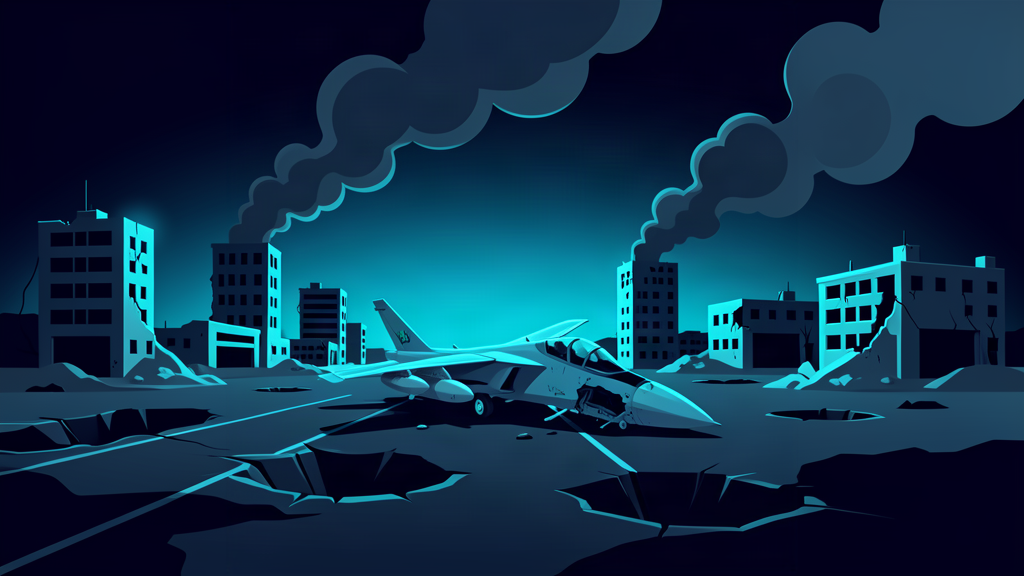
New photographs have revealed the extent of damage inflicted on United States sites following attacks by Iran, showing destroyed buildings and wrecked military aircraft in stark detail. The images, obtained by the BBC’s partner CBS News, offer a rare visual record of the aftermath of a conflict that has been unfolding largely away from direct public view.
A Visual Record of Destruction
The photographs depict a scene of significant damage. Among the most striking images is that of a wrecked air force plane, its fuselage damaged and its operational life clearly over. Alongside it, buildings have been reduced to rubble or left with gaping holes, the kind of structural destruction that takes months or years to repair and carries a heavy financial and operational cost.
Seeing this kind of damage in photographs changes the perception of a conflict from abstract headlines to something more tangible. Numbers in a report — of aircraft lost, structures destroyed, costs incurred — are one thing, but a picture of a burnt-out aircraft on a tarmac or a shattered building frame conveys the physical reality in a way that written accounts cannot.
What the Images Show
The collection of photographs appears to have been gathered from sites that were directly targeted during the Iranian attacks. The presence of a destroyed aircraft suggests that military assets were among the intended or collateral damage, while the damaged buildings point to infrastructure that has been hit hard enough to require substantial rebuilding.
Images like these often emerge gradually after a conflict, as journalists and their partners gain access to the affected areas and are able to document what has happened. In the immediate aftermath of an attack, access may be restricted for safety or operational reasons, meaning that the full picture of destruction only becomes clear later.
The Broader Conflict Picture
The damage shown in these photographs sits within a wider pattern of attacks and counter-attacks between the United States and Iran that have flared up over recent weeks after a month-long pause. The resumption of hostilities has raised tensions across the region and prompted concern about escalation, with each side demonstrating its willingness to strike the other’s assets and positions.

ADVERTISEMENT
For the United States, the loss of military aircraft and damage to facilities represents not just a physical cost but a signalling one: adversaries take note of what they can damage, and allies and partners take note of what they can withstand. The photographs therefore have a strategic as well as a documentary function.
Why It Matters
This story matters because it provides visual evidence of the real-world consequences of a conflict that might otherwise be discussed only in terms of policy and geopolitics. The destruction of aircraft and buildings has direct consequences — for the personnel who operated them, for the budgets that must replace them, and for the calculus of those planning future operations.
It also matters because the imagery arrives at a moment when public attention has been focused on the personal drama surrounding political figures, such as President Trump’s reported use of a secret flight and a catering container to avoid detection during a visit to Turkey. The photos pull the focus back to the military and material reality of the conflict, which continues regardless of the political theatrics around it.
What Happens Next
The US military and its partners will need to assess the full extent of the damage and begin the process of recovery and replacement. Some of what has been lost may be repairable; other assets will need to be written off and replaced, at significant cost and over a timeline that will depend on industrial capacity and supply chains.
For the wider region, the question is whether these images mark a temporary spike in hostilities or the beginning of a more sustained period of conflict. International actors, including those negotiating ceasefires or de-escalation, will be watching closely to see whether the damage documented here is followed by further attacks or by a return to the uneasy pause that preceded them.
Source: BBC News, via CBS News.



















We do not allow links of any sort in comments. No SPAM whatsoever. On topic comments only.