

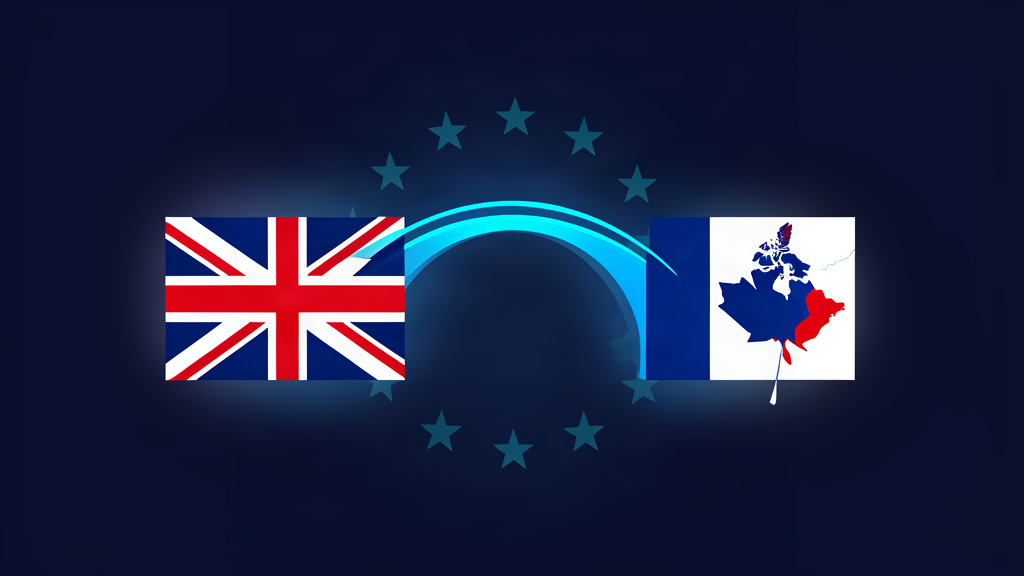
A senior Canadian minister has called for the United Kingdom to join forces with Canada in a new transatlantic alliance anchored to Europe, ahead of what the BBC understands could be a significant shift in how European unity is conceptualised after Brexit.
The proposal
The suggestion, made in an interview with the BBC, comes after the European Commission President floated the idea of opening the door for Canada to become an associate member of the European Union. That proposal, still at an early stage, has stirred debate across European capitals about what the bloc’s outer boundaries should look like and which non-EU democracies might be offered a closer seat at the table without full membership.
For the United Kingdom, the question is particularly charged. London walked away from the EU’s structures in 2020 and has since been navigating a relationship defined by the Trade and Co-operation Agreement and a series of more ad-hoc arrangements. A formal UK-Canada partnership that sits alongside, or in parallel with, any renewed EU outreach to Ottawa would represent a different model of post-Brexit alignment than the one that has evolved to date.
Why the UK is central
Britain and Canada share a long history of defence, intelligence and trade co-operation, rooted in the Five Eyes network, NATO and the Commonwealth. Both are also members of the G7 and have navigated similar pressures in recent years around trade liberalisation, supply-chain resilience and their relationship with a shifting United States posture on the world stage.
The Canadian minister’s remarks suggest that Ottawa sees value in a more structured partnership with London as a bridge between North America and Europe — a role that would draw on the UK’s geographic position, its diplomatic networks and its remaining institutional familiarity with EU processes. That would not necessarily mean the UK rejoining any EU body; instead, it could mean the three parties — the UK, Canada and the EU — developing a more explicit triangle of co-operation on issues such as climate, technology regulation, critical minerals and security.
Why it matters
The proposal matters because it reframes the post-Brexit question. For several years the dominant discussion in British politics has been whether to seek closer alignment with the EU, stick with the current arrangements or distance the country further. A UK-Canada initiative that is explicitly pitched as complementary to any European move towards Canada would give London a different kind of lever: not a return to the structures it left, but a role in shaping a wider, looser constellation of like-minded democracies around the continent.

ADVERTISEMENT
It also matters for trade. Any move towards associate membership for Canada in the EU would have implications for British exporters, service providers and regulators, particularly if it created a two-tier environment in which Canadian firms enjoyed smoother access to EU markets than UK firms in some sectors. The government in London would want to understand those implications early, and a UK-Canada partnership could be one way to shape that conversation rather than simply react to it.
What happens next
The immediate next step will be diplomatic: whether the European Commission’s idea of an associate membership track for Canada gains traction among member states, and how the UK government chooses to respond to both that idea and the Canadian invitation. Any formal UK-Canada framework would require negotiation on both sides, and would almost certainly be framed in careful language designed not to undercut either country’s existing relationships with the EU.
For now, the clearest signal is that the question is moving from abstract debate about Britain’s global role into a more concrete discussion about institutional design in North America and Europe. The BBC’s interview marks an early public marker in that shift.
























We do not allow links of any sort in comments. No SPAM whatsoever. On topic comments only.