

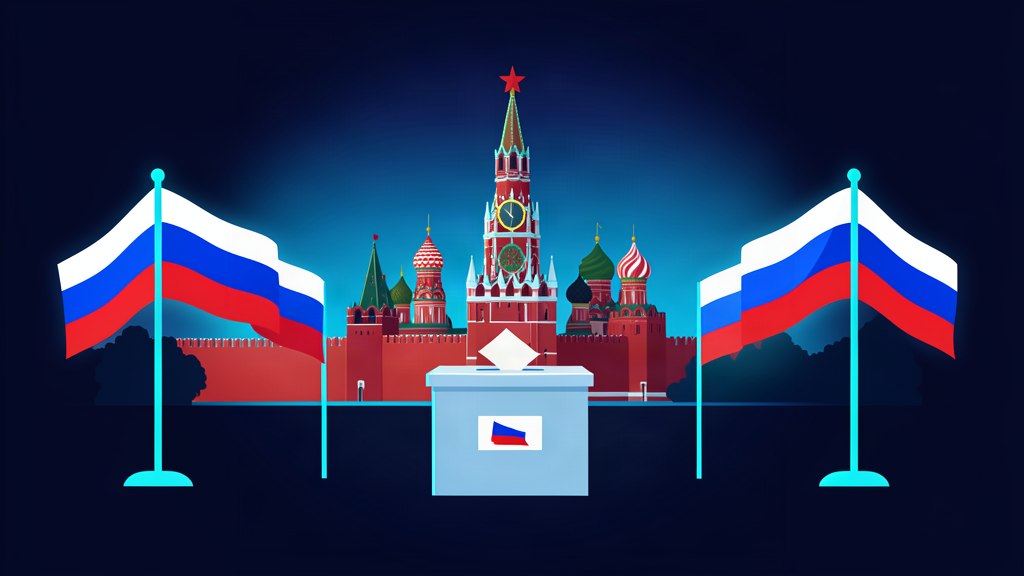
Vladimir Putin’s United Russia party has secured a decisive victory in the country’s parliamentary elections, as was widely expected, but the real question now is how the Kremlin will use the result to consolidate its position both at home and abroad.
No surprises in the ballot
In a political system tightly controlled by the Kremlin, the result of this election was the least unpredictable event in Russia. United Russia, the party that has dominated the State Duma for more than two decades, ran a campaign that relied on administrative resources, state media coverage, and a curated political landscape that left little room for genuine competition. Opposition figures who might have offered a challenge were either barred from standing, marginalised, or, in the case of those who have opposed the war in Ukraine, imprisoned or exiled.
The outcome is exactly what political analysts inside and outside Russia anticipated. What matters now is less the numbers themselves than the message the Kremlin will draw from them, and how it will use the perceived mandate to frame its next moves.
The domestic message
For Vladimir Putin, the election result provides an opportunity to claim that the vast majority of Russians back his government’s course, including the so-called special military operation in Ukraine. State media will present the turnout and the vote share as confirmation that the country is united behind its leadership, even as the reality of a tightly managed election, conducted against a backdrop of censorship and repression, gives independent observers considerable pause.
The Kremlin may also use the result to reinforce internal discipline. A strong showing for United Russia can be presented as a signal to regional governors, state-sector employees, and business leaders that the central government’s authority remains unchallenged. In a system where political loyalty is closely tied to career survival and economic opportunity, that message carries weight.
Why it matters
The significance of the Russian parliamentary election extends well beyond the composition of the Duma. It is a moment in which the Kremlin can, if it chooses, recalibrate the narrative around the war in Ukraine and its consequences for ordinary Russians. With the economy under pressure from sanctions, mobilisation having touched many families, and the war now stretching into its fourth year, the government faces the question of whether to frame the result as a show of confidence or as a mandate for further escalation. For European capitals and for Nato, the Kremlin’s reading of the election will inform assessments of its appetite for diplomacy or confrontation in the months ahead.

ADVERTISEMENT
What happens next
United Russia’s victory will be swiftly converted into political capital. The government may use the period after the election to announce measures that reward loyalty or address grievances, depending on what it perceives the public mood to be. Internationally, the question is whether Moscow sees the result as a platform from which to signal openness to negotiation or as a confirmation that it can press on without domestic resistance. The answer will shape the outlook for the war in Ukraine and for relations between Russia and the West well into next year.
Source: BBC News, by Steve Rosenberg, BBC Russia editor













We do not allow links of any sort in comments. No SPAM whatsoever. On topic comments only.