

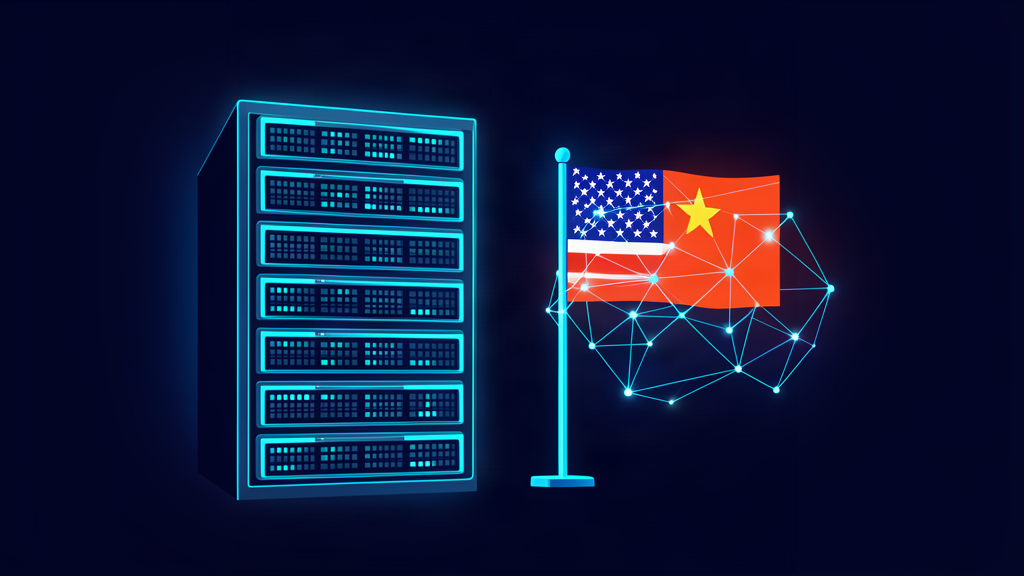
The United States is tightening restrictions on China’s artificial intelligence industry, but the strategy of containment through economic pressure is carrying its own risks, according to analysts who warn that a technology cold war between the world’s two largest economies could backfire.
The limits of containment
Washington has already imposed various restrictions on the sale of chips to China, and last year launched the Pax Silica initiative, aimed at securing supply chains for AI technology that exclude Beijing. Twenty-three states have since joined, along with the European Union. The intention is to slow China’s progress by cutting off access to the advanced semiconductors that power the most capable AI models, and to build a like-minded coalition of countries that agree to keep China out of critical technology supply chains.
The strategy rests on the assumption that China’s AI ambitions depend heavily on hardware that it cannot produce at the required scale and quality. That may be true for the most advanced models in the short term, but it is not clear that restrictions will produce the long-term containment that their architects intend. China has shown a capacity for rapid adaptation in technology sectors, and the pressure of sanctions can sometimes accelerate domestic innovation rather than suppress it.
The cost of a tech cold war
The concern among some analysts is that a bifurcated technology landscape, with one set of standards and supply chains in the US-aligned world and another in China’s, will slow progress for everyone while entrenching a long-term strategic rivalry. AI is not just a competitive industry in the way that consumer electronics are; it is increasingly woven into infrastructure, finance, healthcare, and defence. When the world’s two largest economies deliberately decouple their technology stacks, the effects ripple through every sector that depends on them.
There is also the question of whether US restrictions can hold. The global nature of the semiconductor supply chain means that chips and the equipment to make them flow through many jurisdictions, and enforcing a comprehensive blockade on advanced hardware destined for China is a far harder task than it looks on paper. Companies in third countries have a commercial incentive to fill gaps if US restrictions create a market, and that can undermine the coherence of the containment strategy over time.
Why it matters
Artificial intelligence is widely seen as one of the defining technologies of the coming decades, with implications for economic competitiveness, national security, and the balance of power between states. A genuine AI cold war would not only shape the fortunes of the two countries most directly involved; it would affect the technology choices available to every other country, narrowing the range of suppliers and potentially raising costs for businesses and governments that sit outside the two camps. For the UK and Europe, the question is whether to align fully with the American approach to AI supply-chain security or to maintain enough strategic flexibility to benefit from advances wherever they appear.

ADVERTISEMENT
What happens next
The US will likely widen and deepen its restrictions in an attempt to close loopholes and add pressure. China, in response, will continue to invest heavily in domestic chip manufacturing and in alternative approaches to AI development that are less dependent on Western hardware. The contest will be measured not only in export figures and patent counts but in which model of AI development proves more durable: one built on a tight, exclusionary supply chain, or one built on rapid iteration and scale. The outcome will shape not just the technology industry but the broader pattern of economic and strategic competition between the two countries for years to come.
Source: Al Jazeera
















We do not allow links of any sort in comments. No SPAM whatsoever. On topic comments only.