

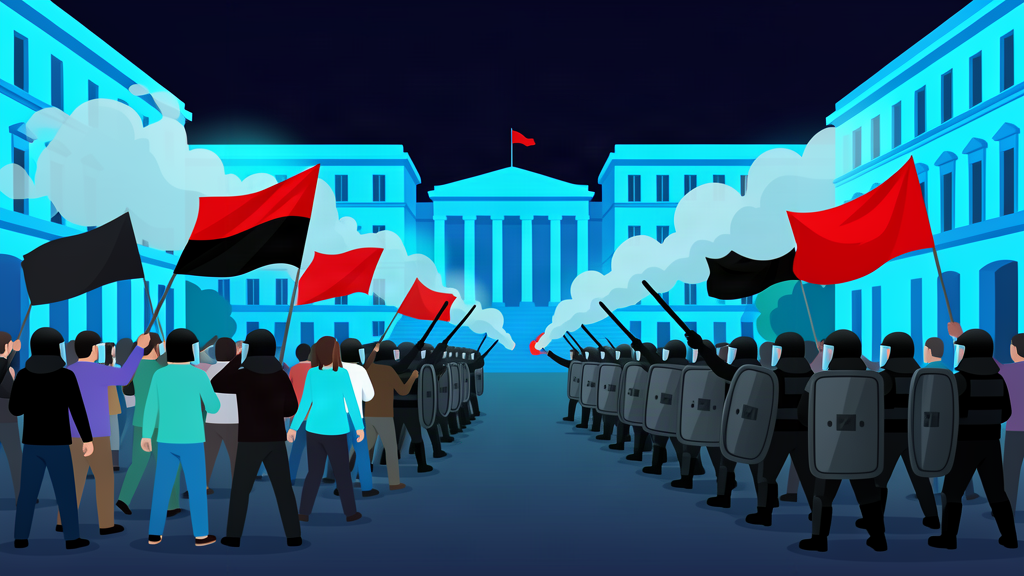
Anti-government protests have entered their sixth day in Tirana, with student-led demonstrators clashing with riot police in the Albanian capital as crowds demand the resignation of Prime Minister Edi Rama. The unrest, driven by soaring living costs and anger over alleged corruption, has become the longest-running street movement in the Balkans this year, and British officials in London watching the live feeds note familiar echoes of how economic distress translates into political upheaval across southern Europe.
The demonstrations, organised largely by university students and civil-society groups, began outside the prime minister’s office and have since spilled into the city centre. Riot police deployed water cannon and tear gas to disperse crowds, with Al Jazeera reporting injuries on both sides. The protesters’ grievances centre on rising utility bills, youth unemployment that exceeds 25 percent, and a widening gap between the political elite and ordinary families.
Why it matters
The protests matter beyond Albania’s borders because the country is a Nato member that the Prime Minister of the United Kingdom has identified as a key partner in stabilising the western Balkans. A sustained domestic crisis in Tirana could complicate Britain’s push for deeper Nato integration in the region and strain diplomatic channels that London relies on for intelligence sharing and migration cooperation. More broadly, the unrest reflects a pattern familiar to British voters: cost-of-living pressure fuelling mistrust of established leaders, something Andy Burnham’s government has spent months trying to defuse at home.
Foreign Office sources in Whitehall confirmed that the British embassy in Tirana remains fully operational and that no British nationals have been caught in the clashes. Travel advice was updated late last night, urging UK citizens already in Albania to avoid demonstration areas and keep abreast of local media.
What happens next
With demonstrations now entering their seventh day, the critical question is whether Prime Minister Rama will respond with concessions or a firm crackdown. Al Jazeera reports that opposition parties are weighing whether to enter the streets themselves, a move that could either galvanise the protests or expose fractures in the anti-government camp. The European Union has already signalled concern, and Brussels is expected to issue a formal statement this week. For now, Tirana’s streets remain the focus of a story that is reshaping one of Europe’s most volatile political corners.
Source: Al Jazeera, “Photos: Antigovernment protesters clash with police in Albania’s capital” (18 October 2026).






We do not allow links of any sort in comments. No SPAM whatsoever. On topic comments only.