

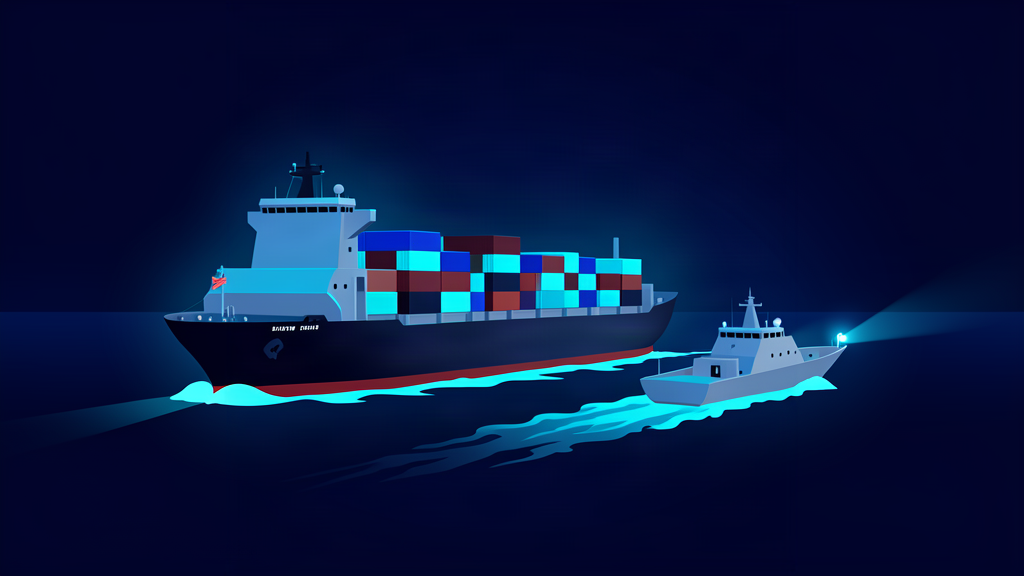
The US military says it has fired on and disabled a St. Kitts-flagged cargo ship in the Gulf of Oman, in a development that is drawing attention to the security of one of the world’s most closely watched shipping areas. The account was reported by Al Jazeera, which said the US military described the vessel as having been fired on and disabled. Further details about the circumstances, the vessel’s cargo, and the condition of anyone on board were not set out in the summary provided by the feed.
The Gulf of Oman sits between the Arabian Peninsula and Iran and connects the Strait of Hormuz to the wider Arabian Sea. It is a route used by tankers, bulk carriers and container ships moving between the Gulf, Europe and Asia. Any use of force against a commercial vessel in those waters will therefore be watched not only by governments and navies, but also by shipowners, insurers and the crews who operate under flags of convenience. A St. Kitts flag means the vessel’s formal flag state is St. Kitts and Nevis, but that does not by itself tell readers who owned the ship, who crewed it, or where it was travelling.
Why it matters for the UK
For the UK, the immediate concern is the safety of sea lanes on which energy, manufactured goods and food supplies depend. Britain is not a Gulf state, but British households and businesses feel the effects quickly when shipping through the region is disrupted. Higher insurance premiums, rerouted vessels or uncertainty about security can feed through into fuel prices, freight costs and the availability of goods in shops. The incident also raises questions about the rules governing force at sea, the protection of civilian shipping, and how quickly clear information is shared with other countries whose nationals may be on board or whose trade uses the same waters. UK ministers are likely to seek a fuller account from partners, and shipping groups will want to know what additional guidance, if any, is being issued to masters operating in the area.
What is known so far
Al Jazeera’s summary is limited to the US military’s statement that it fired on and disabled the ship. It does not, in the material provided, explain why the vessel was targeted, whether warning shots or shots aimed at disabling machinery were used, or whether there were injuries. Those omissions matter, because the legal and political assessment of such an incident depends heavily on the facts. A vessel that fails to comply with lawful orders after warnings is treated differently from one attacked without explanation, and the distinction will shape reactions in capitals around the world. Until the US military publishes more detail, or other governments and the ship’s operators speak publicly, readers should treat the core claim as coming from one party to the incident.
What happens next
Attention will now turn to the vessel’s condition, the fate of its crew, and whether the ship is towed, boarded or released. The flag state, St. Kitts and Nevis, may also be expected to set out what inquiries it is making, even though small flag states often have limited capacity to investigate incidents involving ships registered with them. Maritime organisations will be watching for any change in threat assessments for the Gulf of Oman, and there may be calls for countries to share maritime domain awareness so that commercial traffic is not caught unawares. For the UK, the practical question is whether British-linked shipping, ports or insurers need to act on the new information, and whether ministers press for a public explanation of the legal basis for the action. More facts are needed before firm conclusions can be drawn, and this story will be updated as they emerge.




















We do not allow links of any sort in comments. No SPAM whatsoever. On topic comments only.