

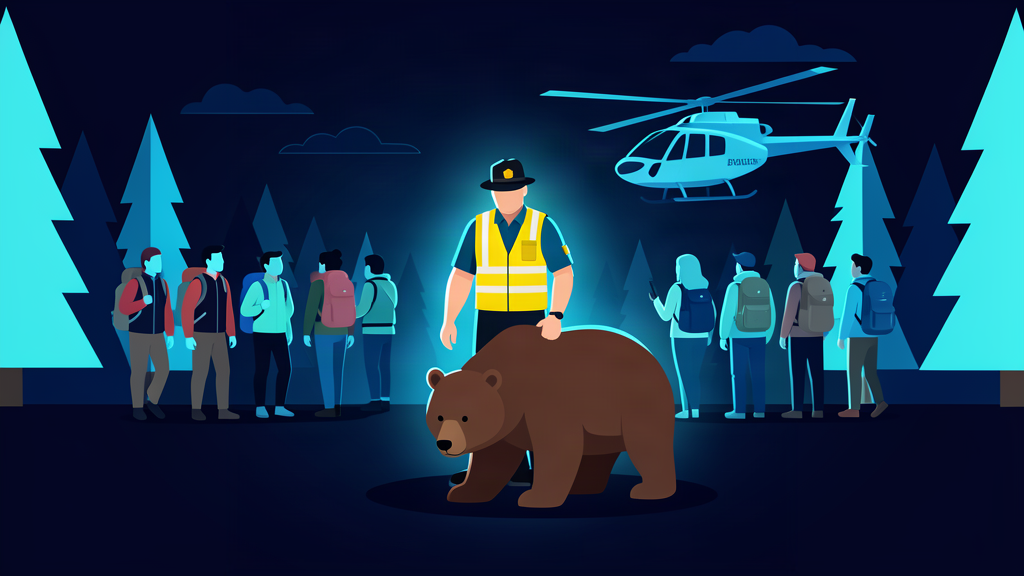
Canada’s authorities have said they will kill four bears after the animals were involved in a deadly attack on hikers, an intervention that has reopened a long-running argument about how far wildlife agencies should go to protect people in the wild. The incident took place in a national park popular with backpackers, where a group of hikers came into contact with a family of bears, and the subsequent investigation led to the decision to euthanise the animals.
The conflict unfolded over the course of a day, with rangers responding to reports of the attack and a multi-agency response that included park staff, provincial wildlife officers and, eventually, a decision to end the lives of the animals. The hikers were treated for injuries and taken to hospital, and the surviving members of the family were relocated, a course of action that has prompted both outrage and acceptance among those who follow wildlife management closely.
The killings are the outcome of a decision that balances two competing duties: the duty to protect human life and the duty to preserve a wild species. In North America, that balance is struck publicly and in detail, with the agencies involved publishing statistics on bear attacks, on the number of animals destroyed and on the circumstances that led to each decision. The Canadian government’s statement was short, noting the circumstances and the steps taken without elaboration.
Why it matters
The incident matters because it lands at the intersection of conservation, public access to the countryside and the expectations of visitors to national parks. In the United Kingdom, where national parks are treasured and where encounters with large mammals are rare, the story is a reminder of the risks that exist in the wild and of the difficult decisions that managers must take.
The wider question is whether the use of lethal force is a last resort or a routine tool. The statistics that follow this incident, which will be published by the authorities, will determine whether the public sees the killings as a tragic necessity or as a sign of a management culture that is too quick to destroy. The debate will play out in the press, on social media and in the corridors of government.
For the United Kingdom’s wildlife agencies, the event is watched closely. The parallels with British land management, where encounters with dangerous animals are uncommon but not unheard of, make the case a reference point for how other countries handle similar situations.

ADVERTISEMENT
What happens next
The investigation into the attack will run its course, with a report expected to set out the circumstances in detail and to explain why the decision to destroy the bears was taken. The findings will likely be quoted as a case study in wildlife management, and the lessons will be applied to how rangers are trained and how visitors are briefed.
How the public responds will be the next stage. Complaints, calls for review and statements from wildlife groups will follow, and the agencies will be under pressure to explain their actions and to show that the balance between human safety and animal welfare was properly weighed.
The BBC and the international press will report the details as they emerge, with the case likely to be cited in future debates about the management of large predators.




















We do not allow links of any sort in comments. No SPAM whatsoever. On topic comments only.