

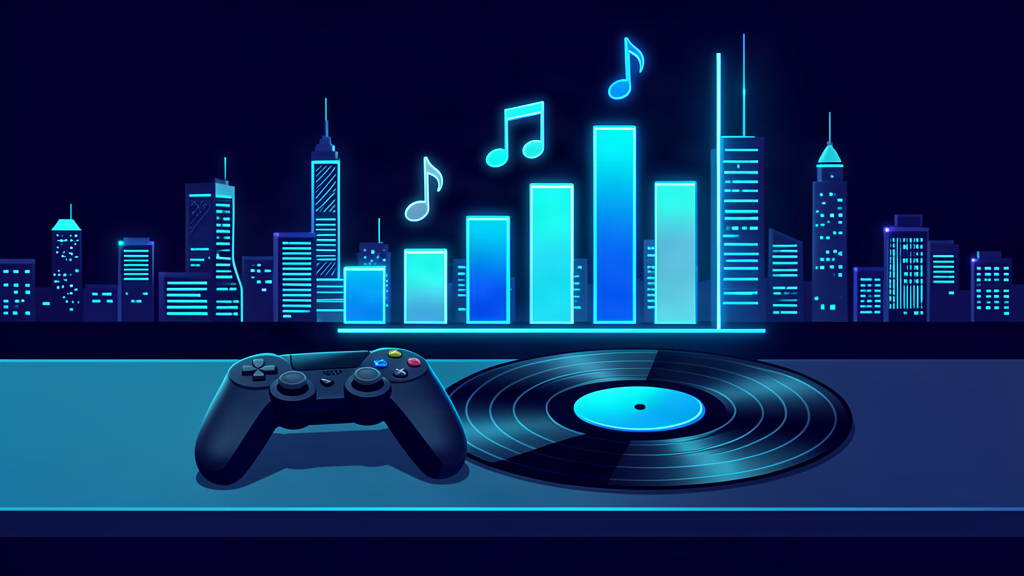
Several songs from the soundtrack of GTA 6 have climbed the UK singles chart in the wake of the game’s record-breaking launch, according to the BBC. The surge shows how a video game can now shape the music charts as powerfully as radio or streaming playlists, turning a soundtrack into a commercial force in its own right. For the UK music industry, the development underlines a growing reality: some of the biggest boosts a song can receive now come not from a traditional single release but from appearing in a cultural phenomenon that millions of people play at once.
From game launch to chart impact
The BBC reported that a number of tracks featured in GTA 6 have risen in the UK’s singles chart following the game’s release, which has been described as a record launch. Soundtracks have long been a way for games to introduce music to new audiences, but the scale of a title like GTA means the effect can be immediate and measurable. When a game sells and is played in the millions, the songs heard while playing it reach a vast audience in a short space of time, and that attention can translate into streams and chart positions.
The precise chart positions and the tracks involved are matters for the official chart reporting, and the material available here does not set them out. What is clear from the BBC’s report is the direction of travel: songs connected to the game moved upward. That is enough to make the point that the boundary between gaming and the mainstream music market has become porous. A soundtrack is no longer a bonus feature tucked away in a menu; it can be a launchpad in its own right.
A familiar pattern with a new scale
Music supervisors have understood for years that placing a song in a game or a film can transform its fortunes. What has changed is the speed and reach of the platform. A globally released game creates a shared cultural moment, and social media amplifies the tracks people encounter in it. In the UK, where the singles chart remains a closely watched measure of popular music, a cluster of soundtrack entries is a visible sign of that shift. It also helps explain why artists and labels now treat game placements as a serious part of a release strategy rather than an afterthought.
Why it matters
For Britain, the story sits at the intersection of two industries in which the UK punches above its weight: music and video games. The chart impact of a game soundtrack matters because it shows how British music can reach audiences through new routes, and because it highlights the soft power of interactive entertainment. The UK has a strong games sector and a music industry that exports worldwide; when a game drives songs up the domestic chart, it demonstrates how those strengths can reinforce each other. It also raises questions for chart rules about how game-driven streams are counted, and for artists about where their audience is actually coming from.
What happens next
The immediate question is whether the soundtrack’s chart performance is sustained once the novelty of the launch fades, or whether the tracks settle back down. The BBC reported the movement in the UK chart; future positions will depend on continued streaming and sales. For the wider industry, the episode is likely to encourage more collaboration between game makers and musicians, and more attention to soundtracks as chart contenders. For UK readers, it is a reminder that the charts now reflect more than what is played on the radio — they increasingly reflect what people are playing, too.


















We do not allow links of any sort in comments. No SPAM whatsoever. On topic comments only.