

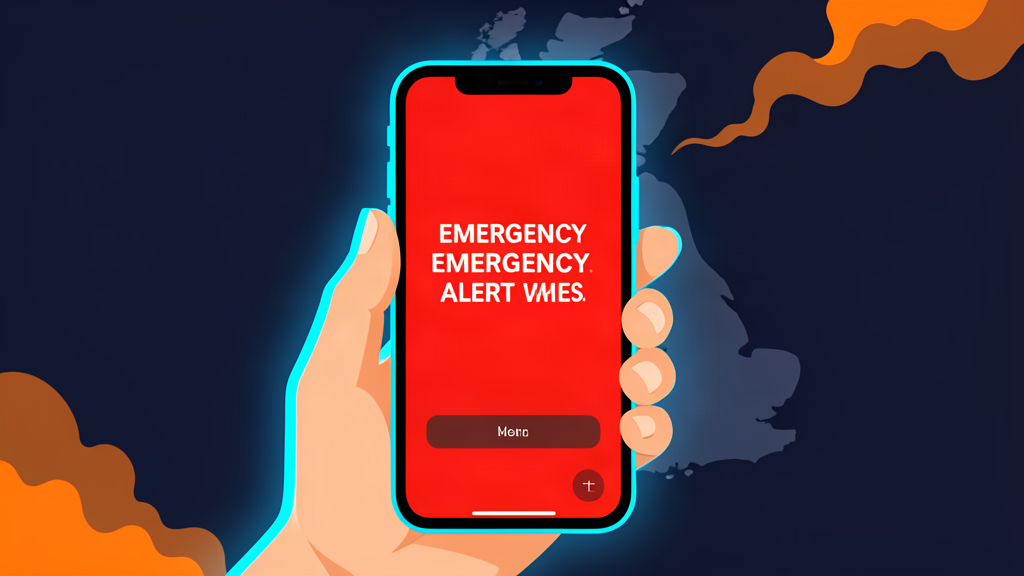
Phones across Britain sound the alarm
At 7pm on Friday, millions of smartphones across England and Wales emitted a loud, piercing tone as the government sent a “severe” emergency alert about the wildfires sweeping the country. For many, it was the first time they had experienced the system since its national rollout — and the reaction was immediate and divided.
Former Conservative cabinet minister Thérèse Coffey, who was nine miles from a nuclear power station when her phone sounded, said she had “expected a much more specific alert, not a generic message on wildfires.” Her complaint was echoed by thousands online.
“Overreach” or vital warning?
Critics took to social media to call the alert an “overreach,” questioning why a blanket message had been sent to so many people when the fires were concentrated in specific areas. Others objected to the intrusive nature of a tone that cannot be silenced on most devices.
The government has defended the use of the alert, saying that fast-moving fires and shifting wind made a broad warning the safest option. Officials noted that the system allows geographically targeted messages, but that the speed of the incident left little time for finer detail.
Yet many welcomed the warning, arguing that any system which prompts people to stay safe during a national emergency is worthwhile. Some pointed out that the alternative — silence — could prove far costlier if conditions deteriorate.
A debate about decarbonisation
The alert also reopened a wider argument. While some lamented what they saw as a lack of government action on decarbonisation and the extreme weather it fuels, others used the moment to question how the UK prepares for a future of hotter, drier summers.

ADVERTISEMENT
For a public unaccustomed to being addressed directly through their phones, the experience was striking. The system is designed to reach nearly every mobile handset in a defined area within seconds — a capability hailed by emergency planners but still novel to those on the receiving end.
What the alert means for the UK
The episode underscores how the UK’s emergency communications are evolving. As wildfires and other climate-driven hazards become more frequent, officials are likely to rely on the alert system more often — and to face growing scrutiny over how specific, and how useful, those messages are.
For now, the piercing tone has done its job: it got the nation talking, checking, and preparing. Whether the next alert lands with more precision remains to be seen.
Source: Original report. Rewrite for Your News Website.
















We do not allow links of any sort in comments. No SPAM whatsoever. On topic comments only.