

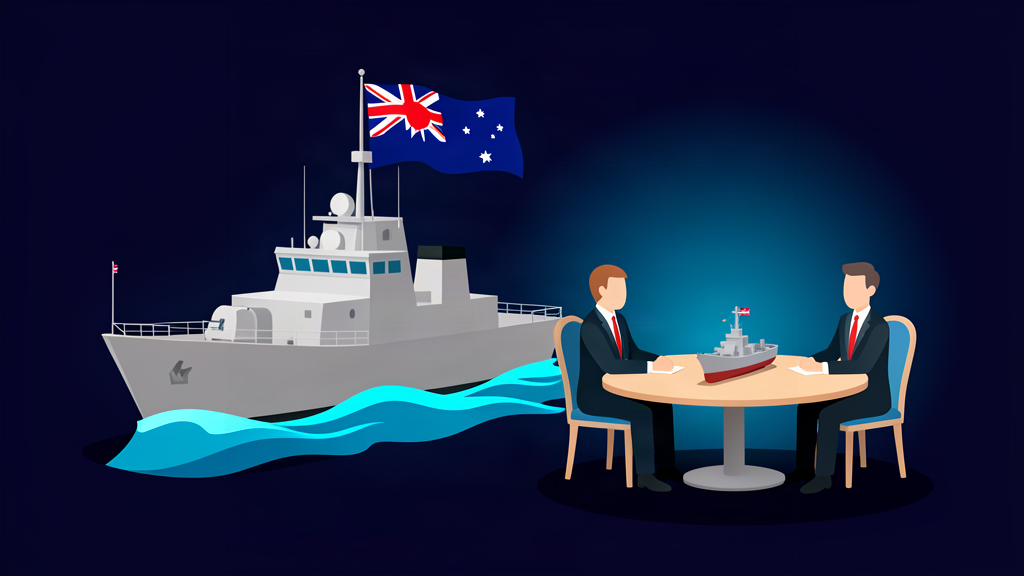
Japan’s defence minister, Shinjiro Koizumi, travels to Canberra this week for the most senior engagement with Australia since a row erupted over Prime Minister Anthony Albanese’s remarks about a gift of melons from his Japanese counterpart, Sanae Takaichi. The visit puts substance over satire: the centrepiece is Australia’s planned acquisition of Japan’s Mogami-class frigates and deeper bilateral security cooperation.
What Koizumi and Marles will discuss
Koizumi is due to meet his Australian counterpart and deputy prime minister, Richard Marles, on Tuesday. The agenda centres on the Mogami-class frigate programme — a deal that would weave Japanese-built warships into the Royal Australian Navy — alongside joint exercises, supply-chain resilience and coordination in the Indo-Pacific. Quietly, both governments are also managing the aftershocks of the ‘melon-gate’ episode, which briefly embarrassed Albanese and was played for laughs in Tokyo.
Why the ‘melon-gate’ row matters
The gift of melons from Takaichi became a minor diplomatic soap opera after Albanese’s podcast comments about it drew criticism at home and amusement abroad. Diplomats have been keen to move on; the substance of the partnership is far weightier than fruit. Still, the episode illustrated how personal remarks by leaders now ripple instantly across allied capitals.
The UK connection: AUKUS and Indo-Pacific security
For Britain, the Tokyo–Canberra tightening is not a sideshow. The UK is a pillar of AUKUS, the trilateral security pact with the United States and Australia built around nuclear-powered submarines and advanced technology. A Australia-Japan defence industrial link reinforces the same strategic geography London cares about: a free, stable Indo-Pacific in which British and allied vessels can operate.

ADVERTISEMENT
What Britain stands to gain
Closer Japanese-Australian interoperability strengthens the ecosystem of allies Britain hopes to plug into through AUKUS and the broader ‘Global Britain’ tilt east. Shared standards, shared shipbuilding and shared patrols mean a larger coalition able to deter coercion in Asian waters — and a bigger market for UK defence exporters.
The wider strategic picture
The meeting signals a region hedging against uncertainty. As great-power competition intensifies, middle powers are weaving tighter bonds outside the traditional US umbrella, even as they rely on it. For the UK, watching Tokyo and Canberra draw closer is a reminder that its own Indo-Pacific posture is now part of a denser web of alliances — one melon joke notwithstanding.
Source: Original report. Rewrite for Your News Website.






















We do not allow links of any sort in comments. No SPAM whatsoever. On topic comments only.