

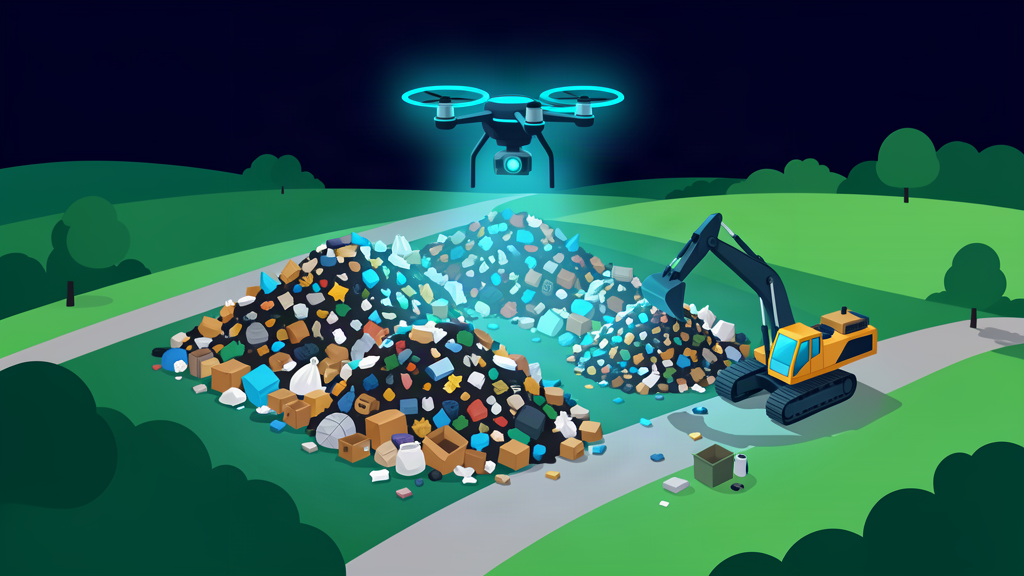
Andy Burnham has confirmed that taxpayers will foot the bill for clearing three major illegal waste sites in West Yorkshire, Surrey and Kent, as the Prime Minister launches a wider drive against toxic dumping that will deploy AI-powered drones to catch those responsible. The Guardian reports that ministers have identified dumps in Bradford, Runnymede and the Isle of Sheppey which together hold around 22,000 tonnes of illegal waste, to be cleared in the next phase of the government’s national clear-up effort.
Where the waste is
The three sites named by ministers span very different parts of England, from an industrial corner of Bradford to green-belt land in Runnymede and the shoreline of the Isle of Sheppey. Between them they contain tens of thousands of tonnes of material that was tipped, buried or abandoned without permission, and the cost of making them safe now falls to the public purse. The government’s argument is straightforward: the waste is a hazard that cannot wait, and the public should not be left exposed while the state chases those who created it.
Drones, fines and a tougher stance
Burnham has promised to raise fines for illegal tipping and to bring in AI-powered drones to scan land for signs of unauthorised activity, a technological step that reflects how far enforcement has shifted toward surveillance and data. The pitch is that spotting dumps early, before they grow into the sprawling sites now being cleared, is cheaper and safer than the slow, expensive business of remediation after the fact. Whether the technology delivers on that promise at scale will be closely watched by cash-strapped councils.
Why it matters
Illegal dumping is more than an eyesore. Toxic and construction waste can leach into soil and water, blight the communities nearest to it, and land local authorities with clean-up bills they are ill placed to meet. That the Prime Minister has personally attached his name to the clear-up signals that the government wants to be seen tackling environmental crime head-on, at a moment when faith in the state’s willingness to enforce basic standards has been strained. It also sets a template: spend public money to fix the mess now, then try to recover it and deter the next one.
What happens next
The immediate task is physical: removing and safely disposing of roughly 22,000 tonnes of waste across the three sites, a logistics operation that will take months rather than weeks. In parallel, ministers are expected to set out how the drone surveillance and higher fines will work in practice, and how councils will be reimbursed or supported. The longer test is whether the drive proves a genuine deterrent or simply moves the problem elsewhere, with fly-tippers seeking new, less watched ground once the cameras are trained on the first hotspots.
Source: Original report. Rewrite for Your News Website.
























We do not allow links of any sort in comments. No SPAM whatsoever. On topic comments only.