

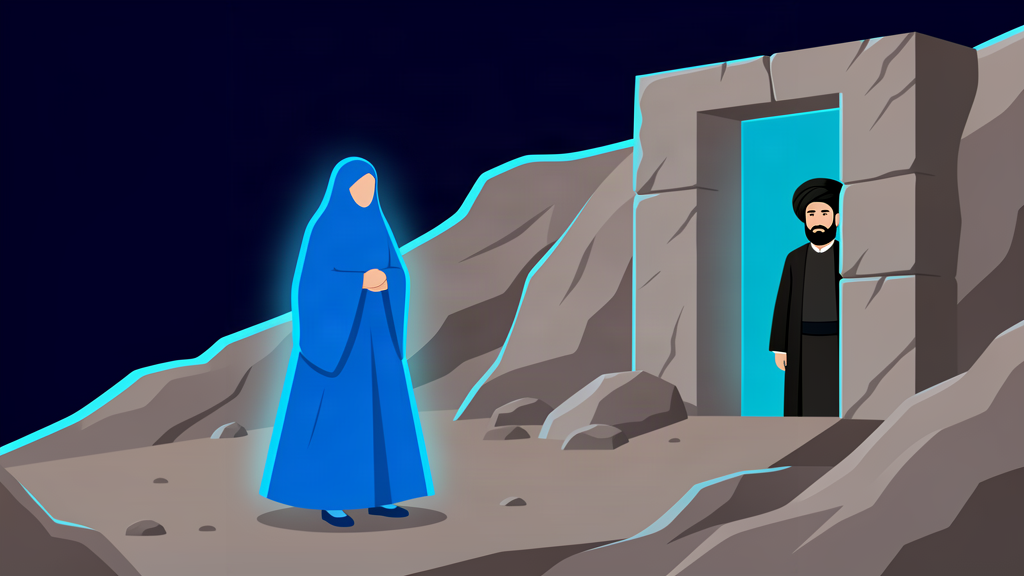
Five years after the Taliban swept back into power, a BBC World Service investigation has laid bare the routine humiliations and controls faced by ordinary Afghans, from an 18-year-old woman begging a provincial governor for a divorce to senior figures openly boasting of past atrocities. Broadcast this week from Sheberghan, Kabul and Kandahar, the reporting offers the clearest window yet into how the movement governs, and why its return continues to weigh on British foreign policy and on the Afghan communities now settled across the UK.
A governor’s court
In his office in northern Afghanistan, Governor Abdullah Sarhadi of Jawzjan province is confronted by a young woman who will not take no for an answer. The 18-year-old, her face hidden behind a full veil and sunglasses, tells the grey-bearded former commander that she wants to leave a husband she accuses of months of abuse and beatings. After trying to persuade her to stay, Sarhadi later remarks to the men around him that women are “mindless” and “deficient in intellect”, drawing laughter from officials, bodyguards and elders. Under the Taliban’s court system it remains extremely difficult for a woman to obtain a divorce without her husband’s consent, and the man in this case is demanding four times the bride wealth paid at marriage, an amount her family refuses.
From Guantanamo to the governor’s office
Sarhadi is no ordinary bureaucrat. A military commander during the Taliban’s first stint in power in the 1990s, he was among thousands of insurgents who surrendered after the US-led coalition ousted the group in 2001, and was held for several years in American detention at Guantanamo Bay before his release. When the Taliban returned in 2021 he became a governor, first in Bamiyan and then in Jawzjan, and has since been appointed deputy commander of a military corps in Kunduz. Asked about the giant Buddha statues his forces destroyed in Bamiyan, he says plainly that he “destroyed it with my own hands”, insisting the act was “God’s will”. He also complains that a recent ban on smartphones for officials has slowed the business of government.
“We had all the information we needed”
In Kabul the BBC meets Habibullah Badr, who says he was once “responsible for the operations of suicide attackers” in the capital and now holds a role in the ruling administration, driving the correspondents through the streets in an armoured car. Hours away, former fighters show the BBC the cave network they used to evade capture, while a local official, Abdul Samad, points to an unmarked graveyard where his father lies among the movement’s dead. The United Nations says roughly three in four Afghans cannot meet their basic needs, and the people the BBC meets describe desperate shortages of water, roads and clinics. A woman who protested when the Taliban first returned, identified only as Hoda, says the group fears educated women because “that would end the Taliban”.
Why it matters
For Britain the film is more than distant reporting. The UK has not formally recognised the Taliban and, together with its allies, has maintained diplomatic isolation and targeted sanctions while running resettlement routes for Afghans who worked with British forces and for vulnerable women and activists. The scenes of arbitrary justice and the effective exclusion of half the population from education and work reinforce the case made by British MPs and campaigners that recognition is off the table, and that support for the Afghan diaspora and civil society must continue even as international aid shrinks.
What happens next
There is little sign the Taliban intend to relax their restrictions, and with mass returns, prolonged drought and falling assistance, the humanitarian pressure on ordinary Afghans is set to deepen. The BBC’s access, unusually granted to senior figures, is likely to sharpen debate in Western capitals, including London, over how to balance isolation with the need to reach a population in crisis. Expect renewed parliamentary scrutiny of the UK’s resettlement schemes and of the sanctions regime as the fifth anniversary of the takeover forces a reckoning with a reality the West failed to prevent.

ADVERTISEMENT
Source: Original report. Rewrite for Your News Website.





















Really helpful article, thank you – looking forward to more like this!