

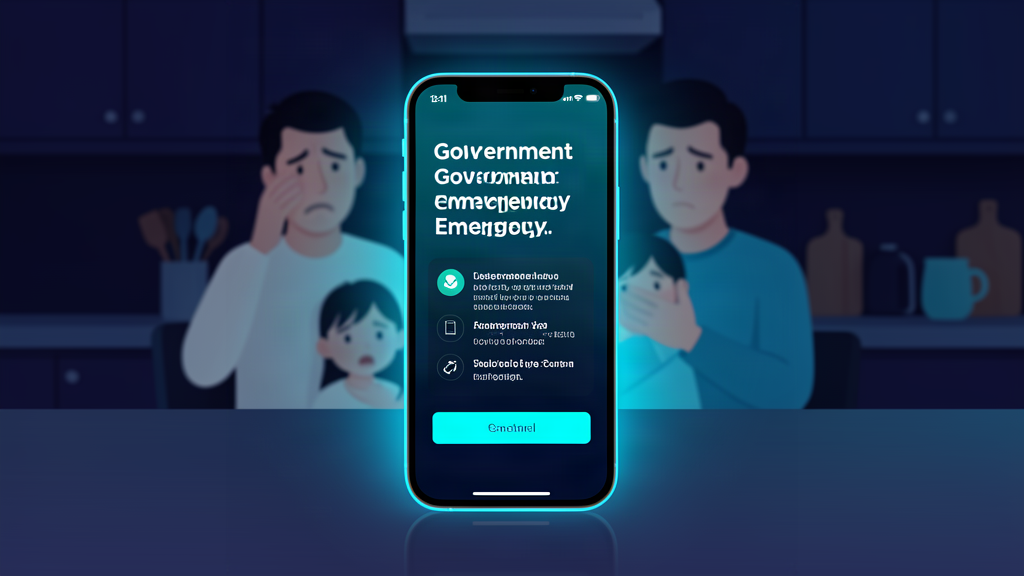
The engineers who built the UK’s emergency alert system have publicly defended the technology while voicing unease about the way it is now being used, after a wildfire warning pushed to millions of phones across England and Wales earlier this month partly backfired. In an interview reflecting on the rollout, the team behind the service said the capability to reach almost every handset in the country within seconds remains vital, but warned that public trust could erode if alerts are issued for events people do not perceive as genuine emergencies.
What went wrong with the wildfire alert
The recent warning, tied to wildfire risk, reached huge numbers of people at short notice. Rather than reassuring the public, it drew confusion in some areas, with recipients questioning why they had been interrupted for a hazard that felt remote. The BBC, which spoke to the system’s creators, reported that the episode illustrated a gap between the raw technical success of the alert and its usefulness as a tool for keeping people safe.
A powerful but fragile tool
Britain’s Emergency Alerts system works by broadcasting a signal from mobile masts to every compatible phone in range, removing the need for an app or sign-up. That makes it uniquely valuable during floods, fires and rare national threats. The same power, however, means a poorly calibrated message can feel like noise, and repeated misfires risk the public switching alerts off or learning to ignore the next one.
How other countries handle it
Other nations with similar cell-broadcast systems tend to pair the technology with tight rules about who can trigger a message and for what. The challenge for the UK is not the engineering, which works, but the judgement around deployment. A warning that arrives too often, or for a risk that never materialises locally, trains people to dismiss the very signal that might one day save them.
Why it matters
The episode speaks to a wider question for the government: how to operate a mass-communication system that citizens cannot easily opt out of without poisoning the well. If the public comes to treat alerts as a nuisance, the real-world consequence could be slower responses when lives are genuinely at risk. With climate-driven heatwaves and wildfires becoming more plausible across the UK, the threshold for sending a warning matters more than ever.
What happens next
Officials are likely to review the messaging and targeting rules that govern when an alert is triggered and who receives it. Expect sharper guidance on distinguishing a true emergency from an awareness message, and possibly a clearer communications strategy so future alerts are understood rather than resented. The underlying system is not going away, so the question is simply whose judgement decides when it sounds.

ADVERTISEMENT
Source: Original report. Rewrite for Your News Website.








We do not allow links of any sort in comments. No SPAM whatsoever. On topic comments only.