

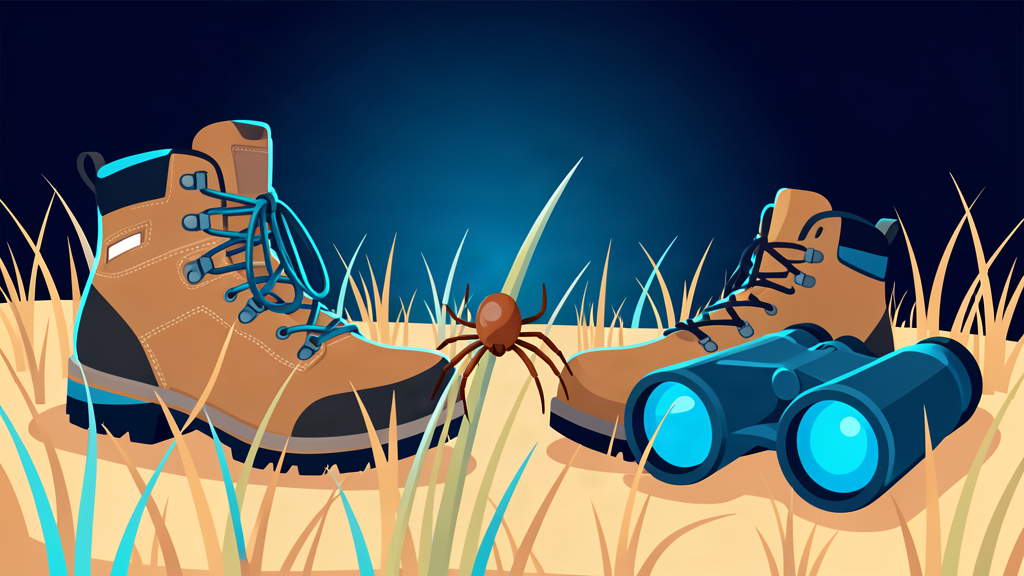
Ticks capable of carrying a severe and potentially fatal virus are surviving for longer in Britain because of more regular heatwaves, according to UK Health Security Agency experts. Hyalomma ticks are the principal vectors of Crimean-Congo haemorrhagic fever, a tick-borne viral disease the World Health Organisation says carries a fatality rate of between 10% and 40%.
Ticks arriving on migratory birds
Hyalomma ticks reach Britain by latching onto migratory birds from the Mediterranean and Africa, usually during the middle stage of their life cycle. In cooler British conditions they have historically struggled to complete their development, dying before reaching adulthood. Dr Jolyon Medlock, head of medical entomology at the UK Health Security Agency, said: “What we’re seeing now in heatwave years is that they can moult through to the adult stage, and we then could be able to pick up records of adults through our tick surveillance.”
He added: “These have happened less than probably five times in the last 10 years or so, but it’s something that we and colleagues across northern Europe are starting to pick up a bit more.”
Medlock was careful to add that the change does not mean every tick survives, nor that an infection risk necessarily follows. Adult Hyalomma records on British soil remain rare, and the species is not the vector for the tick-borne viruses most commonly contracted in Britain.
A disease on the move in Europe
In its native range, Hyalomma is a vector for Crimean-Congo haemorrhagic fever virus, which Medlock described as relatively common in the Balkans and which has started to emerge in Spain more recently. He called it one of the “climate-sensitive tick-borne disease pathogens” that Britain could increasingly expect to see.
The virus causes fever, dizziness and nausea, and severely ill patients can experience rapid kidney deterioration and sudden liver failure. It can incubate for anywhere between one and nine days, and can also be transmitted through contact with the blood or tissues of infected animals.

ADVERTISEMENT
Milder winters changing seasonality
It is not only summer heat that is altering tick behaviour. Medlock said milder winters could mean ticks stay active far later into the year, or throughout it. “Usually they say 7C is the critical temperature for activity, I’ve seen them active at 3C,” he said, adding that this may cause a “shift in the seasonality” of ticks in the UK.
Why it matters
The practical message for the millions of Britons who walk, garden, farm or travel in the countryside each summer is straightforward: the tick species most associated with exotic-feeling diseases are no longer as reliably excluded by British weather as they once were. That is a shift in baseline risk, even though individual infections remain rare.
It also illustrates how quickly a warming climate reshapes public health. Surveillance systems that had recorded adult Hyalomma in Britain only a handful of times in a decade are now picking them up more consistently.
What happens next
UK tick surveillance programmes will continue to monitor Hyalomma adults over the coming seasons, with colleagues across northern Europe watching the same signals. Officials are expected to reassess the risk assessment if the trend continues into successive years, and the practical advice remains the same as it has always been: cover skin on walks, use repellent, and check for attached ticks after being outdoors.



















We do not allow links of any sort in comments. No SPAM whatsoever. On topic comments only.