

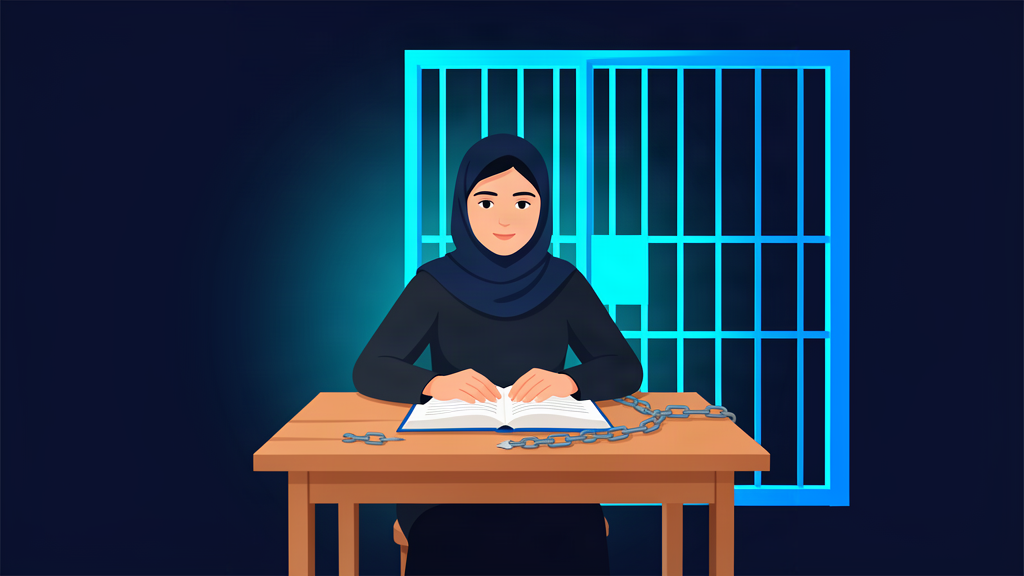
Five years of lost freedom
Five years after the Taliban swept back into power, women and girls across Afghanistan have told the BBC their lives are unrecognisable. The hard-line group has spent the past four years dismantling the rights of the country’s 22 million women since regaining control in 2021, two decades after a US-led coalition removed it from power.
Afghanistan is now the only country in the world where girls are officially barred from secondary and higher education. The Taliban has stopped girls over 12 attending school, restricted their travel without a male chaperone, and brought in a law that implies approval for child marriage. According to Unicef, around 2.6 million girls can no longer attend school beyond Grade 6.
‘An old wound opens again’
Shakiba, an 18-year-old jewellery maker in Kabul, described 15 August – the day the government fell – as “the worst and most painful day of my life”. “Every year when this date comes I feel as if an old wound opens again,” she said, recalling dreams of becoming a pilot that now feel impossible. She finished her studies online, “a very important victory”, but the sky she once imagined flying through remains out of reach.
Others have lost their livelihoods entirely. Zuhal, a 32-year-old former news anchor from Bamyan, was pushed out of her job by a series of Taliban orders. “The days when I used to wake up to the sound of my alarm clock and get ready to watch TV have now become days when I wake up in the morning knowing that I have to spend the whole day at home,” she said.
Work, healthcare and public punishment
The United Nations says only 7% of Afghan women are employed, after being banned from many workplaces and fields of study. The regime has also resumed public corporal punishment. Shaima told the BBC she was whipped 50 times, leaving her scarred and her family traumatised; Manizha was lashed 39 times over a friendship with a man, then jailed. “I had no desire to continue living,” she said.
Healthcare is also at risk. With rules restricting treatment by male doctors, Afghanistan’s high maternal mortality rate worsens; there is roughly one midwife for every 4,050 women. Midwife Marzia watched a 45-year-old mother of six die after travelling from a remote district. “We managed to save the baby,” she said, “but now I keep thinking about the baby’s future.”

ADVERTISEMENT
Holding on to hope
Not all is despair. Noori, 24, started a jam-making company that now employs 10 women. Asma, 13, is certain she will one day become a doctor. Ela, a dental assistant, urged the world not to look away: “Speak up for Afghan women, support their right to education and work. Keep the world’s attention on their situation. We need solidarity, not silence.”
Source: Original report. Rewrite for Your News Website.




















We do not allow links of any sort in comments. No SPAM whatsoever. On topic comments only.