

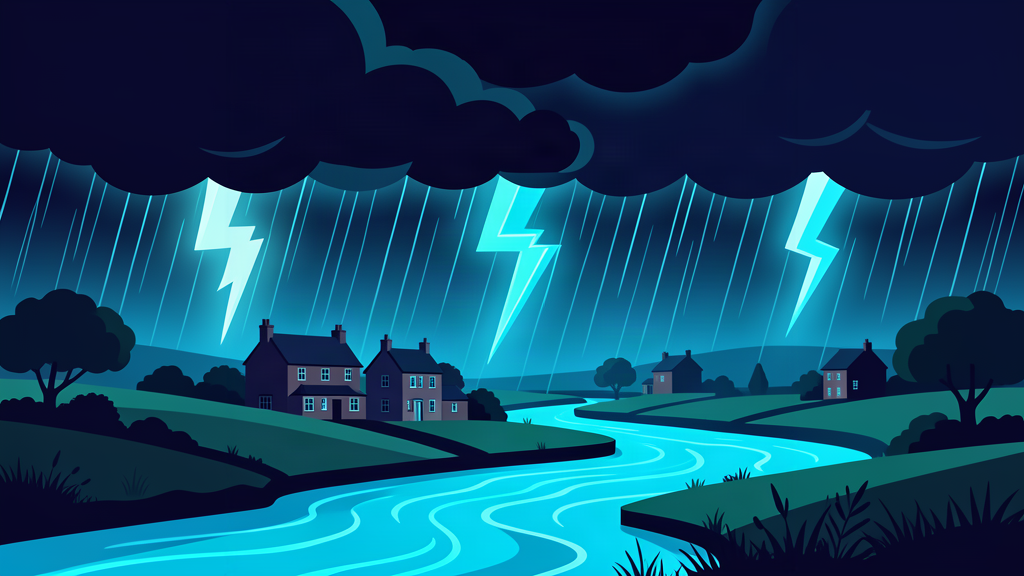
The prolonged dry spell across Britain has given way to heavy, thundery showers that continue to sweep the country, with forecasters warning that the rain still brings a risk of flooding even though formal thunderstorm warnings have now expired. The BBC’s Ben Rich explains that the change marks a decisive end to weeks of dry conditions, but the shift comes with its own hazards for communities already stressed by a parched summer.
From drought to downpour
After an extended period with little meaningful rainfall, the arrival of intense convective storms has soaked ground that had hardened and lost its ability to absorb water quickly. That combination is precisely the one that raises flood risk: when soil is baked hard, heavy rain runs off rather than soaking in, overwhelming drains and low-lying roads. The BBC weather team reports that while the most severe thunderstorm alerts have lapsed, bursts of heavy rain remain likely across parts of the UK over the coming days.
Where the risk sits
The danger is concentrated in areas that saw the heaviest downpours in the shortest time, where surface water can gather faster than drains can clear it. Drivers are being urged to avoid flooded routes and not to treat expired warnings as a sign that all risk has passed. The Met Office and local authorities typically issue separate flood alerts when rivers and surface systems come under pressure, and households in prone areas are advised to stay alert to updates rather than assume the worst is over.
The transition also matters for agriculture and water supplies. A sudden storm can deliver in minutes what weeks of gentle rain would not, but it does not reliably recharge reservoirs in the way steady rainfall does, and much of the accumulated deficit from the dry spell will need sustained, well-distributed rain to recover.
Why it matters
The swing from drought conditions to flash flooding captures a familiar British weather problem: extremes arriving back to back. For homeowners, commuters, and farmers, the practical consequences are immediate, from disrupted journeys to damaged property and stressed crops. It is also a reminder of how quickly the national conversation moves from worrying about too little water to worrying about too much.
What happens next
Forecasters expect further showers to track across the UK, with the flood threat easing only as the rain becomes lighter and more intermittent. The BBC will continue to update its warnings and guidance, and residents in flood-prone areas should monitor official alerts. The episode is likely to feed ongoing discussion about drainage resilience and how the country copes with increasingly erratic rainfall patterns.

ADVERTISEMENT
Source: Original report. Rewrite for Your News Website.






















Really helpful article, thank you – looking forward to more like this!